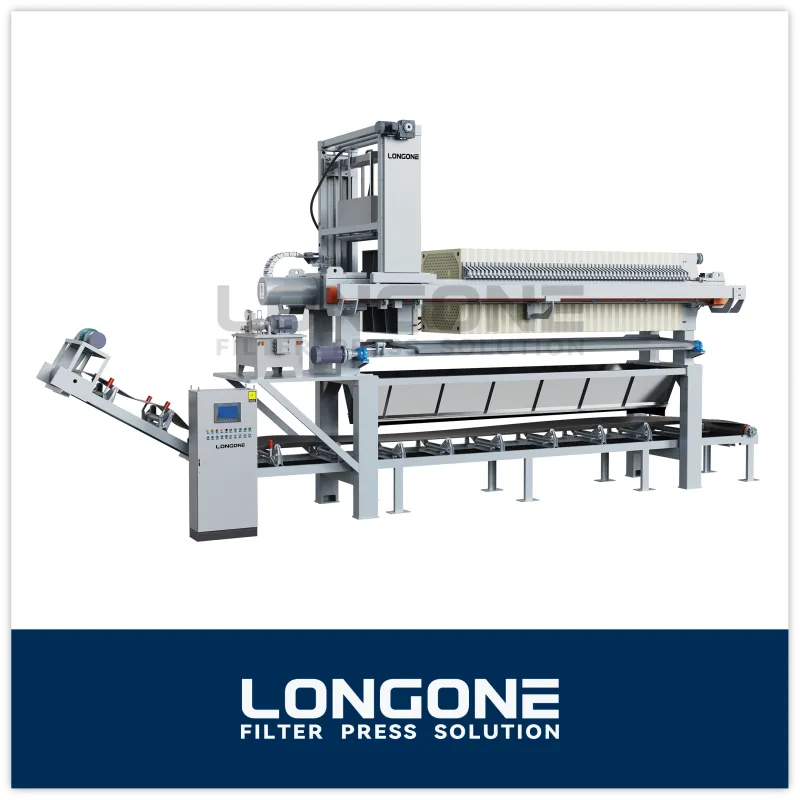
A chemical filter press rarely fails because of its hydraulic system. It fails because a plate cracked under a hot slurry, a cloth blinded after three weeks, or a gasket let acidic filtrate leak onto the floor. In a chemical plant, those failures mean lost product, unplanned shutdowns and safety incidents.
Most of these problems start at the specification stage, when a filter press is chosen by filtration area and price alone. This guide takes a different order: start with the slurry, then the wetted parts, then the machine. It is written from the manufacturing side, where filter plates are molded, cloths are matched and presses are commissioned.
What Is a Filter Press and Why Chemical Plants Rely on It
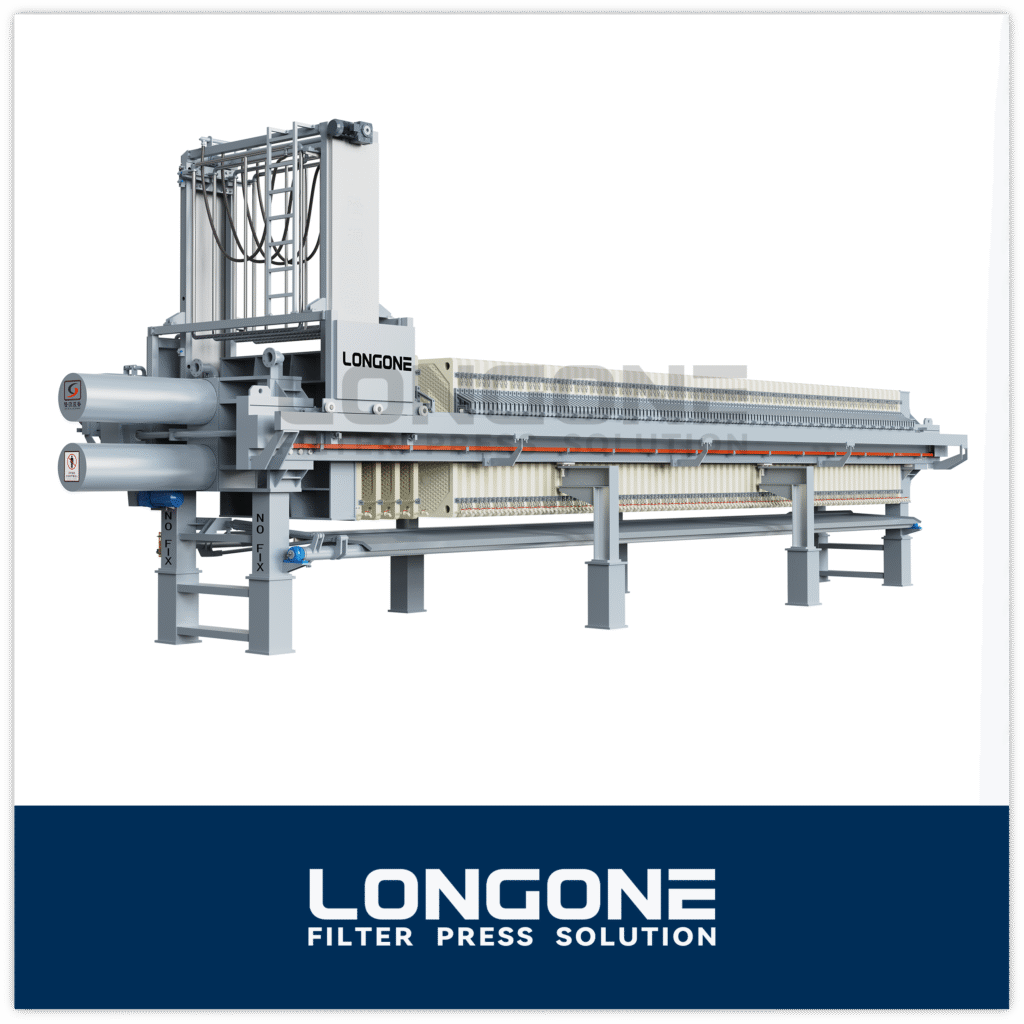
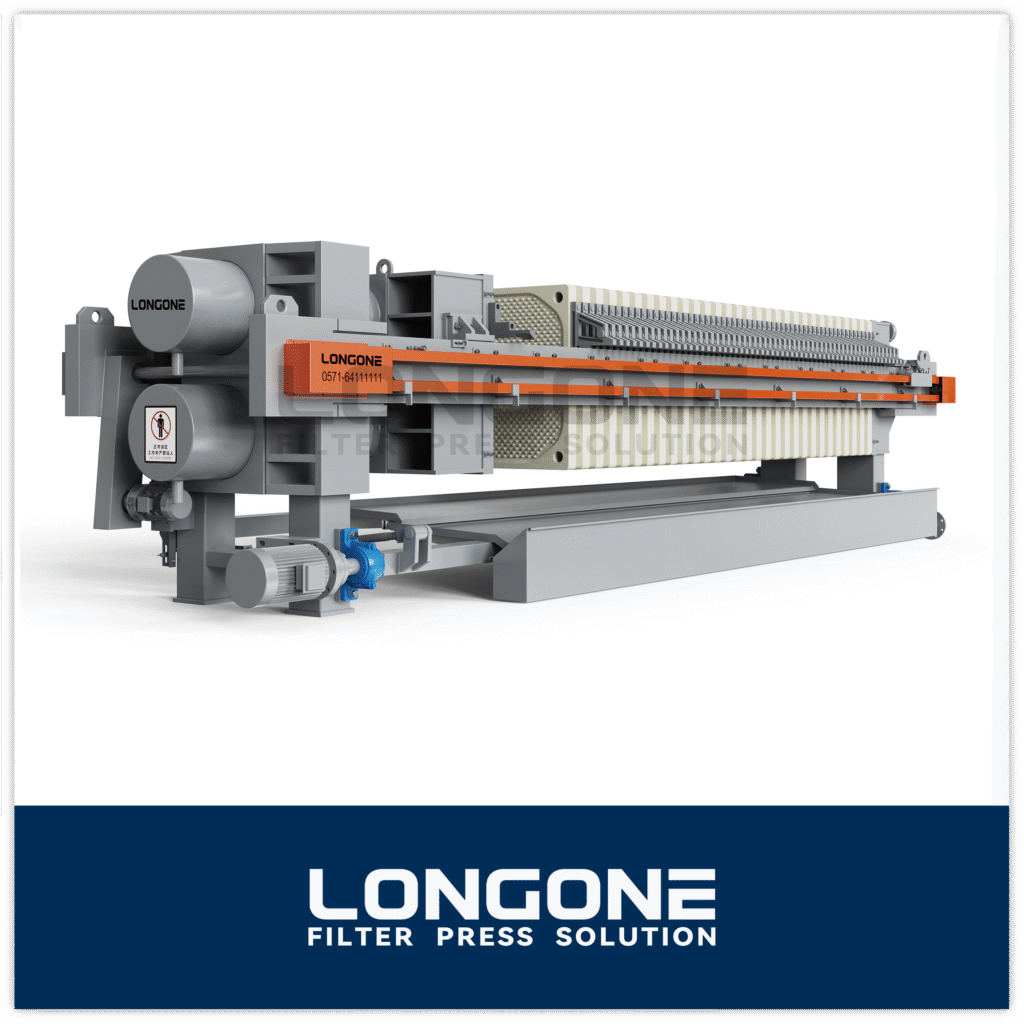
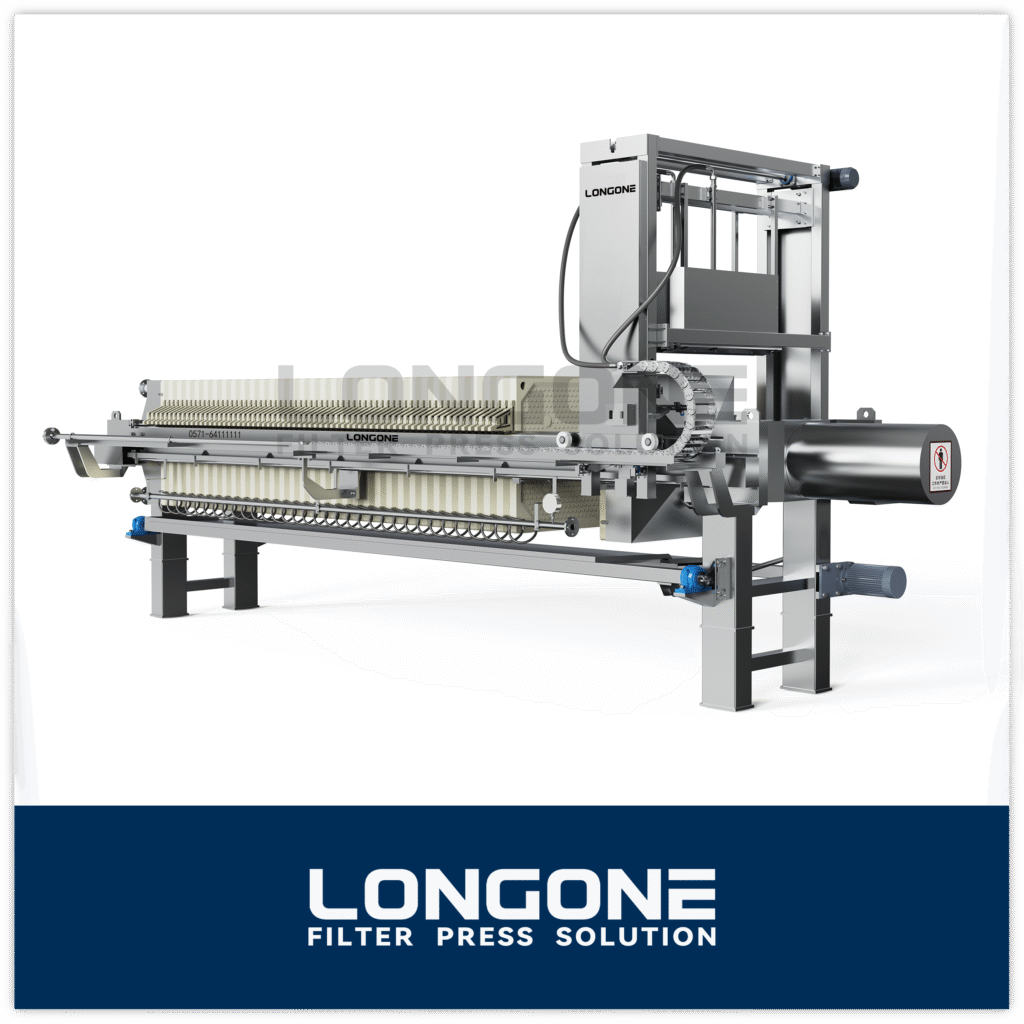
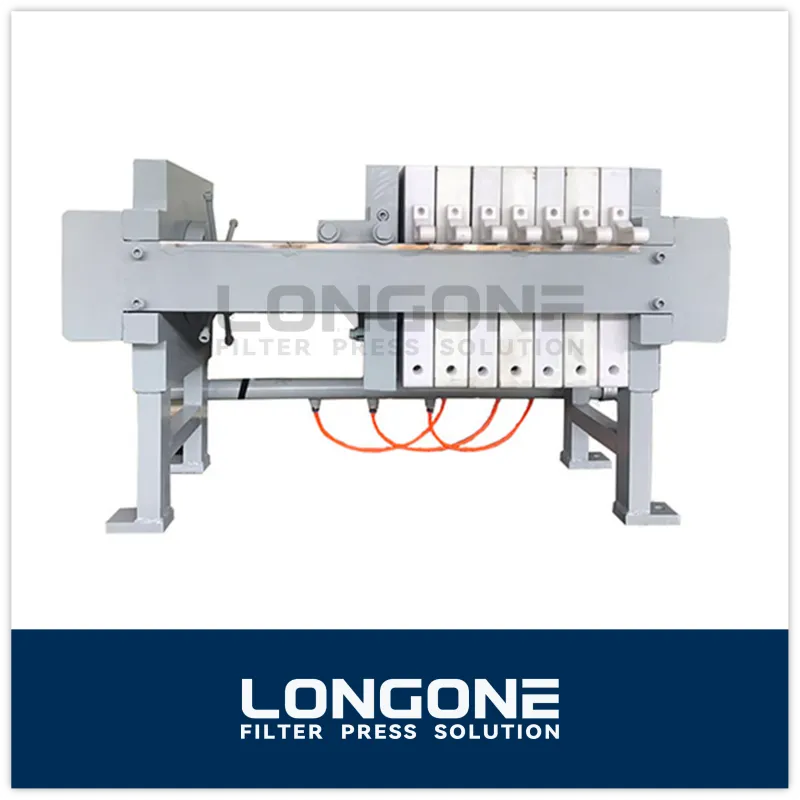
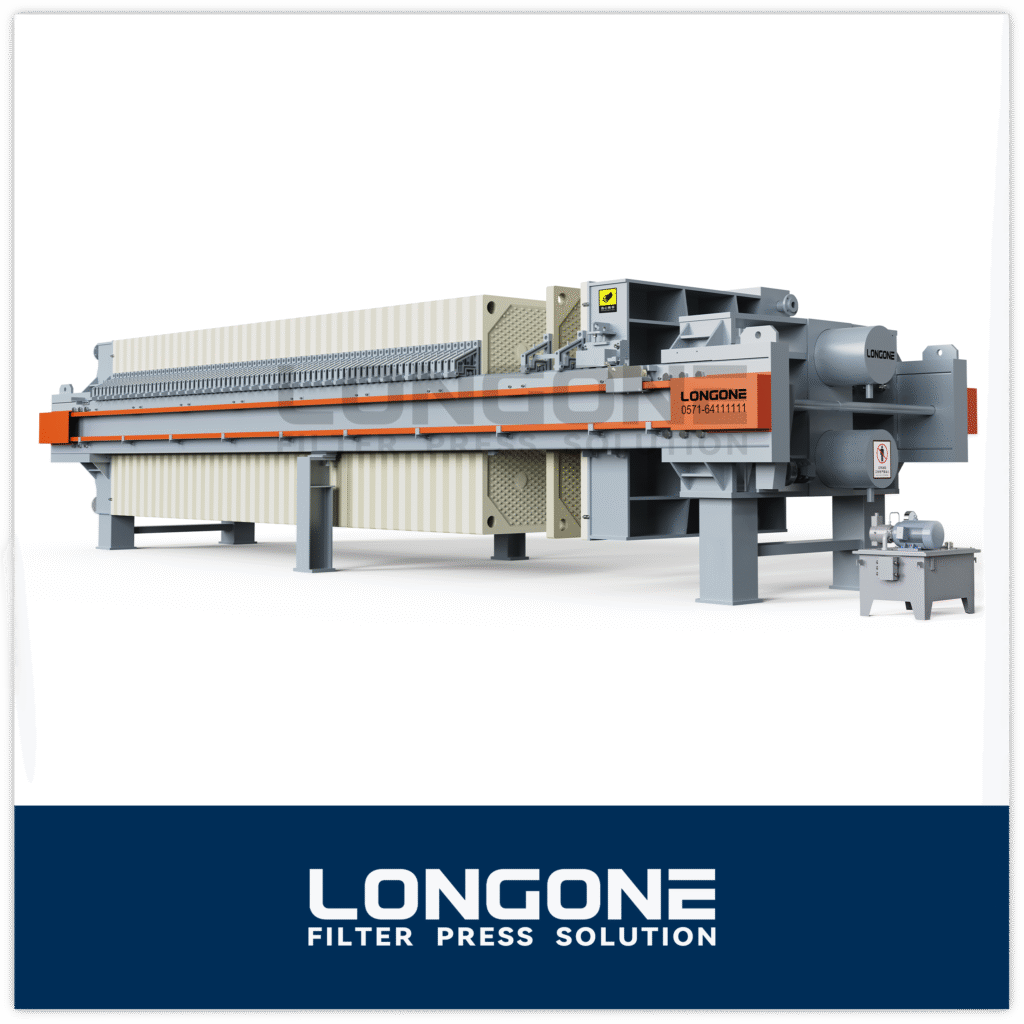
A filter press is a batch solid-liquid separation machine. A slurry pump feeds the slurry into chambers formed between pairs of filter plates. Each plate is covered with filter cloth. The solids stay on the cloth and build up into a cake, while the clear filtrate passes through the cloth and leaves through the plate drainage channels. When the chambers are full, the press opens and the cake is discharged.
Chemical plants rely on this design for three practical reasons.
- High cake solids. Pressure filtration produces a drier cake than most continuous alternatives, which lowers drying, transport and disposal costs. When the cake is the product, it also means less residual liquor.
- Clear filtrate. Fine particles are held back by the cloth and the forming cake, which matters when the filtrate is a valuable solution or must meet discharge limits.
- Flexibility. The same press can handle different slurries by changing plates, cloth and operating pressure, which suits plants that run multiple products.
The trade-off is that a filter press is a batch machine with a cycle: fill, filter, wash, squeeze or blow, discharge. For chemical duty, the cycle is only as reliable as the materials that touch the slurry.

Key Applications of Filter Presses Across the Chemical Industry
Filter presses appear wherever a process produces solids that must be separated from a liquid. The goal differs by application, and the goal drives the specification.
- Product recovery. Pigments, dyes, inorganic salts and fine chemicals are often filtered and washed to isolate the solid product. Here cake washing and product purity matter most.
- Catalyst recovery. Spent or reusable catalysts are separated from the reaction liquor. Fine particle size and the value of the solids call for tight cloth selection and minimal cake loss.
- Solvent and liquor clarification. The liquid is the valuable stream. The priority is filtrate clarity and compatibility with the solvent.
- Battery and phosphate chemicals. Slurries from mineral and battery material processing are often abrasive and corrosive, so wear and chemical resistance of the plates matter.
- Wastewater and sludge dewatering. Neutralization sludge and precipitated metal hydroxides are dewatered to cut disposal volume. The priority is low cake moisture and dependable cycle times.
Before choosing equipment, ask a simple question: is the cake the product, the liquid the product, or is this a waste stream? The answer shapes washing needs, cloth choice and how much dryness you actually require.

How to Choose Filter Plates and Cloth for Corrosive and Hot Slurries
This is where most chemical filter press projects are won or lost.
Filter plates. Reinforced polypropylene (PP) is the standard material for most chemical duty because it resists a wide range of acids and alkalis and is relatively light and cost-effective. The limits are temperature and certain solvents. Standard PP plates are generally rated for moderate operating temperatures, while high-temperature PP grades extend that range for hotter slurries. When the slurry combines high temperature, strong oxidizers or aggressive organic solvents, the plate material needs to be confirmed against the actual process conditions rather than assumed from a generic chart.
Thermal shock is a common hidden cause of plate damage. A plate that runs fine with a steady hot feed can crack if cold wash water hits it suddenly. If your cycle includes hot filtration followed by cold washing, tell your supplier.
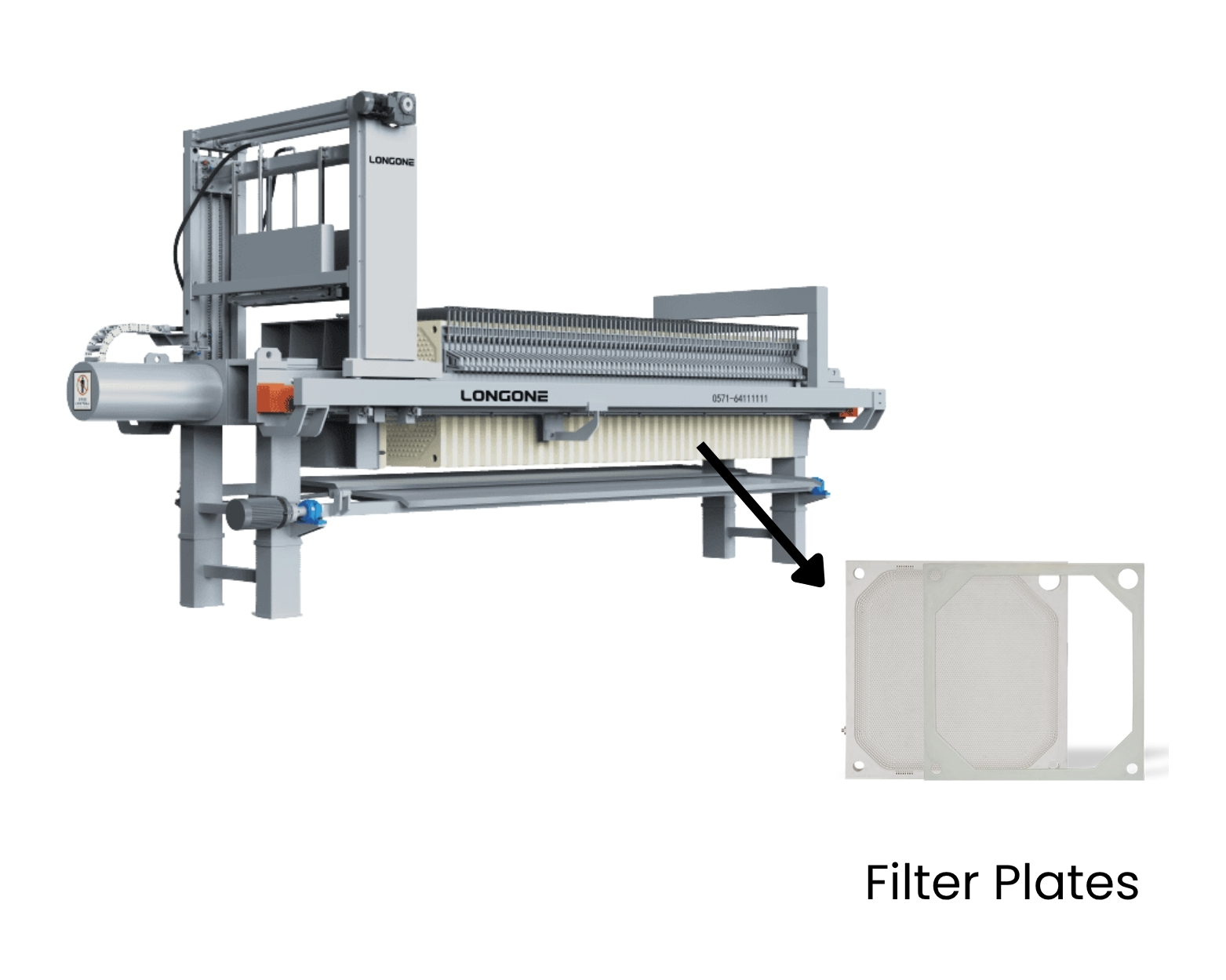
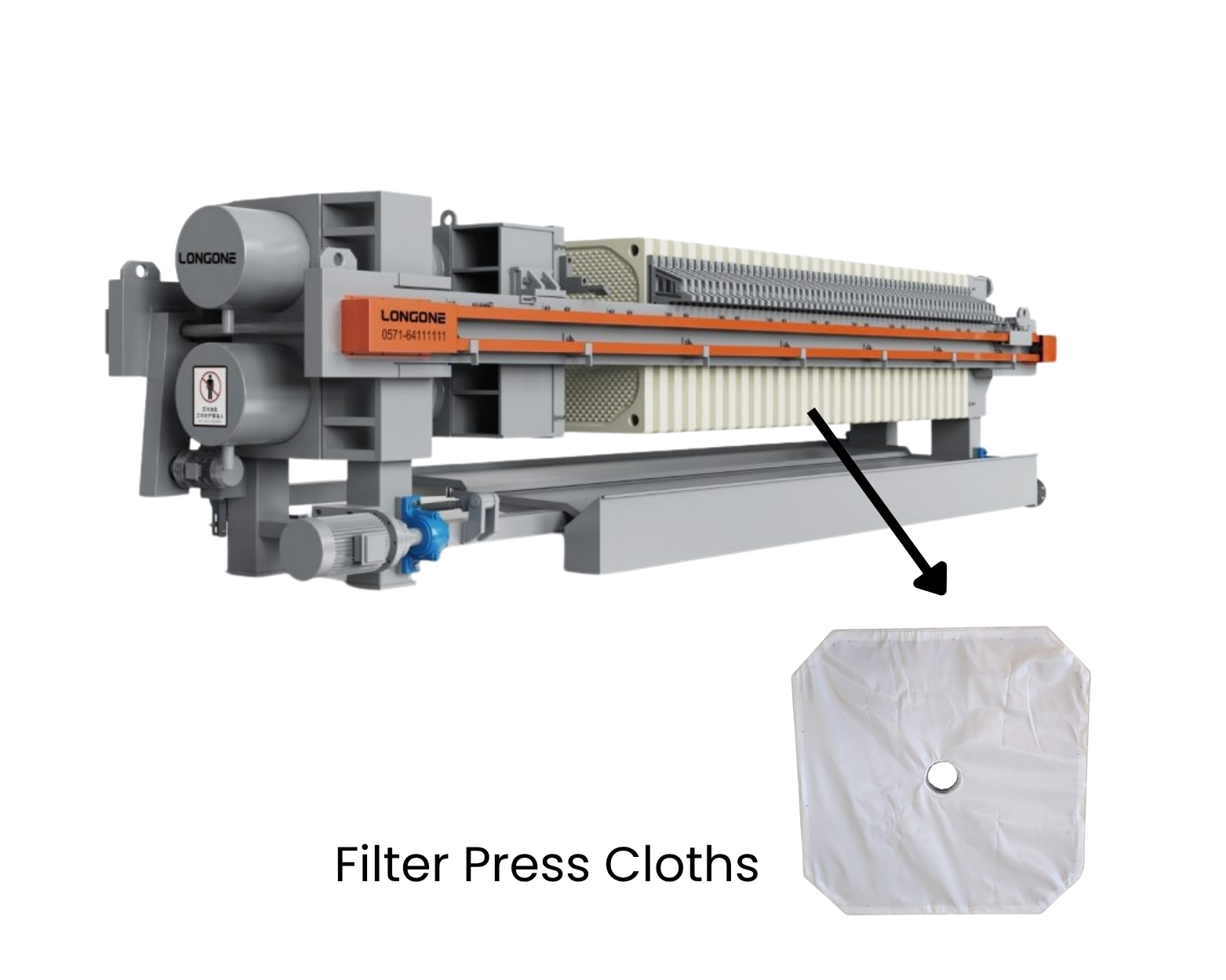
Filter cloth. The cloth decides filtrate clarity, cake release and blinding behavior. Three variables matter:
- Fiber material. PP is widely used for its broad chemical resistance. Polyester performs well in acidic conditions but is less suited to strong alkalis. Nylon is chosen for abrasion resistance in some applications. Match the fiber to the pH and chemistry of your slurry.
- Weave and permeability. A tighter weave captures fine particles but can blind sooner. A more open weave drains faster but may let fines through. The right balance depends on particle size distribution.
- Surface finish. Calendered or smooth-finished cloths release cake more easily, which helps with sticky chemical cakes.
Gaskets and seals. Leakage often traces back to a sealing surface that does not suit the chemistry or the temperature. For corrosive duty, specify sealing and plate edge design together with the plates, not as an afterthought.
The practical rule: supply your supplier with pH range, operating temperature, solvent content and particle size. A short slurry test before ordering is cheaper than replacing plates after the first month.
Chamber vs Membrane Filter Press for Chemical Processes
Once the wetted parts are defined, the next decision is the plate configuration.
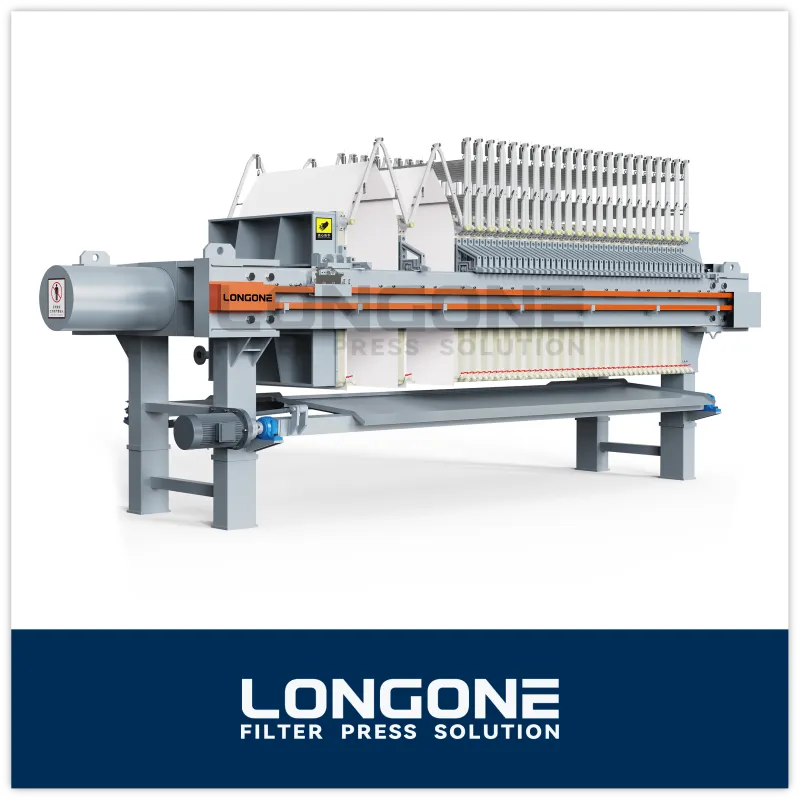
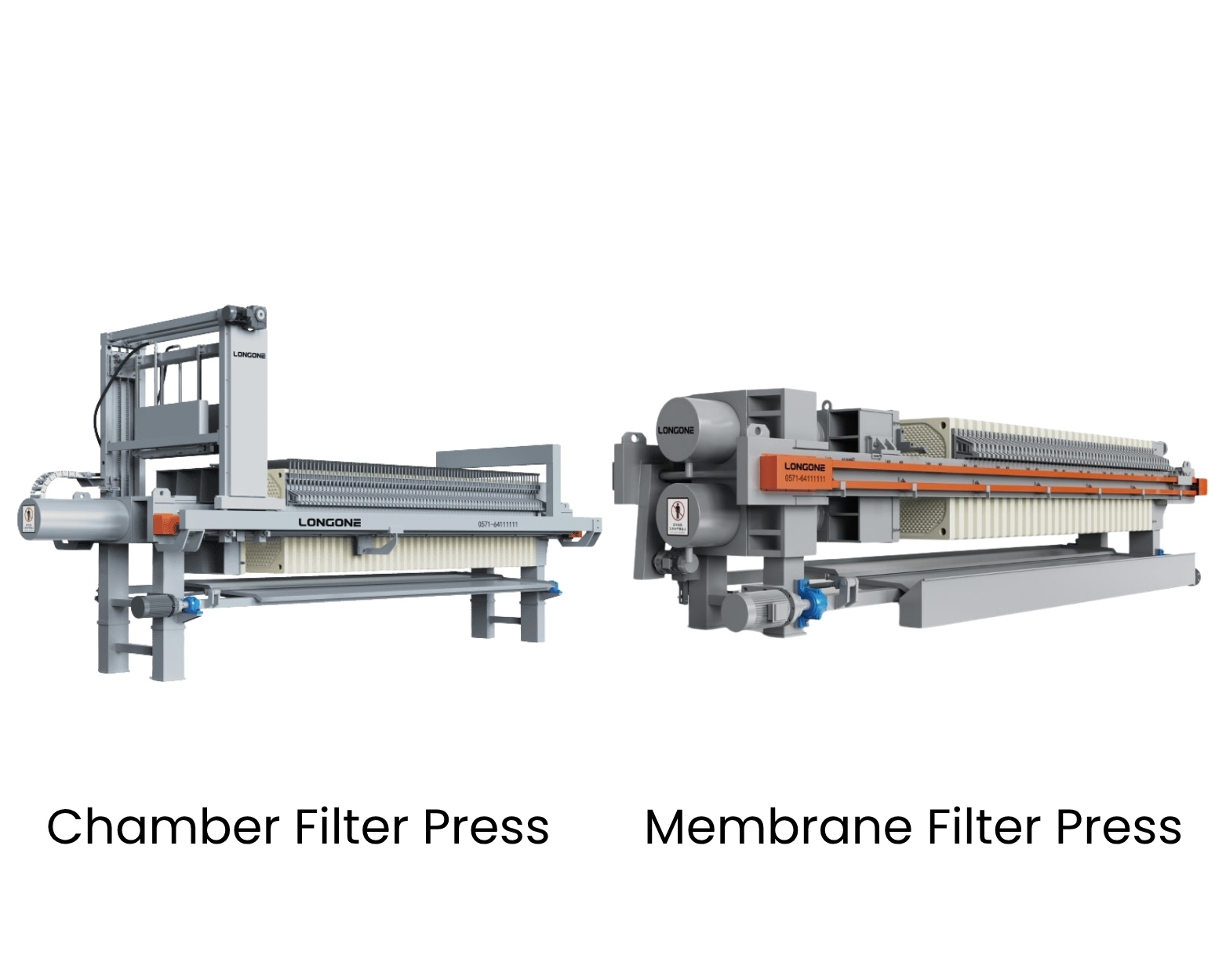
A chamber (recessed) filter press fills fixed-volume chambers with slurry and builds the cake by feed pressure alone. A membraanfilterpers uses plates with a flexible diaphragm. After the chambers fill, compressed air or water inflates the membrane and squeezes the cake, pushing out additional liquid.
| Factor | Kamerfilterpers | Membraanfilterpers |
|---|---|---|
| Cake moisture | Higher; depends on feed pressure and time | Lower; additional squeeze step removes more liquid |
| Cycle time | Longer filtration to reach dryness | Shorter filtration plus a squeeze step |
| Cake washing | Possible with suitable plate design | Often more uniform washing after squeeze |
| Investment | Lower initial cost | Higher initial cost |
| Maintenance | Simpler, no diaphragm | Diaphragms must be checked for wear and chemical attack |
| Best suited to | Easy-filtering, crystalline or granular solids; cost-sensitive duty | Compressible, fine or sticky cakes; drier cake required |
For chemical service, one point is often overlooked: the membrane is a wetted, flexing component. It must tolerate the chemistry and temperature of the process as well as the squeeze pressure. A membrane press can pay for itself through lower cake moisture, but only if the diaphragm material suits the slurry.
If your product is crystalline and filters freely, a chamber press is usually enough. If your cake is compressible, sticky or must be very dry for the next step, a membrane press is usually the better investment.
Sizing and Specifying a Filter Press for a Chemical Plant
Filtration area is the last number to settle, not the first. A reliable specification starts with process data:
- Slurry characteristics: solids concentration, particle size distribution, pH, temperature, viscosity and solvent content.
- Target result: required cake dryness, filtrate clarity and whether washing is needed.
- Batch size and cycle time: how much slurry per batch and how many batches per day.
- Operating pressure: feed pressure and, for membrane presses, squeeze pressure.
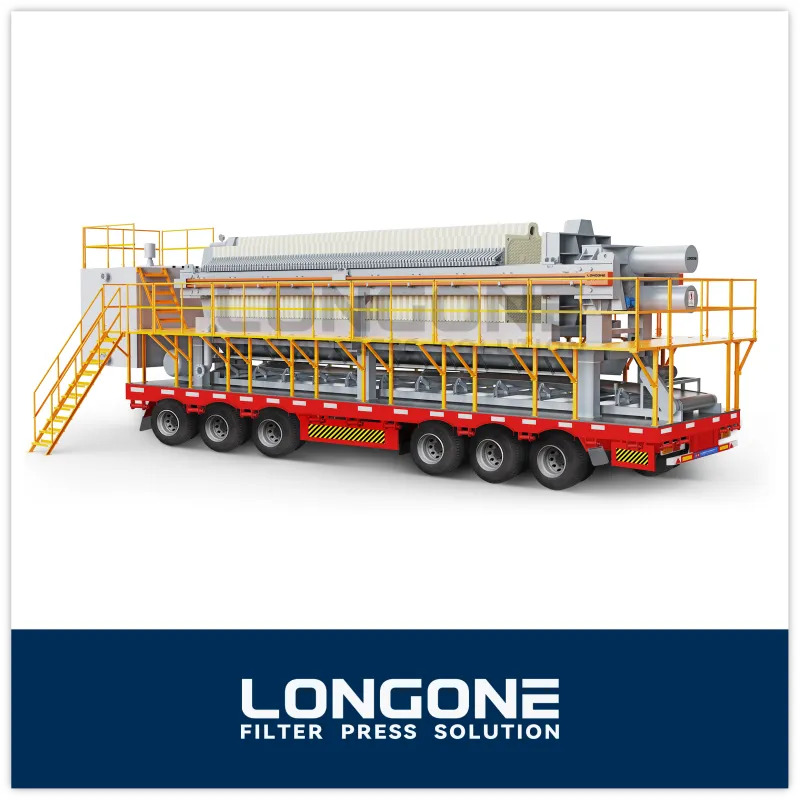
- Plant constraints: floor space, ceiling height, utilities, hazardous-area requirements and cake handling method.
With this data, a manufacturer can estimate the number of plates and the chamber volume. A small lab test or pilot run on a real sample gives the most reliable basis, because filtration behavior varies widely between chemical slurries, even ones that look similar on paper.
Then consider the options that matter in chemical duty:
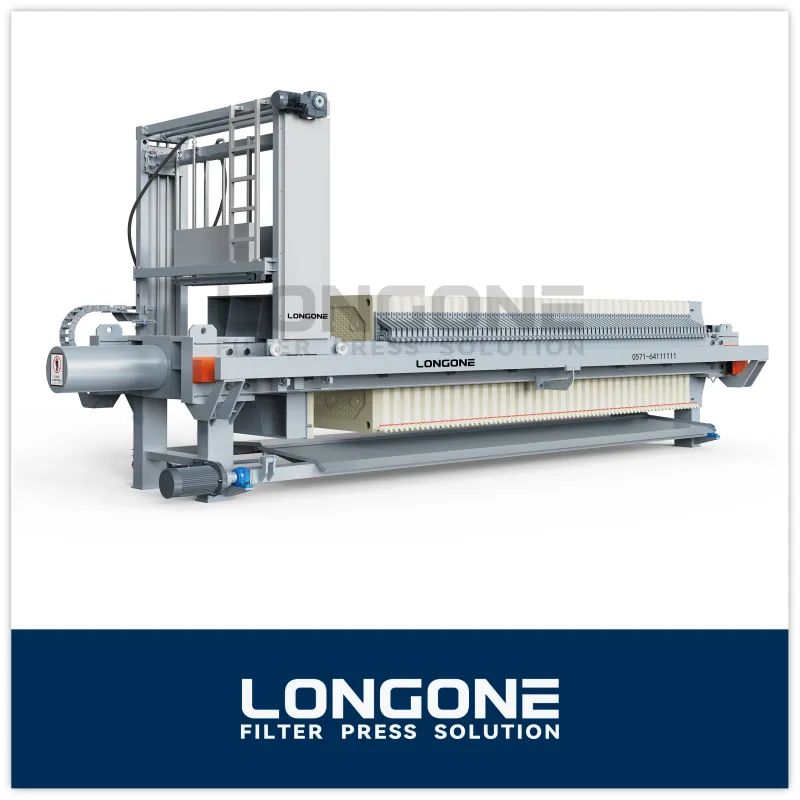
- Automatic plate shifting to reduce operator exposure during discharge.
- Cloth washing systems to extend cloth life and reduce manual cleaning.
- Drip trays and closed discharge to contain leakage and fumes.
- Frame design. A sturdy side-beam frame gives open access to plates and cloths, which simplifies inspection and cloth changes.
- Instrumentation and interlocks for pressure, hydraulic clamping and safety.
Specify these at the start. Retrofitting safety and automation later costs far more than including them in the original order.
Operating, Maintaining and Troubleshooting Filter Presses in Chemical Service
A well-chosen press still needs consistent operation. Most problems follow recognizable patterns.
Cloth blinding. Filtration slows and cake moisture rises over successive cycles. Common causes are fine particles lodged in the weave or chemical residue drying on the cloth. Regular cloth washing, and the right chemical or pressure-wash method for the residue, restores permeability. If blinding returns quickly, review the weave or the feed conditions.
Leakage between plates. Check sealing surfaces for damage or debris, confirm that cloths are installed flat without folds, and verify clamping pressure is correct. Uneven cake build-up can also push plates apart.
Cracked or deformed plates. Look for thermal shock, over-pressure, uneven feed or chemical attack. Inspect plates for stress marks during cloth changes and replace damaged ones before they fail in service.
Poor cake formation or wet cake. Possible causes include feed pressure that is too low, a cloth that is too open, insufficient filtration time or a change in slurry properties. Compare current conditions with the original test data.
Safety basics. Chemical filter presses involve pressurized slurry, hazardous liquids and, sometimes, fumes. Train operators on depressurization before opening the press, use proper protective equipment and keep leak containment in place. Record plate and cloth replacement dates so inspections follow a schedule, not a failure.
Good records are a simple tool. Tracking cycle time, cake moisture and cloth age lets you spot trends early and plan replacements during scheduled shutdowns.
Veelgestelde vragen
What is a filter press used for in the chemical industry?
A filter press separates solids from liquids in chemical processes. Typical uses include recovering solid products, collecting catalysts, clarifying liquors and dewatering sludge from wastewater treatment.
Which filter plate material is best for acidic slurries?
Reinforced polypropylene is the common choice for acidic and many alkaline slurries because of its broad chemical resistance. For hot slurries or aggressive solvents, a high-temperature PP grade or another suitable material should be confirmed against the actual process conditions.
How do I reduce cake moisture in a chemical filter press?
Options include a membrane press with a squeeze step, longer filtration time, higher feed pressure within the limits of the equipment, air blowing after filtration and optimizing the filter cloth. Pre-treatment such as flocculation or coagulation can also improve dewatering for some slurries.
Hoe vaak moet het filterdoek vervangen worden?
There is no fixed interval. Service life depends on slurry abrasiveness, chemistry, temperature, washing practice and cycle count. Track filtration time and cake release; when performance drops and cleaning no longer restores it, replace the cloth.
Chamber or membrane filter press: which one do I need?
Choose a chamber press for easy-filtering, crystalline or granular solids where cost and simplicity matter. Choose a membrane press when the cake is compressible or sticky, or when a drier cake is needed to cut downstream costs.
Conclusie
A filter press can run reliably in chemical service for many years, but only when the plates, cloth and sealing are matched to the slurry. Start with the chemistry and temperature, define the result you need, then size the machine. Treat plates and cloth as consumable engineering components, not generic spares.
If you are planning a new filter press or troubleshooting an existing one, send us your slurry data, such as pH, temperature, solids content and particle size. Our team can suggest a suitable plate and cloth combination and walk through the options with you. You can reach us through the contact page at longonefiltra.com.