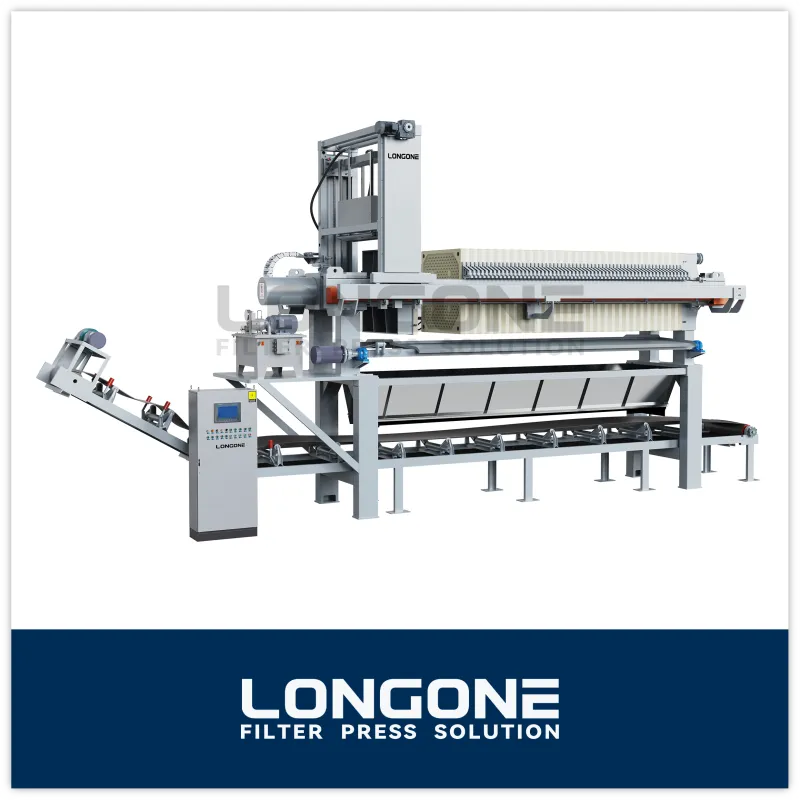
Choosing the right dewatering equipment can make or break the economics of a wastewater or industrial process. Two technologies dominate the conversation: the belt press vs filter press. Both remove water from sludge or slurry, but they do it in very different ways, and each comes with its own trade-offs in cake dryness, throughput, footprint, and operating cost.
This guide breaks down how each machine works, compares their performance side by side, and outlines the factors that should actually drive your decision — so you can match the equipment to your material rather than picking based on price or familiarity alone.
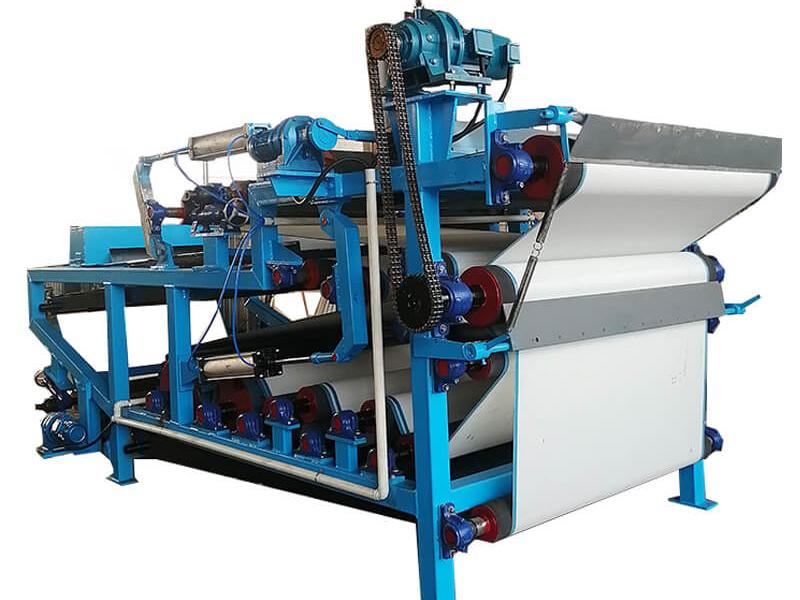
What Is a Belt Press?
A belt press, also called a belt filter press, is a continuous dewatering system built around a moving filter belt. The process typically runs through four stages:
- Chemical conditioning — Polymer is blended into the incoming sludge to bind fine particles into larger, more stable flocs.
- Gravity drainage — The conditioned sludge moves onto the belt, where free water drains away under gravity alone.
- Wedge compression — The sludge is drawn between two converging belts, where it is gradually squeezed to remove more water without breaking up the flocs.
- Roller pressing — A series of rollers apply increasing pressure and shear force, pressing out the remaining moisture before the dewatered cake is scraped off and discharged.
Because the belt moves continuously, the machine can accept a steady, uninterrupted feed. This makes it a natural fit for facilities that process large sludge volumes around the clock, such as municipal wastewater treatment plants.
Wat is een filterpers?
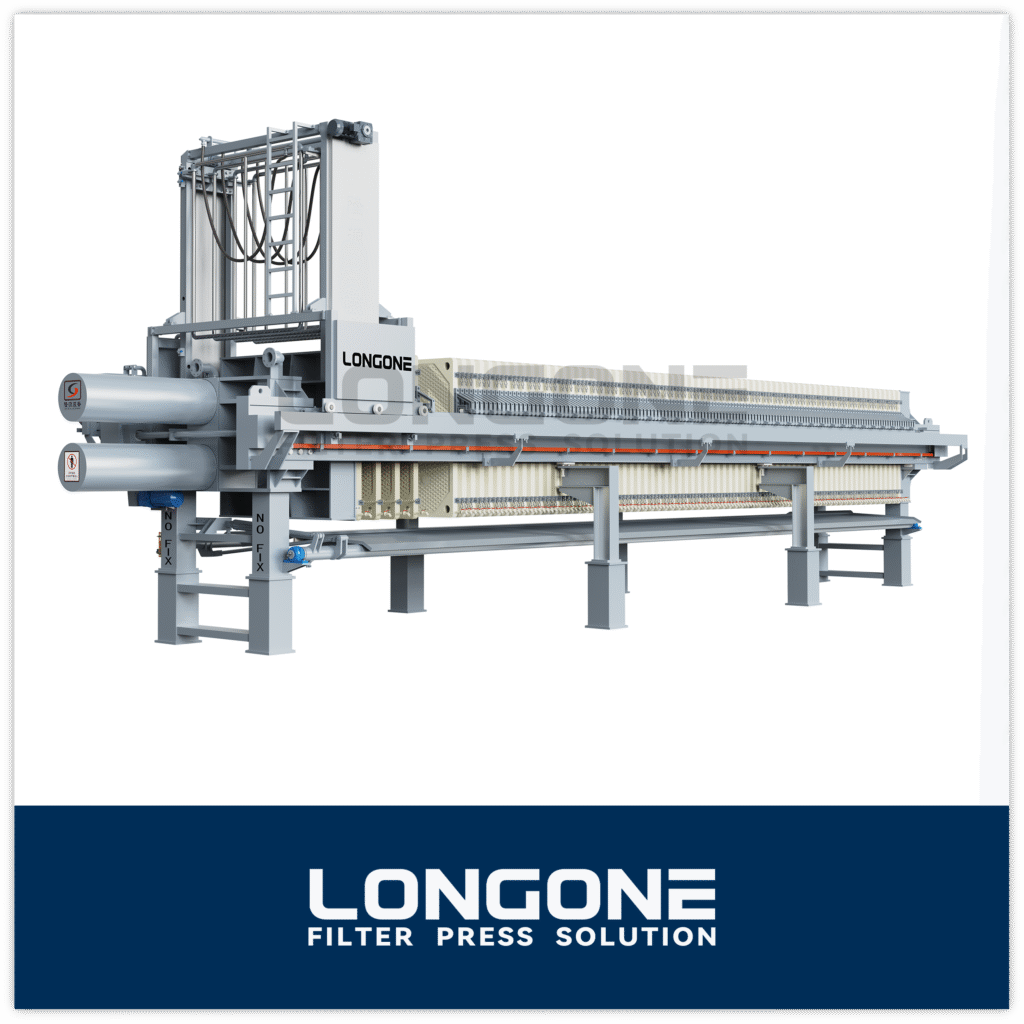
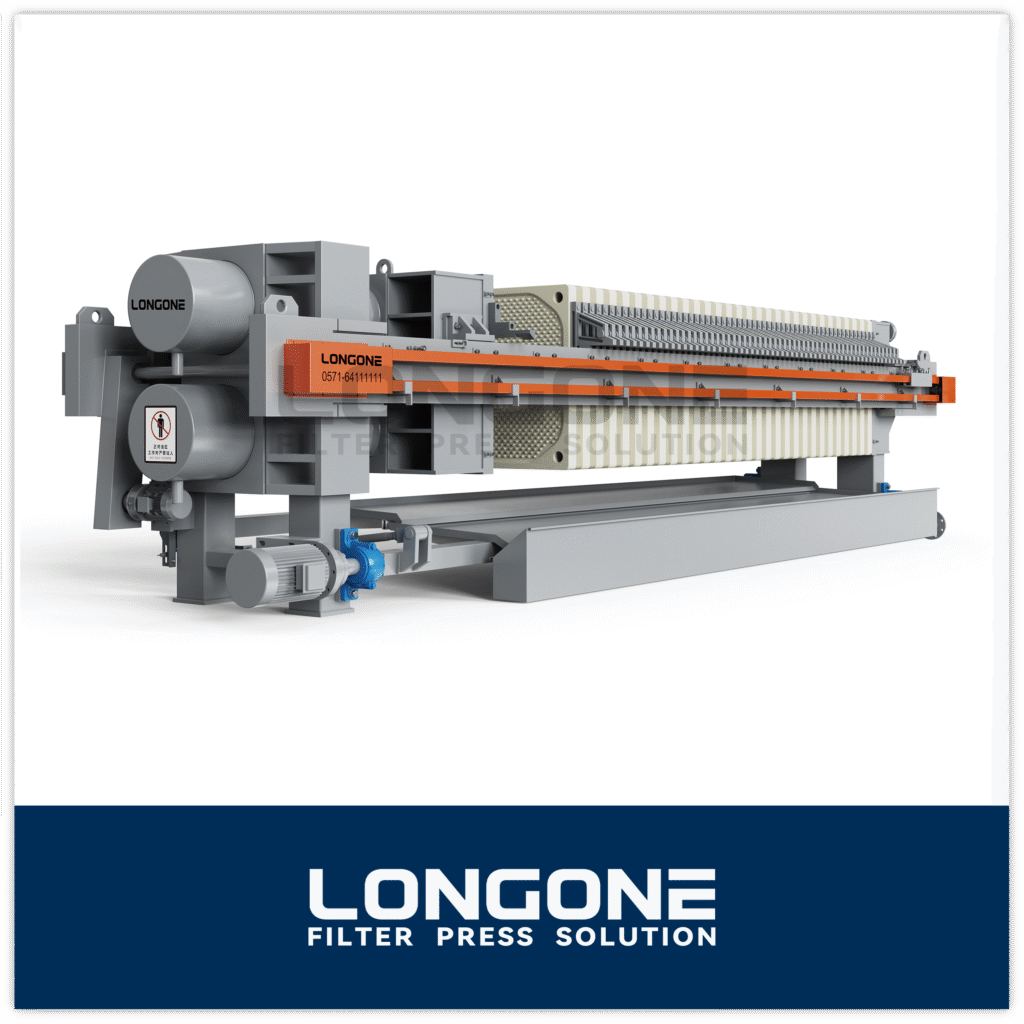
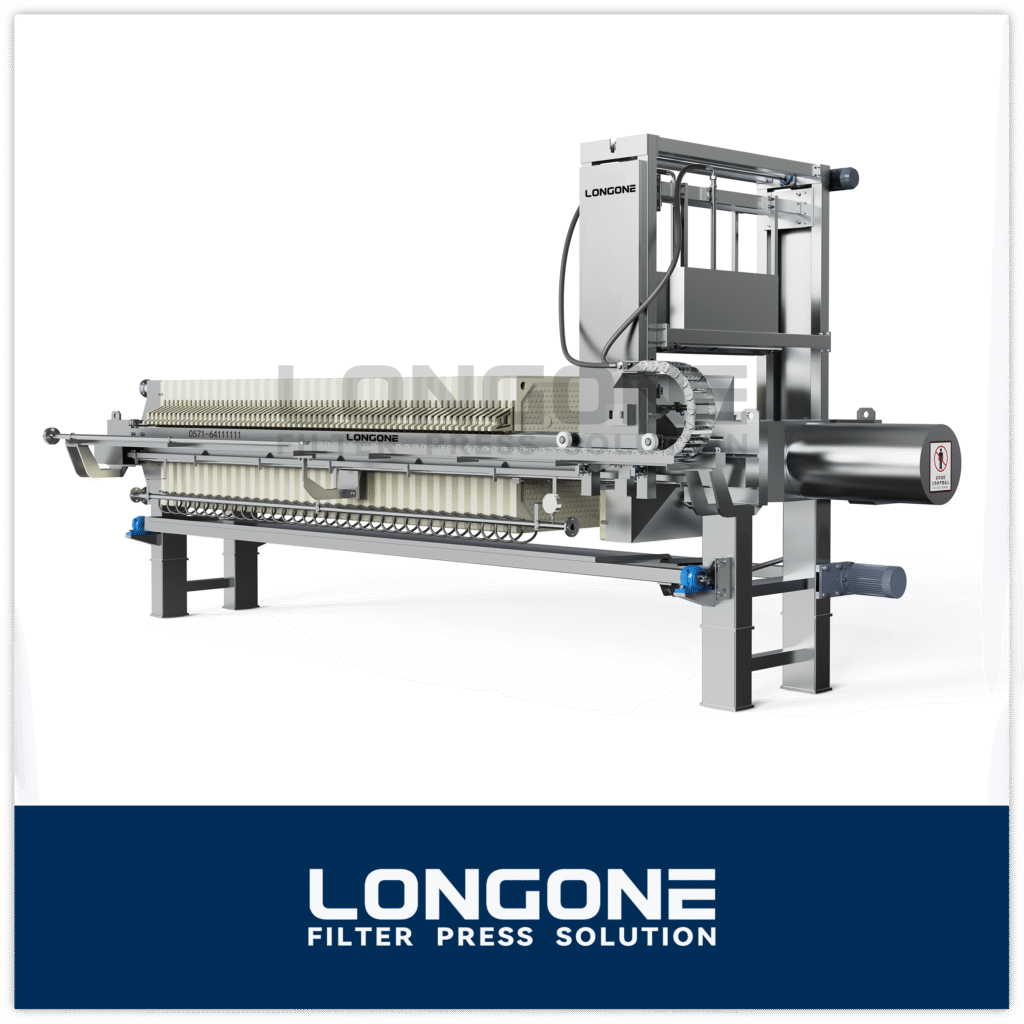
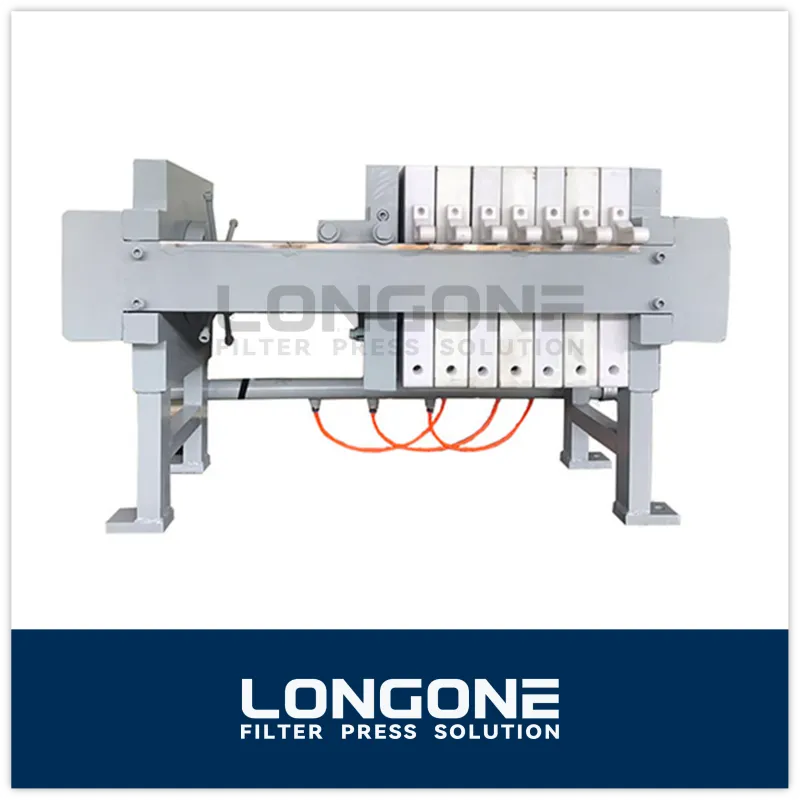
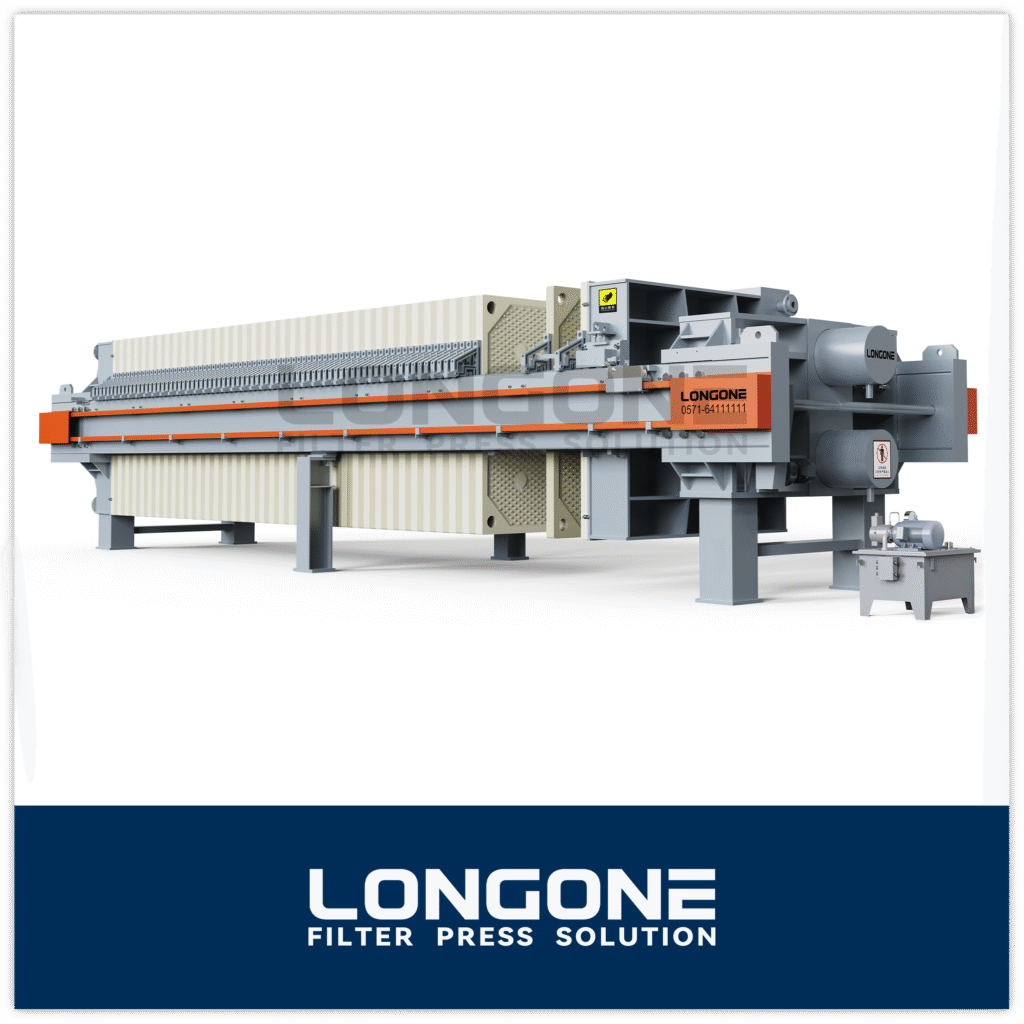
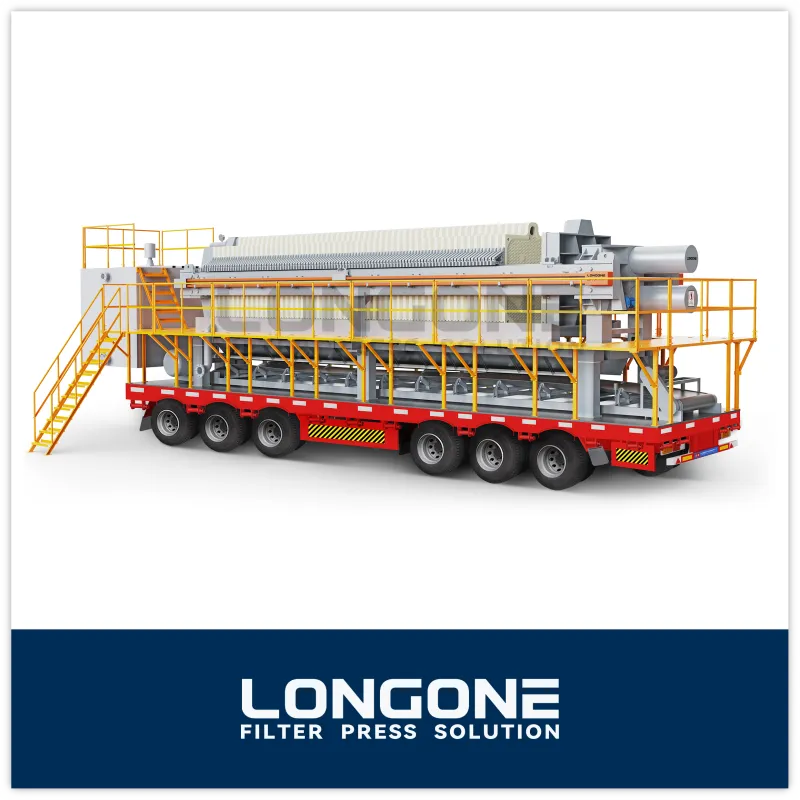
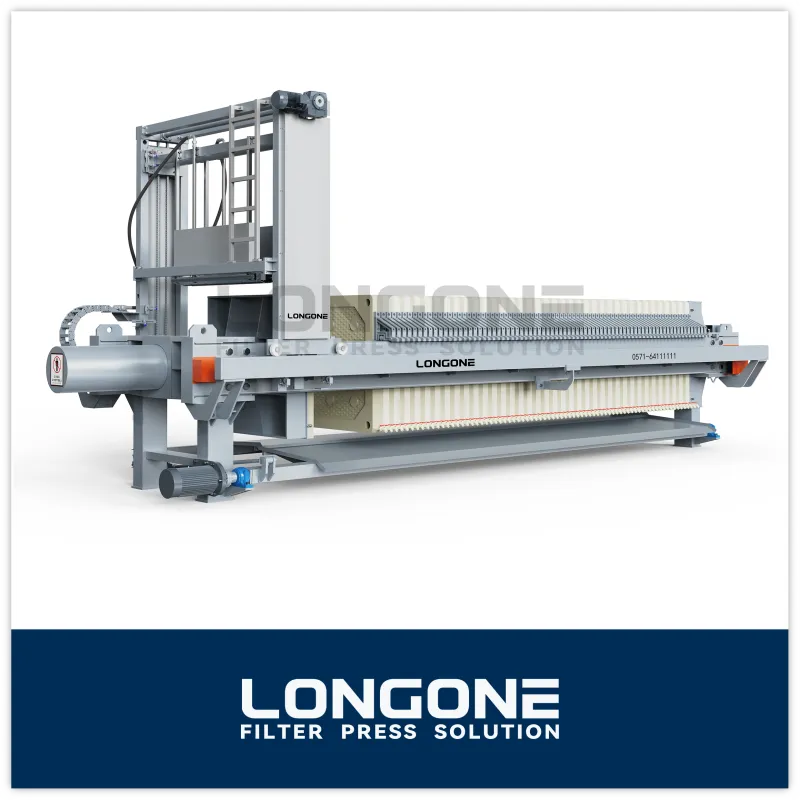
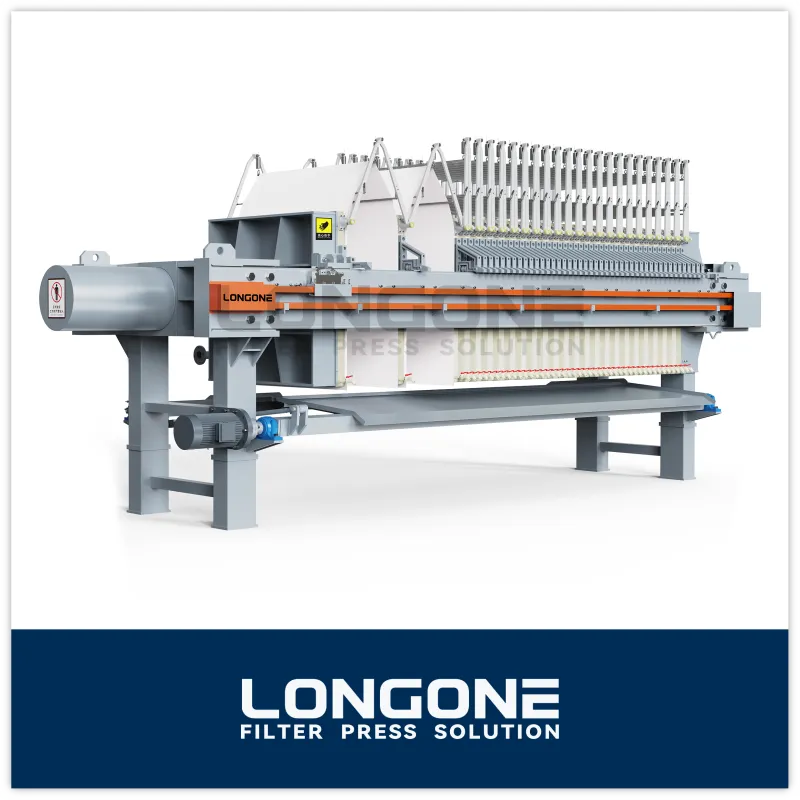
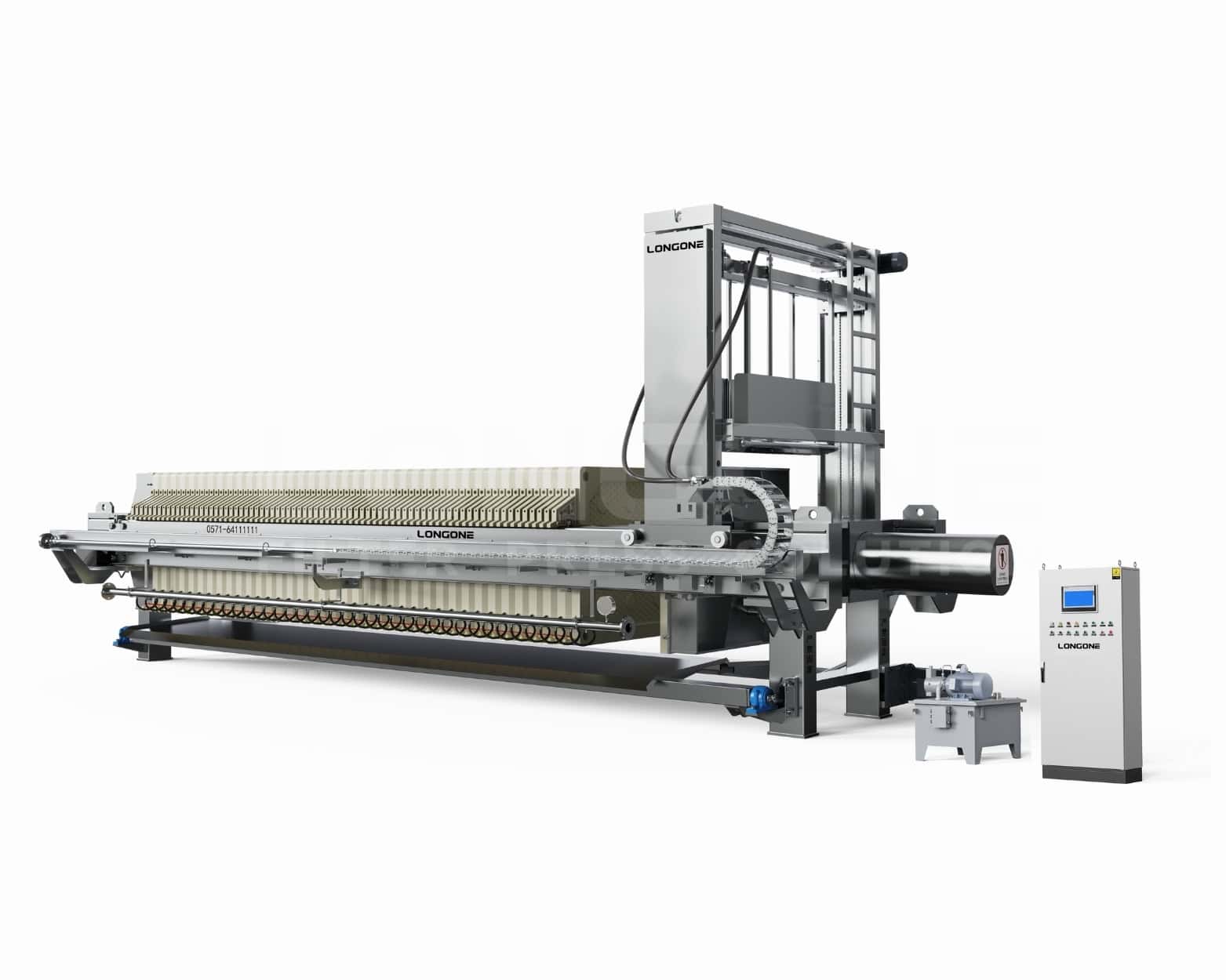
A filterpers — often built as a plate-and-frame or recessed-chamber design — dewaters sludge in batches rather than continuously. Its core components are a series of filter plates, each dressed with filter cloth, clamped together to form sealed filter chambers.
The cycle works like this:
- Feeding — Sludge is pumped under pressure into the closed chambers formed between the plates.
- Pressure filtration — As pressure builds, water is forced through the filter cloth and out through drainage channels in the plates, while solids are retained inside the chamber.
- Cake formation — Solids accumulate against the cloth, building a dense cake as filtration continues.
- Plate separation and cake discharge — Once the chambers are full and filtration slows, the press opens, the plates separate, and the cake drops or is removed manually or by an automatic shifting system.
Because pressure — rather than gravity or belt tension — does the work, a filter press can achieve much higher cake solids content than most continuous systems. The U.S. EPA has noted that recessed-plate filter presses are capable of producing very high cake solids concentrations, and that they see more use on industrial sludge than on municipal biosolids specifically.
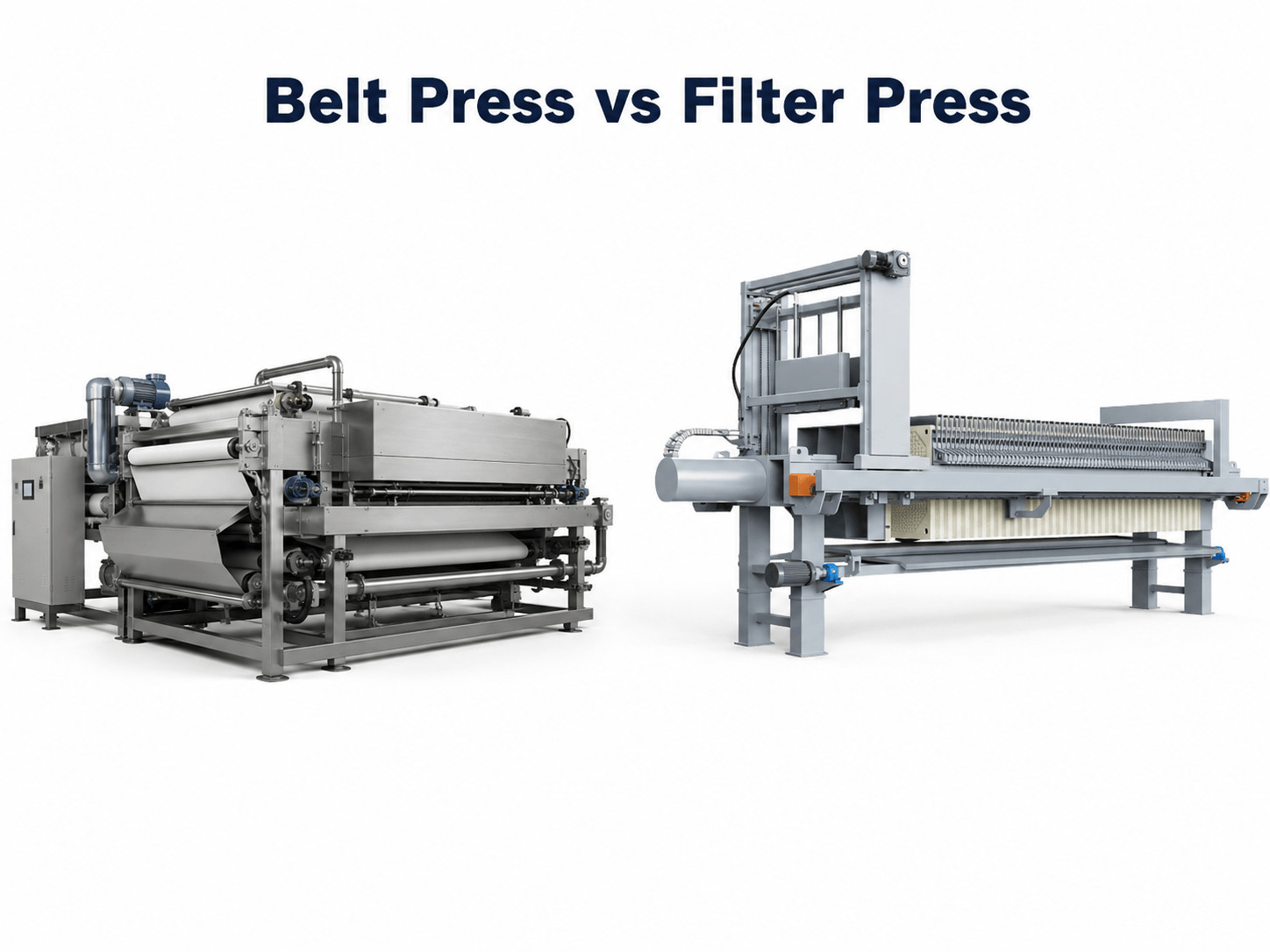
Belt Press vs Filter Press: Core Comparison
The single biggest distinction between these two technologies is how they run.
A belt press operates continuously. Sludge goes in one end and dewatered cake comes out the other, with no stoppage for loading or unloading. That makes it well suited to processes with a steady, predictable feed and a priority on throughput.
A filter press operates in batches. Each cycle fills, presses, and discharges before the next one begins. That stop-start rhythm reduces average throughput compared to a continuous system, but it buys something in return: precise, repeatable control over pressure and filtration time for every batch, and typically a drier, more consistent cake.
Neither approach is universally “better” — the right choice depends on whether your process values speed and continuous flow, or dryness and control.
| Selection Factor | Belt Press | Filterpers |
|---|---|---|
| Operating mode | Continuous | Batch |
| Dewatering mechanism | Gravity drainage + roller pressure | Pressure filtration in sealed chambers |
| Typical cake solids | Lower (wetter cake) | Higher (drier cake) |
| Throughput | High, steady | Moderate, cycle-dependent |
| Wash-water demand | Higher — belts need continuous cleaning | Lower |
| Polymer/chemical use | Usually significant | Depends on sludge type and conditioning |
| Footprint | Long, linear layout | More compact, but needs cake-discharge clearance |
| Automation | Typically high | Ranges from manual to fully automatic |
| Energy use per unit processed | Generally lower | Generally higher due to hydraulic pressure |
| Best suited to | Municipal sludge, high-volume continuous flow | Industrial slurries, mineral tailings, chemical sludge, difficult-to-dewater solids |
Actual performance always depends on the specific material. Particle size, solids concentration, compressibility, oil content, and chemical properties can shift these numbers significantly, which is why bench-scale or pilot testing on your actual sludge is the only reliable way to confirm expected results before committing to a full-scale system.
Advantages and Limitations of Each System
Belt press advantages
- Continuous operation supports high, steady throughput
- Relatively compact and straightforward to install
- Lower energy consumption per unit of material processed
- Well proven in large-scale municipal applications
Belt press limitations
- Filter belts require constant washing to prevent blinding, generating a wash-water stream that must be handled
- Cake solids are typically lower than a filter press can achieve
- Performance is sensitive to fluctuations in feed concentration or sludge characteristics
- Ongoing polymer consumption adds to operating cost
Filter press advantages
- Achieves the highest cake dryness of common mechanical dewatering methods
- Produces clear filtrate, useful where filtrate quality matters
- Handles high-solids, high-viscosity, or chemically aggressive slurries that would overwhelm a continuous system
- Precise, repeatable control over pressure and cycle time
- Can be built and lined for high-temperature or corrosive service
Filter press limitations
- Batch cycling means lower average throughput than a continuous system
- Requires supporting equipment — feed pump, sludge holding tank, and often a cake-handling system
- Sticky or highly compressible sludges can cause slow filtration or cloth blinding without proper conditioning
- Cloth and plate maintenance is part of routine operation
Where Each System Is Typically Used
Belt press applications Municipal wastewater treatment plants rely heavily on belt presses because of their ability to run continuously against a steady sludge feed. They’re also common in food processing and pulp and paper operations, where consistent throughput matters more than maximum cake dryness.
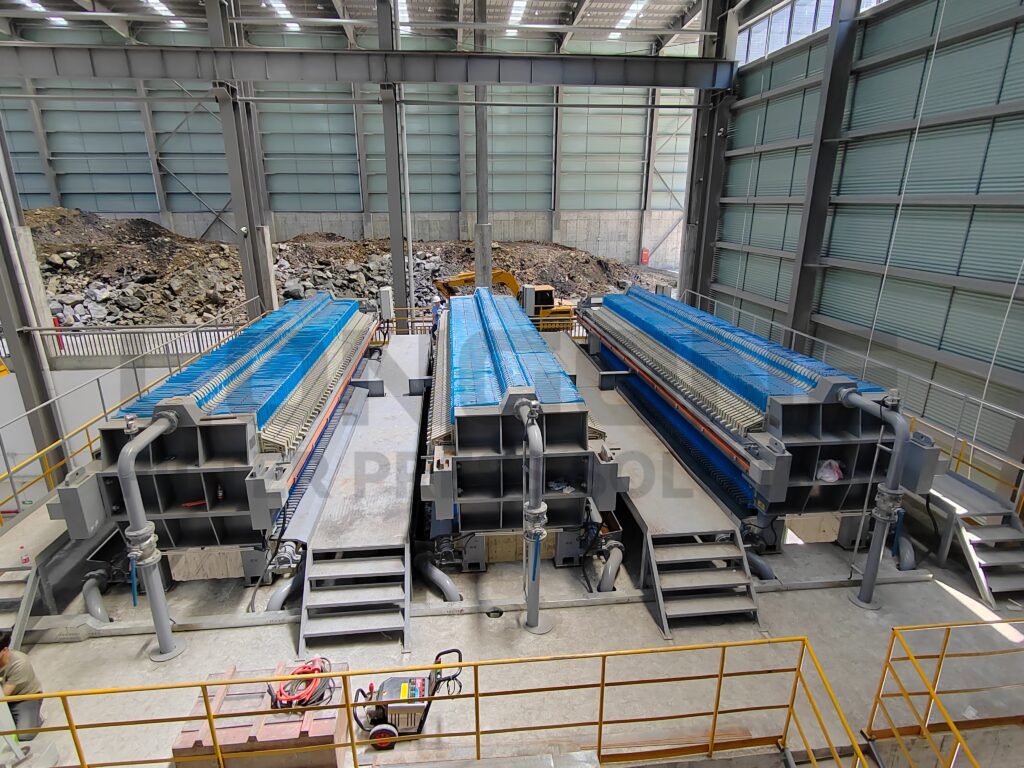
Filter press applications Filter presses tend to dominate wherever cake dryness, filtrate clarity, or handling of difficult material is the priority. That includes:
- Mining and mineral processing — dewatering tailings and concentrates to reduce transport and disposal volume
- Chemical manufacturing — separating crystals, catalysts, and process solids, often from corrosive or high-temperature streams
- Pharmaceutical production — precise solid-liquid separation for crystal recovery and process wastewater
- Industrial and specialty wastewater — sludges with high solids loading or fine particles that don’t dewater well on a continuous belt
How to Choose: Match the Equipment to the Material
Before comparing brochures or prices, the sludge or slurry itself should drive the decision. Key factors to evaluate include:
- Particle size and compressibility — Very fine or highly compressible solids can blind a filter belt quickly but may be well suited to pressure filtration with the right cloth selection.
- Solids concentration — Dilute streams often favor a continuous system; thick, high-solids slurries typically dewater more efficiently under pressure.
- Chemical properties — Corrosive or high-temperature material may call for specific plate materials and construction on a filter press.
- Target cake dryness — If minimizing disposal volume or transport cost is the priority, the higher cake solids of a filter press usually wins out.
- Available footprint — A belt press needs a long, linear layout; a filter press needs a more compact footprint but requires clearance for plate separation and cake discharge.
- Budget — capital vs operating cost — A belt press often carries lower capital cost and energy use per ton processed; a filter press often reduces disposal cost through drier cake, offsetting higher energy and cycle-related labor.
None of these factors should be estimated from general experience alone. Bench-scale filtration testing on an actual sample of your sludge is the most reliable way to confirm cake solids, cycle time, and equipment sizing before specifying a full system.
Final Thoughts
Belt presses and filter presses solve the same basic problem — removing water from solids — through fundamentally different mechanisms, and each excels under different conditions. A belt press earns its place wherever continuous, high-volume dewatering is the priority, particularly in municipal wastewater treatment. A filter press earns its place wherever cake dryness, filtrate clarity, or difficult industrial slurries are the deciding factor, from mining and chemical processing to pharmaceutical production.
The right choice ultimately comes down to your sludge characteristics, your throughput requirements, and your disposal or process economics — not a generic ranking of one technology over the other.
LONGONE supplies both complete filter press systems and filter press plates for a wide range of industrial sludge dewatering applications. If you’re weighing belt press versus filter press for your process, or you already know a filter press is the right fit and need equipment or replacement plates sized to your material, our team can help you evaluate your sludge and specify the right configuration.