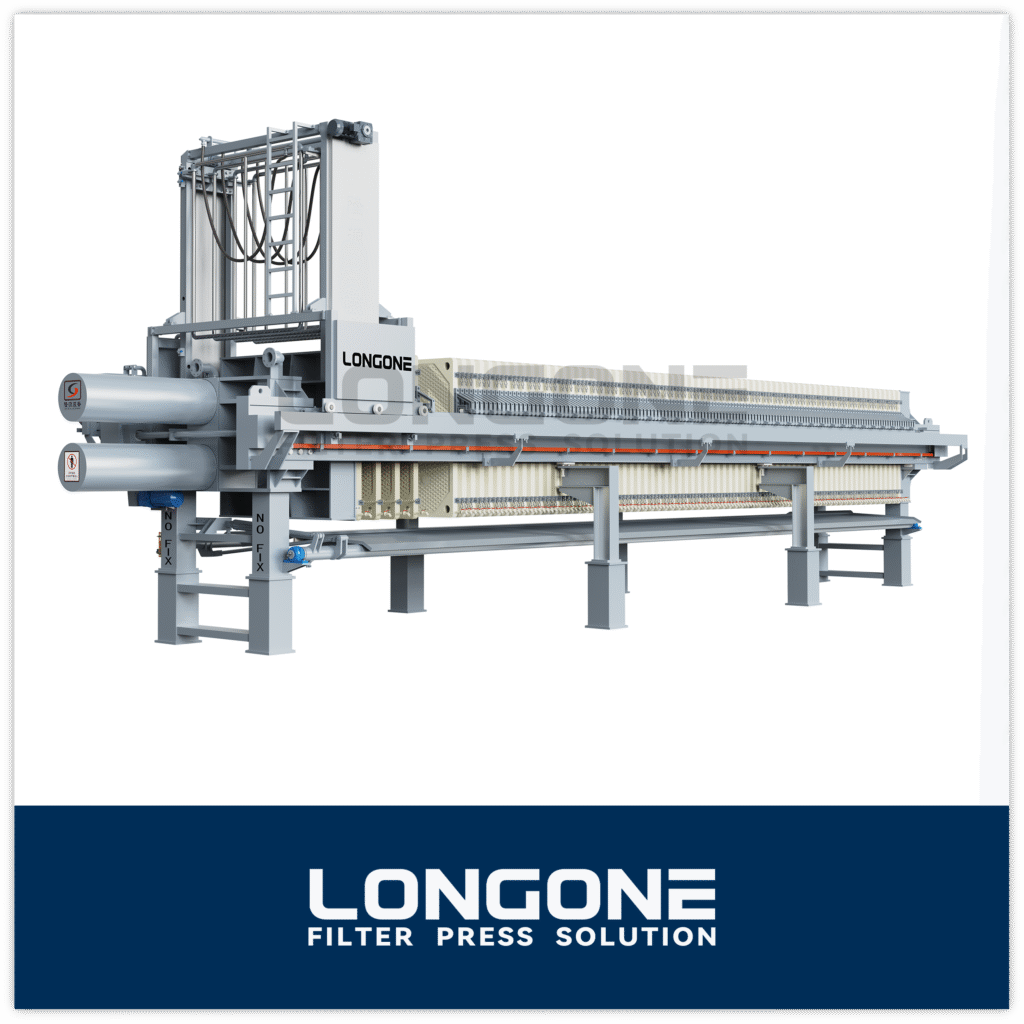
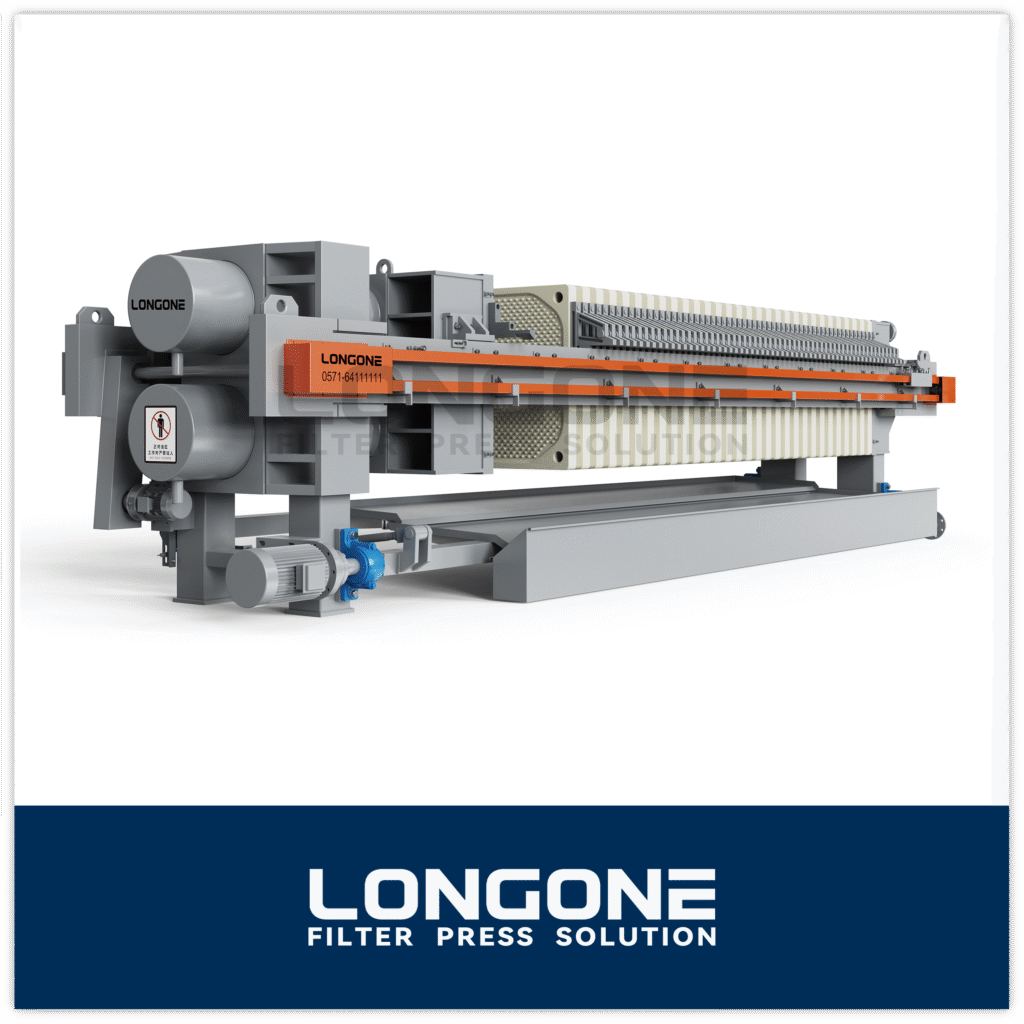
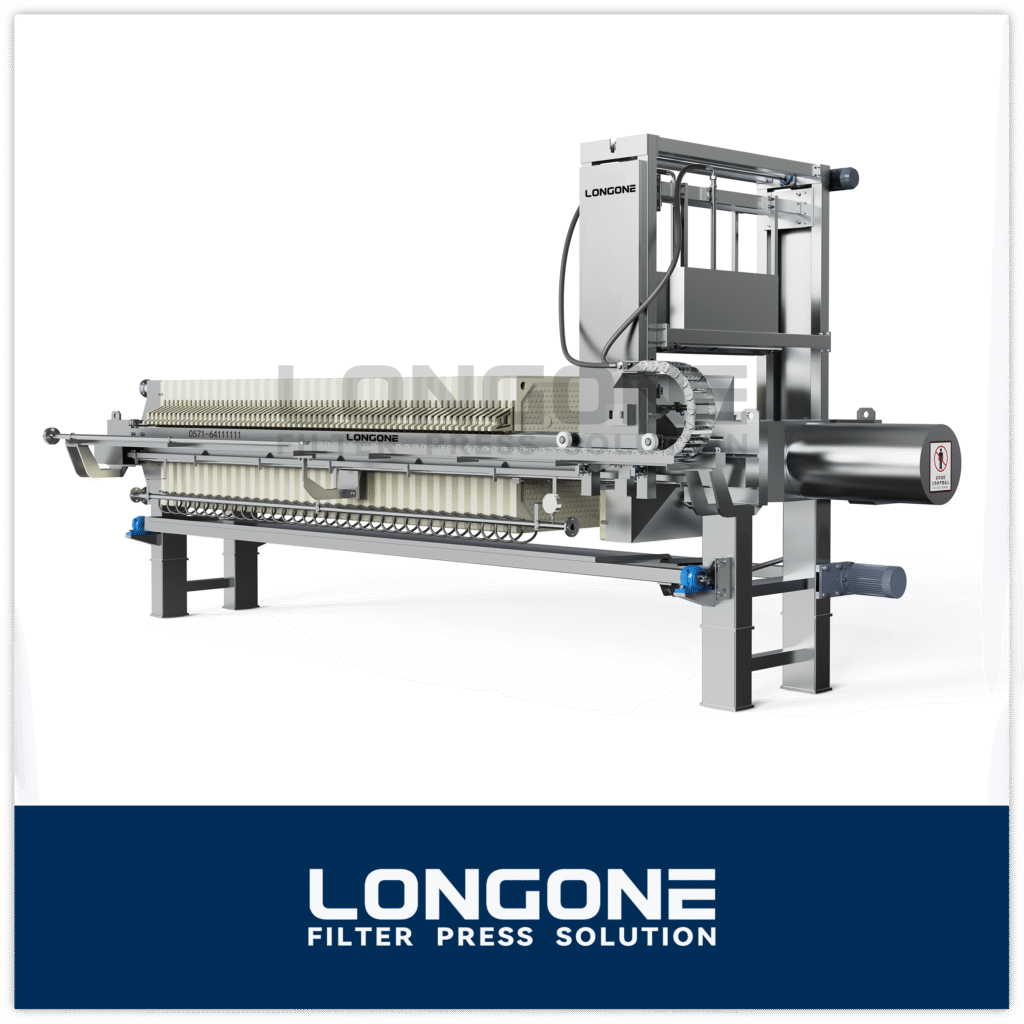
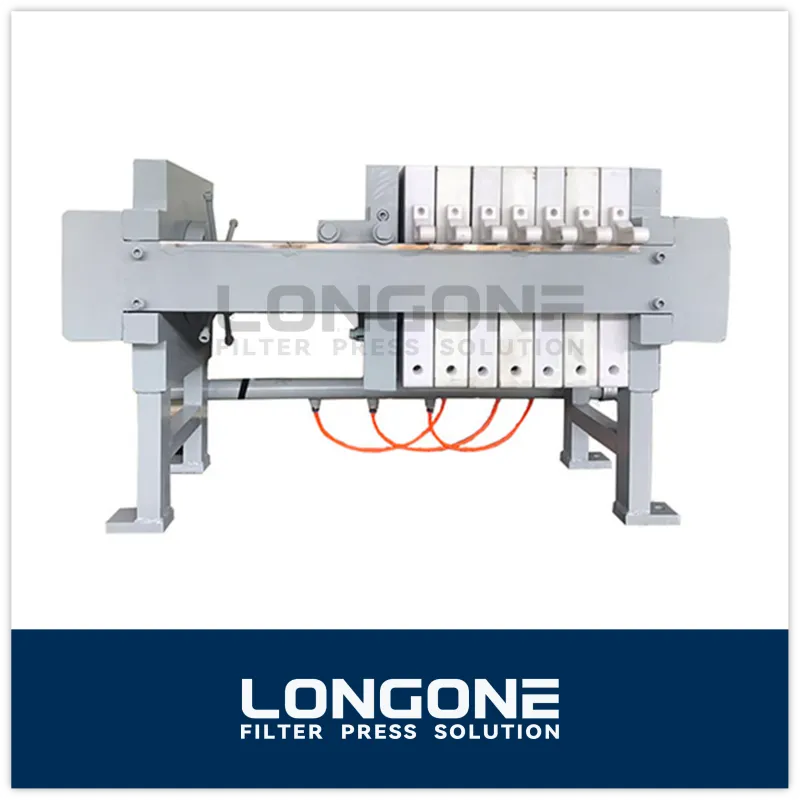
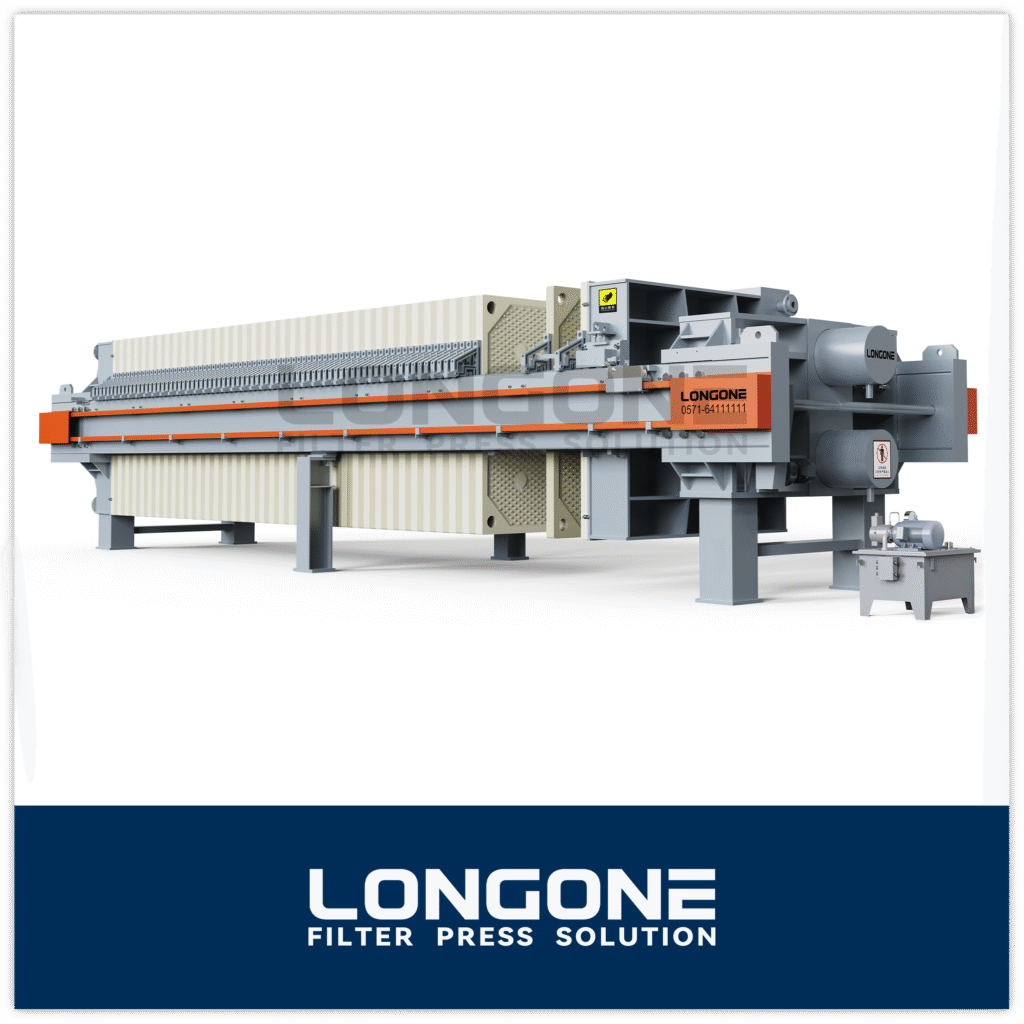
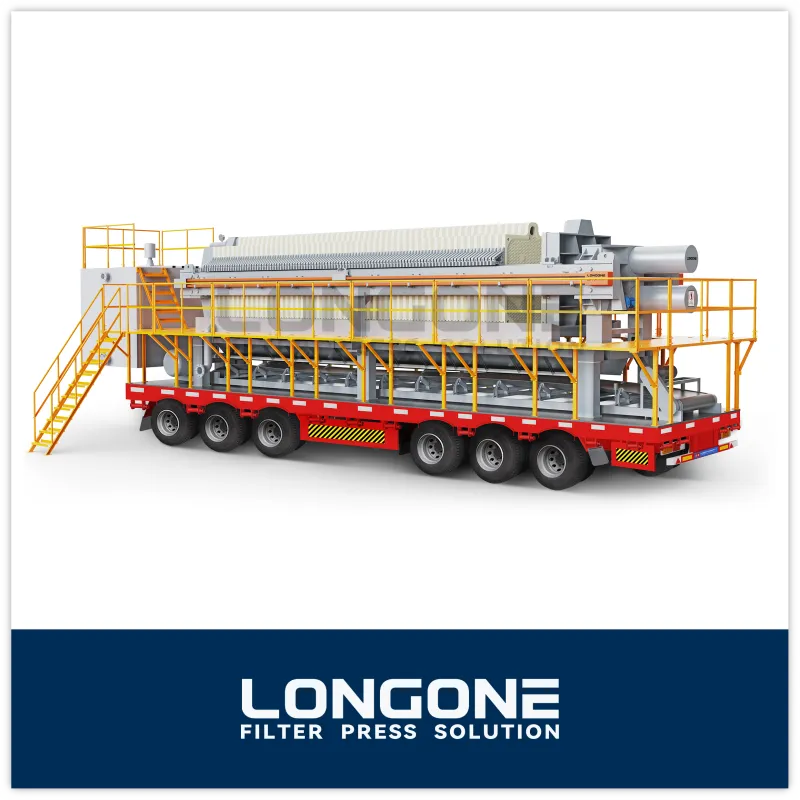
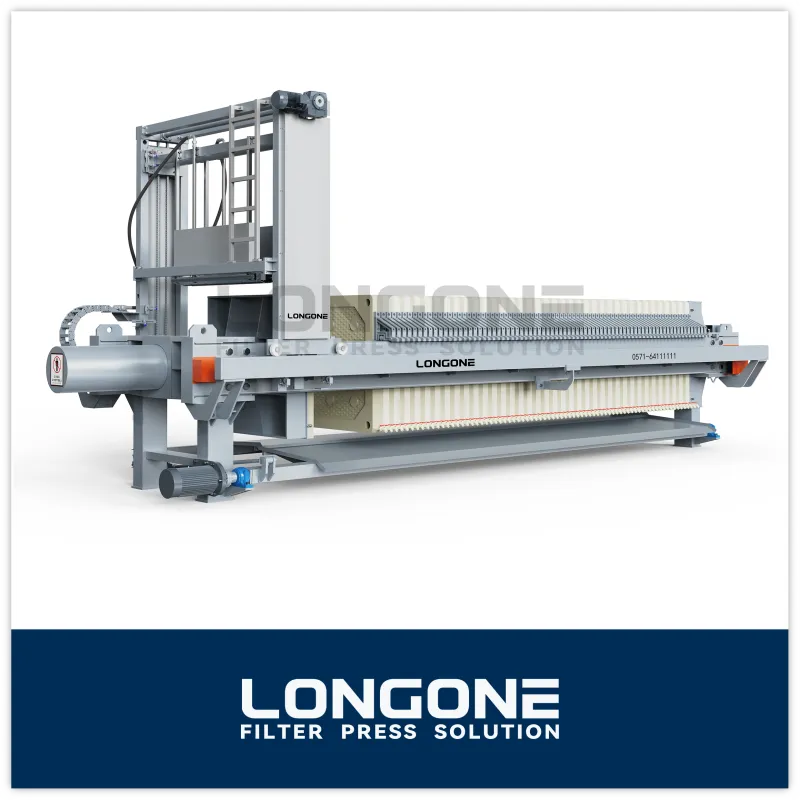
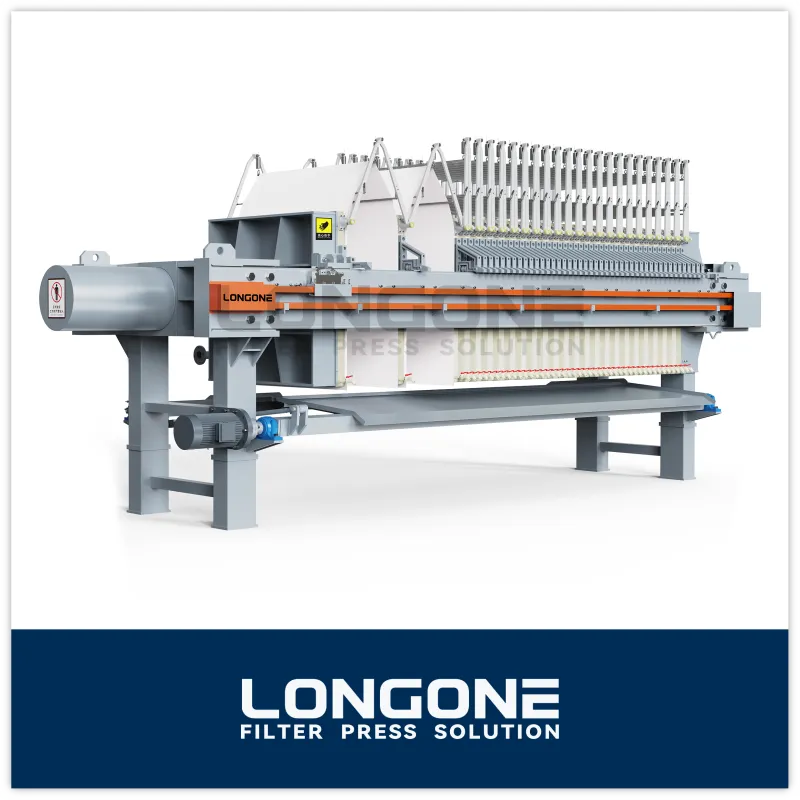
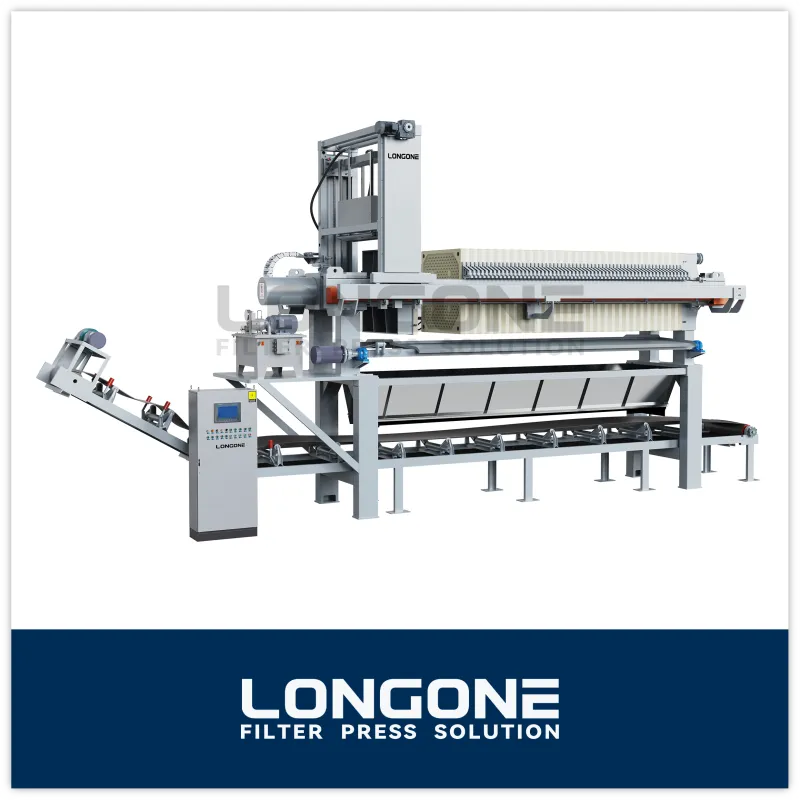
Struggling with high volumes of wet sludge is a major operational and financial burden for many industrial plants. The costs of transport and disposal are constantly rising, and environmental regulations are only getting stricter. A reliable filter press for sludge dewatering offers a powerful solution, transforming this challenging waste stream into a manageable, dry solid and recovering valuable water in the process.
A filter press for sludge dewatering works by pumping sludge into a series of sealed chambers lined with filter cloth. Under high pressure, the liquid (filtrate) is forced through the cloth, leaving the solid particles behind to form a compressed, dry filter cake. The press then opens, and the dewatered cakes are discharged for disposal or reuse.
How the cake forms, the type of plates you choose, and how you size the system all have a massive impact on your operational efficiency and final cake dryness. Let’s dive deeper into the process.
What Is Sludge Dewatering?
Does the term “sludge dewatering” seem overly technical? It’s a critical process for any facility producing liquid waste, but the concept is straightforward. It’s the process of removing as much water as possible from a sludge or slurry to reduce its total volume and weight.
Sludge dewatering is the practice of separating the liquid and solid components of a waste slurry. The primary goals are to minimize waste disposal volume, recover water for reuse, and produce a dry, stackable solid material (filter cake) that is easier and cheaper to handle and transport.
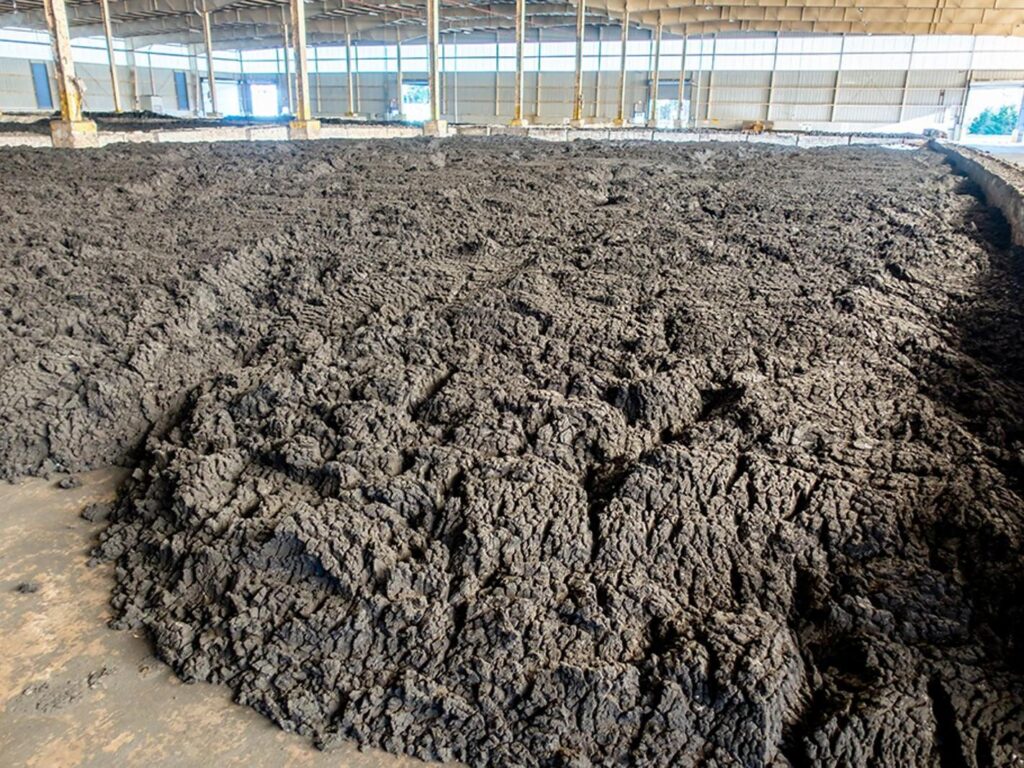
At its core, sludge dewatering is a simple economic and environmental decision. Raw, unprocessed sludge is often more than 95% water. Imagine paying to transport and dispose of all that water. It’s like paying to ship water in very expensive, dirty containers. By removing the liquid, you dramatically reduce the volume and weight of the final waste product.
Consider a facility that generates 100 tons of sludge per day at 2% solids. This means you have 2 tons of solids and 98 tons of water. If you can dewater this sludge to a cake with 40% solids, the final weight is reduced to just 5 tons (2 tons of solids and 3 tons of water). You’ve eliminated 95 tons of waste that you no longer have to pay to transport or dispose of.
The benefits are clear:
- Reduced Disposal Costs: Landfill and disposal fees are typically based on weight or volume. Drier cake means lower costs.
- Lower Transportation Costs: Fewer truckloads are needed to haul away a smaller volume of solid waste.
- Water Recovery: The separated liquid, known as filtrate, is often clean enough to be reused elsewhere in the plant, reducing overall water consumption.
- Regulatory Compliance: Many jurisdictions have regulations on the moisture content of waste accepted at landfills. Dewatering ensures you meet these standards.
- Resource Recovery: In some applications, the dewatered cake itself is a valuable byproduct, such as a biofuel or a soil amendment.
How Does a Filter Press for Sludge Dewatering Work: From Slurry Feed to Dry Cake?
The filter press operates in a repeatable batch cycle. First, a hydraulic ram closes and seals the stack of filter plates. Next, a feed pump fills the empty chambers between the plates with sludge. The pump pressure forces the liquid through the filter cloths, while the solids are trapped inside, forming a cake. Finally, the press opens and the dry cakes are discharged.
The magic of the process happens during the filtration stage. It’s not just about straining particles. Based on my experience engineering these systems, the formation of the filter cake is a sophisticated, two-stage mechanism.
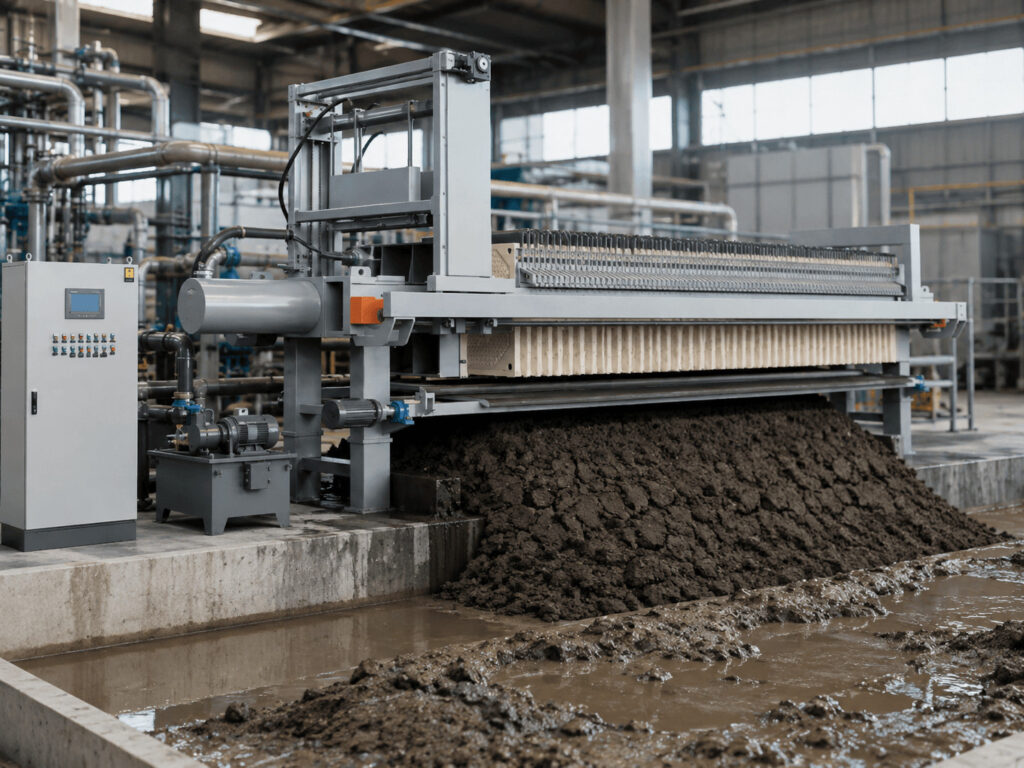
The Filtration Cycle Explained
- Closing & Sealing: The cycle begins with the hydraulic system pushing the moving head against the plate pack. This compresses the sealing surfaces of the filter plates, creating a leak-proof unit capable of withstanding high internal pressures.
- Relleno: A high-pressure feed pump, often a progressive cavity or air-operated diaphragm (AODD) pump, begins moving sludge from a holding tank into the press. The sludge flows through a central feed port and distributes into the empty chambers between each pair of plates.
- Filtration & Cake Formation: This is the most critical stage. As the chambers fill, pressure builds.
- Stage 1: Bridging: Initially, the liquid passes through the filter cloth, but the larger solid particles are caught on the cloth’s surface. These particles form a “bridge” across the pores of the fabric.
- Stage 2: Depth Filtration: This initial bridge layer becomes the true filter medium. It is far more effective at capturing finer particles than the cloth alone. As more slurry is pumped in, the cake builds in thickness from the cloth inward, forcing more and more water out until the chamber is completely full of compacted solids.
- Descarga de torta: Once the chamber is full and the flow of filtrate slows to a minimum, the feed pump stops. The hydraulic system retracts, opening the press. The individual filter plates are then separated (manually or automatically), allowing the now-dry, solid filter cakes to fall from the chambers onto a conveyor or into a hopper below.
Optional Post-Filtration Steps
For applications requiring even higher purity or dryness, two additional steps can be added before the cake discharge.
- Cake Washing: After the cake is formed, a wash liquid (usually water) can be pumped into the press through a separate port. It flows through the cake, displacing the remaining mother liquor and washing out impurities. This is common in chemical and pharmaceutical applications where product purity is essential.
- Air Blowing / Cake Drying: To achieve maximum dryness, compressed air can be blown through the cake. This physically forces out additional trapped moisture, often increasing cake solids by several percentage points.
Chamber Plate vs. Membrane Filter Press: Which Gets Sludge Drier?
When you’re specifying a filter press, the single most important design decision that impacts cake dryness is the choice between chamber and membrane filter plates. Both are effective, but they achieve dewatering in fundamentally different ways.
A membrane filter press will produce a significantly drier cake in a shorter cycle time compared to a standard chamber filter press. While chamber presses rely solely on pump pressure, membrane presses add a mechanical squeeze at the end of the cycle, physically wringing out additional moisture from the cake.
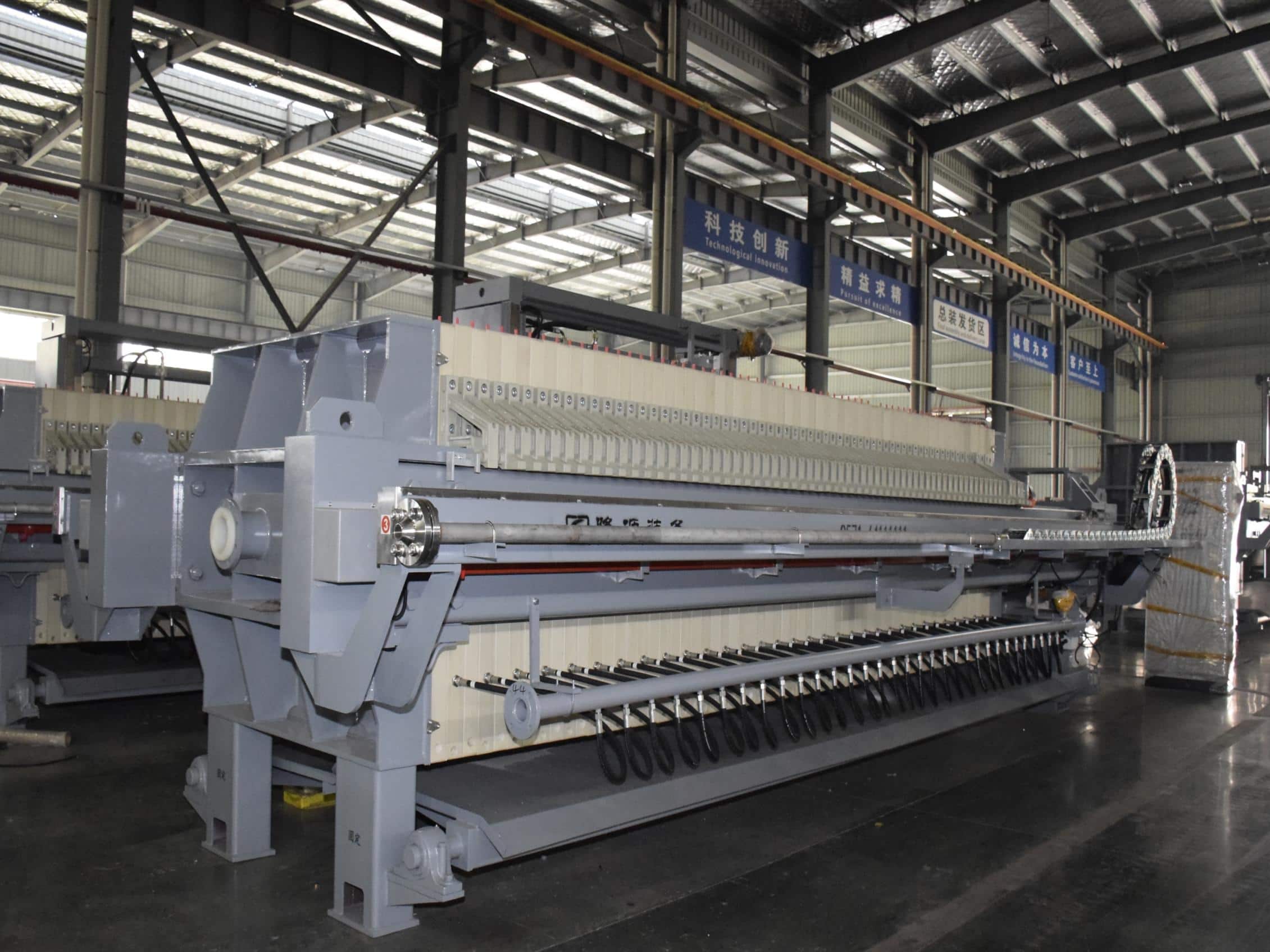
Chamber vs. Membrane Press Comparison
| Feature | Prensa de filtro de cámara | Prensa de filtro de membrana |
|---|---|---|
| Dewatering Method | Feed Pump Pressure Only | Feed Pump Pressure + Membrane Squeeze |
| Typical Cake Dryness | Good | Excellent (Highest Possible) |
| Tiempo de ciclo | Longer, Variable | Shorter, More Consistent |
| Initial Cost | Lower | Higher |
| System Complexity | Simpler | More Complex (requires squeeze system) |
| Best Use Case | Lower volume applications, sludge that dewaters easily | High volume, difficult sludge, when maximum cake dryness is required |
How to Size a Filter Press for Your Sludge Volume (Worked Example)?
Purchasing a filter press is a major capital expenditure. Buying one that’s too small will create a production bottleneck, while an oversized one is a waste of money and valuable floor space. How do you ensure you get the size just right?
Sizing a filter press requires calculating the total volume of dewatered cake you need to process per day. This calculation is based on your daily sludge flow rate, its solids concentration, and the target dryness of the final cake. This determines the required chamber volume of the press.
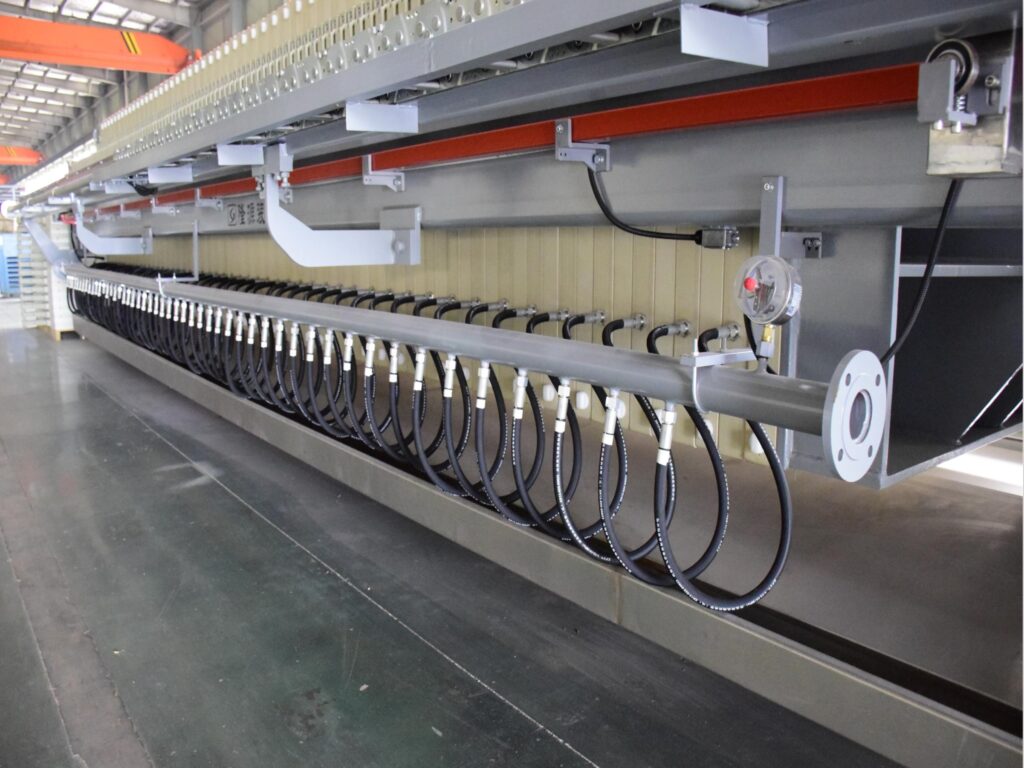
Let’s walk through a simplified example to see how our engineers approach this. Remember, this is for illustrative purposes. For an actual project, you must consult with a filtration specialist to verify all parameters.
Key Sizing Parameters
Before we start, we need to gather some data:
- Sludge Production Rate (V): Volume of sludge produced per day (e.g., m³/day).
- Sludge Solids Content (S_in): The percentage of solids in the incoming sludge (e.g., 2%).
- Target Cake Solids Content (S_out): The desired percentage of solids in the final cake (e.g., 35%).
- Operating Hours (T): How many hours per day the press will run (e.g., 8 hours).
- Cake Density (ρ): The density of the final dewatered cake. A typical value is ~1,200 kg/m³.
- Cycles per Shift: How many filtration cycles you aim to complete in the operating time. Let’s aim for 4 cycles in an 8-hour shift (i.e., one cycle every 2 hours).
Sizing Calculation: A Worked Example
Scenario: A municipal wastewater plant needs a new filter press for sludge dewatering.
- V: 50 m³/day
- S_in: 2% (or 0.02)
- S_out: 35% (or 0.35)
- T: 8 hours/day
- Cycles: 4
Step 1: Calculate the Mass of Dry Solids per Day
This is the amount of solid material we need to capture.
- Mass of Dry Solids = V × S_in × Density of Water
- Mass of Dry Solids = 50 m³/day × 0.02 × 1000 kg/m³ = 1,000 kg/day
Step 2: Calculate the Total Mass of Wet Cake per Day
This is the final weight of the dewatered cake. The 1,000 kg of dry solids will make up 35% of this total mass.
- Mass of Wet Cake = Mass of Dry Solids / S_out
- Mass of Wet Cake = 1,000 kg / 0.35 = ~2,857 kg/day
Step 3: Calculate the Total Volume of Wet Cake per Day
Now we convert that mass to a volume using the cake density.
- Volume of Wet Cake = Mass of Wet Cake / Cake Density (ρ)
- Volume of Wet Cake = 2,857 kg/day / 1,200 kg/m³ = ~2.38 m³/day
Step 4: Calculate the Required Press Volume per Cycle
This is the final answer. We need to process this total daily volume over our planned number of cycles.
- Required Press Volume = Total Cake Volume / Number of Cycles
- Required Press Volume = 2.38 m³ / 4 cycles = 0.595 m³
Conclusion: The facility needs a filter press with a total chamber volume of approximately 0.6 m³ (or 600 Liters) to meet its operational goals.
Key Factors When Selecting a Filter Press for Sludge Dewatering
Beyond fundamental sizing, a procurement team or lead engineer must scrutinize several other technical specifications. The right combination of features ensures the equipment will perform reliably and efficiently for your specific sludge.
When selecting a filter press for sludge dewatering, the most critical factors to evaluate are the filter plate technology (chamber vs. membrane), the filter cloth material and weave, the required level of automation, and the materials of construction for the frame and components.
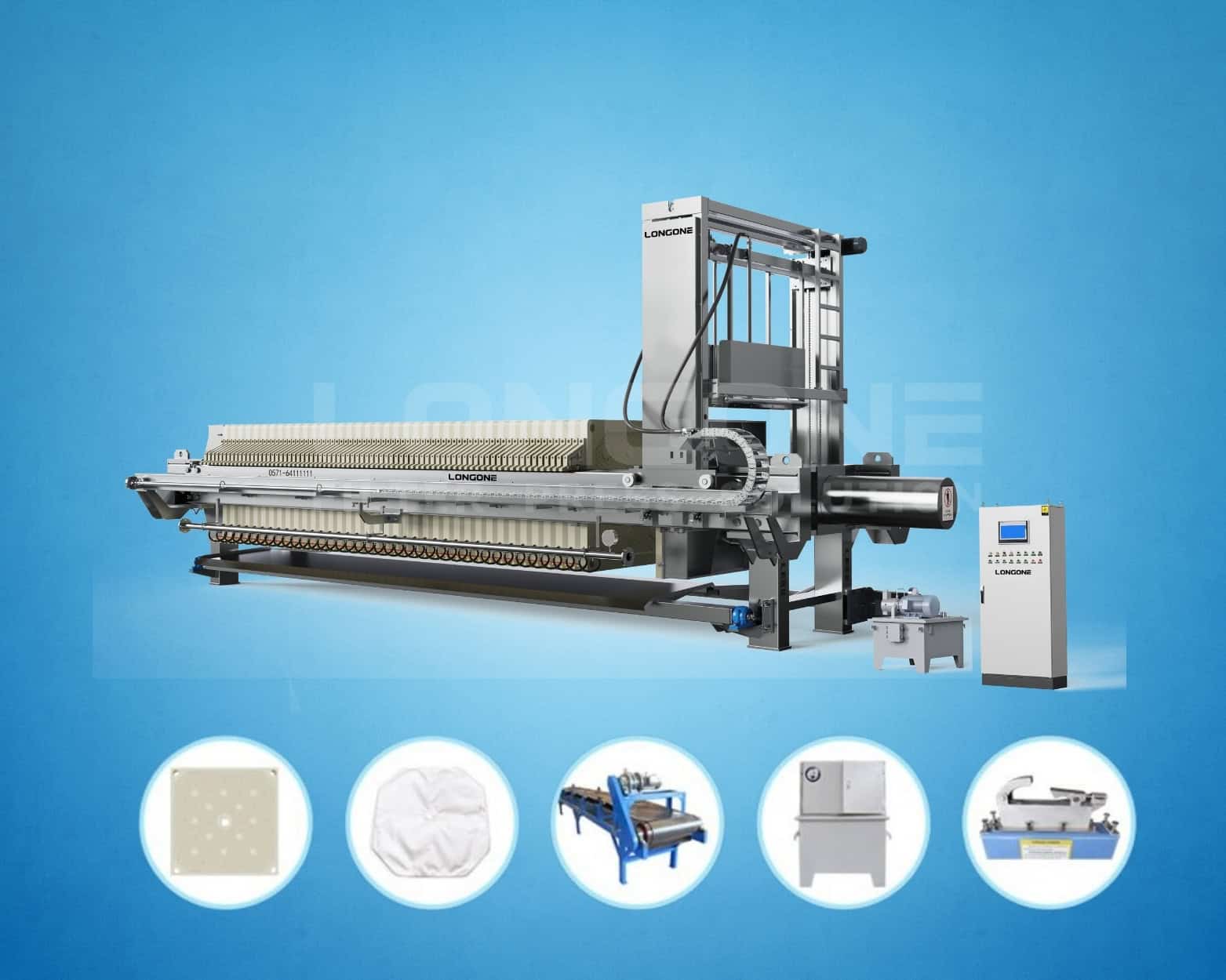
Here are the key areas we advise our customers to focus on during the evaluation process:
- Placas filtrantes: As discussed, this is the primary choice between standard chamber plates for general applications and membrane plates when maximum cake dryness and short cycle times are priorities. The material is almost always polypropylene for its chemical resistance and durability.
- Tela filtrante: This is a surprisingly critical and often overlooked component. The cloth is the first point of contact and must be matched to your sludge’s particle size and chemistry.
- Material: Polypropylene is the most common due to its excellent strength and chemical resistance.
- Micron Rating: This defines the pore size and determines the smallest particle the cloth can capture.
- Weave Pattern: Different weaves (plain, twill, satin) offer different combinations of filtration efficiency, strength, and cake release properties. A cloth that releases the cake cleanly reduces cycle time and manual labor.
- Level of Automation: The right level of automation depends on labor availability and desired throughput.
- Manual: Operator manually opens the press and separates each plate. Suitable for very small, infrequently used presses.
- Semi-Automatic: Features an automatic plate shifter that separates the plates, but the operator supervises the process.
- Fully Automatic: Includes an automatic plate shifter, bomb-bay drip trays that open and close, safety light curtains, and sometimes even an automatic cloth washing system. This is ideal for large-scale, 24/7 operations.
- Presión de funcionamiento: The hydraulic closing system and the feed pump determine the maximum operating pressure. Higher pressures generally lead to a drier cake, but also require a more robust (and expensive) frame and pump system. A typical sludge dewatering press operates between 100 and 225 PSI (7 to 15 bar).
- Chemical Conditioning: While our focus is on the mechanical equipment, it’s important to acknowledge that sludge is often pre-treated with polymers (flocculants or coagulants). These chemicals help small particles clump together into larger flocs, which dewater more easily. The right equipment can often reduce the required chemical dosage, saving on operating costs.
- Materiales de Construcción: The press frame is typically robust carbon steel coated with epoxy paint. However, for highly corrosive sludges found in chemical plants, the entire frame can be clad in stainless steel to prevent corrosion and ensure a long service life.
Industries That Rely on Filter Press Sludge Dewatering
The ability to efficiently separate solids from liquids is a fundamental requirement across countless industries. The robust nature and superior dewatering performance of the filter press make it an essential tool in both production processes and waste treatment applications.
Filter presses are indispensable in industries like municipal wastewater treatment, mining and mineral processing, chemical manufacturing, and food and beverage production. Each industry uses the technology to reduce waste volume, recover valuable resources, and comply with environmental regulations.
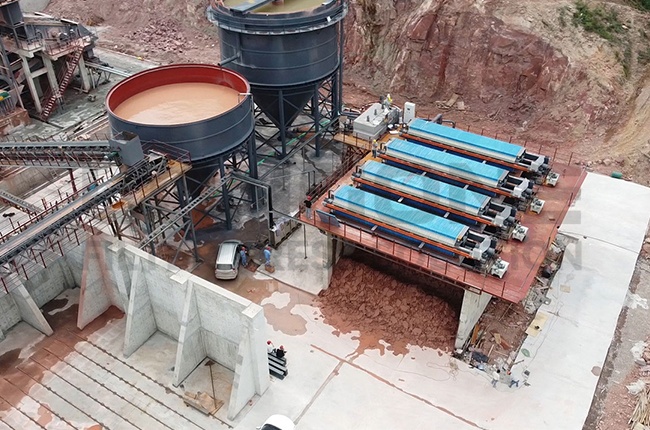
Here are some real-world examples and the typical performance benchmarks you can expect in each sector. These dryness values are general industry standards and can vary based on the specific sludge characteristics and press configuration.
- Tratamiento de Aguas Residuales Municipales: This is one of the largest applications. Sludge generated from primary and secondary biological treatment processes must be dewatered before disposal in a landfill or use as agricultural fertilizer.
- Typical Cake Dryness: 25% – 40% solids.
- Minería y procesamiento de minerales: Mines produce vast quantities of tailings (waste rock mixed with water). Dewatering these tailings with filter presses allows for the massive recovery of process water and produces a stackable, stable cake (“dry stack tailings”), which is environmentally safer than traditional tailings ponds.
- Typical Cake Dryness: 75% – 85% solids.
- Chemical & Pharmaceutical Manufacturing: Filter presses are used in two main ways here: to filter and dewater final products (like pigments or APIs) or to treat waste sludge from the manufacturing process. The ability to add a cake wash step is often critical for ensuring product purity.
- Typical Cake Dryness: Varies widely from 30% to 60%+ solids.
- Procesamiento de alimentos y bebidas: Waste streams from processing fruits, vegetables, sugar beets, or from breweries and wineries can be dewatered to reduce disposal costs. In some cases, the dewatered cake can be sold as animal feed.
- Typical Cake Dryness: 20% – 35% solids.
Conclusión
Successfully implementing a filter press for sludge dewatering comes down to understanding the interplay between your operational needs and the equipment’s technical capabilities. It’s a powerful, reliable technology that can dramatically reduce waste disposal costs and improve your plant’s environmental footprint. The key decision between a chamber and membrane press will define your ultimate cake dryness, while proper sizing and selection of components like the filter cloth and automation level will ensure long-term efficiency. By transforming a high-volume liquid waste into a low-volume dry solid, the filter press provides a tangible return on investment for nearly any industry.