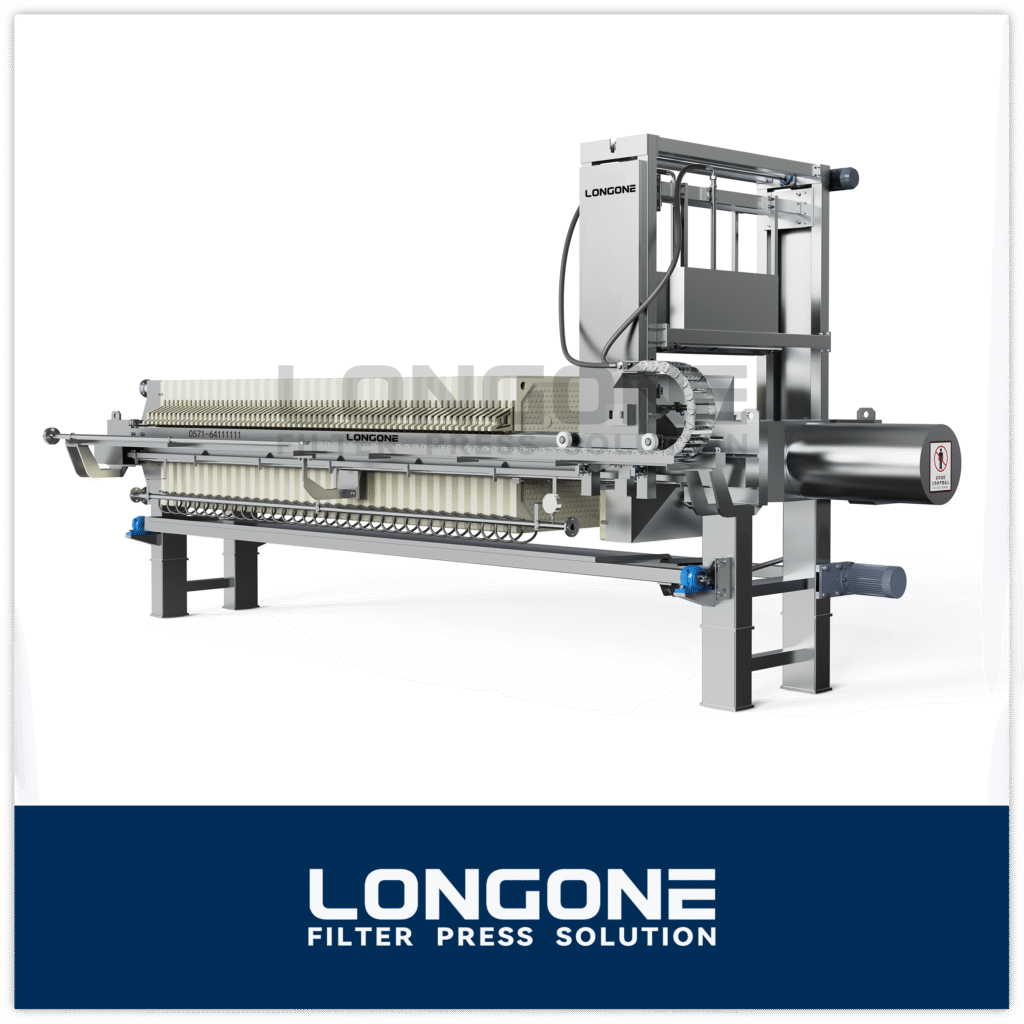
If you’re specifying a filter press for your process, one question usually decides more of your final purchase than any other: how dry does the cake actually need to be, and what design gets you there? The answer depends less on the slurry you’re feeding and more on a piece of equipment most buyers underestimate — the filter plate.
Understanding what filter cake is, how it forms, and what controls its final moisture content will save you from choosing the wrong press configuration before you ever sign a purchase order.
What Is Filter Cake?
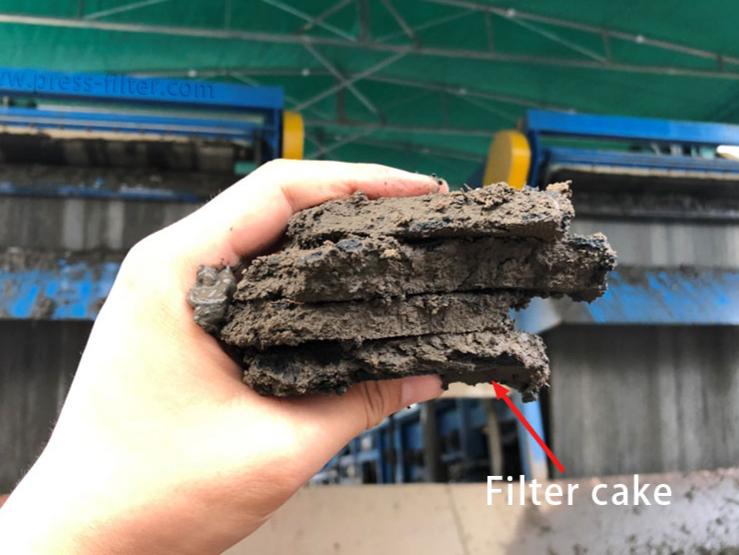
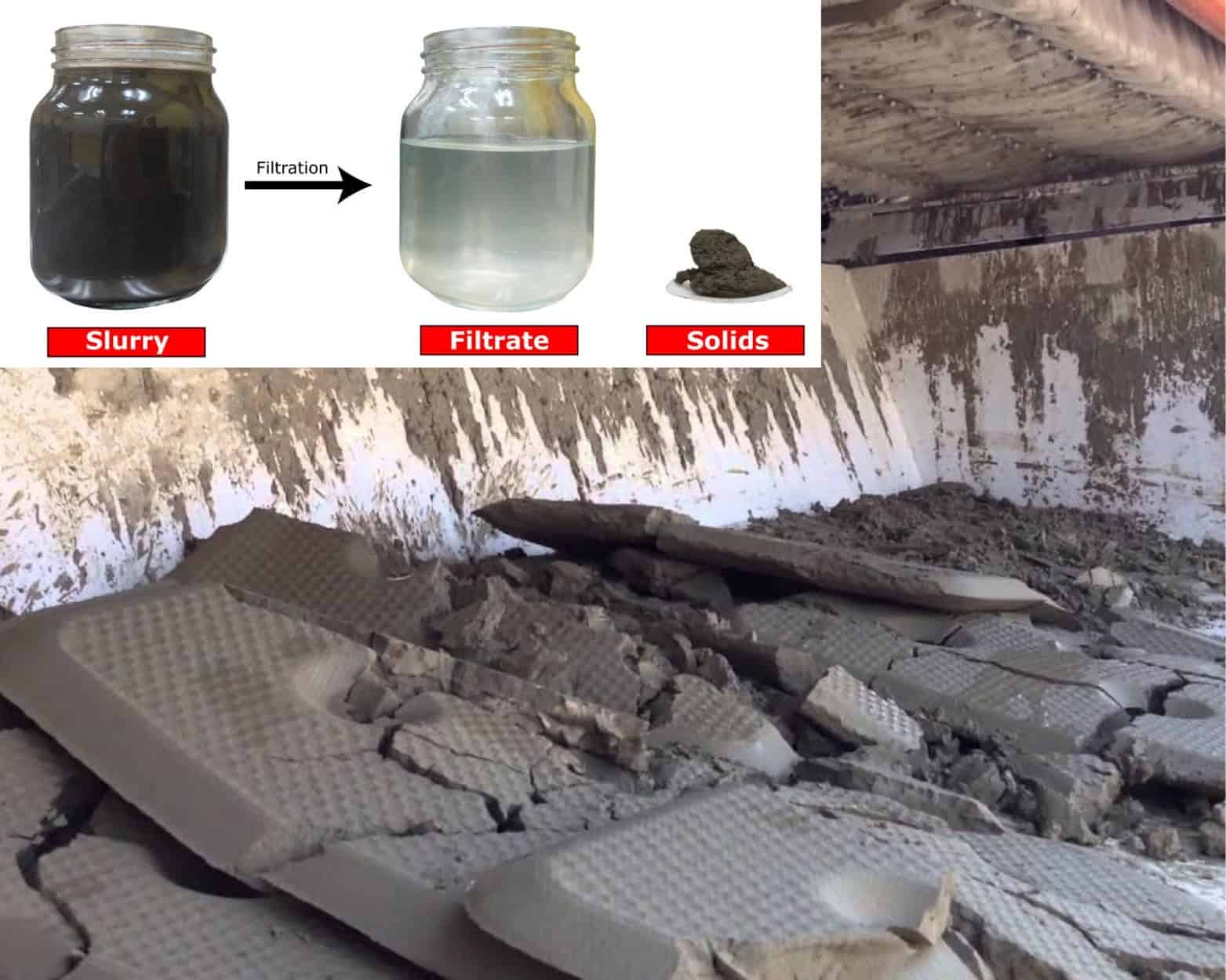
Filter cake is the layer of solid material that builds up inside a filter press chamber as slurry is pumped in under pressure and forced against the filter cloth. As liquid passes through the cloth and exits as clean filtrate, the solid particles are retained and accumulate, layer by layer, until the chamber is full or the cycle is otherwise complete.
Cake formation actually happens in two distinct stages. In the first few seconds of a cycle, particles in the slurry bridge across the tiny openings in the filter cloth, forming a thin initial layer. This bridging layer is critical — it’s finer than the cloth itself, and once it’s in place, it effectively becomes the new filtration surface. From that point forward, the growing cake — not the cloth — is what determines how fine the filtration actually is. This is why the process is often called “cake filtration”: the cake does most of the filtering work, and cloth selection matters mainly for getting that first layer to form cleanly.
As the cake thickens, it also becomes harder for liquid to pass through it. Flow resistance rises sharply as particle size drops — even a modest reduction in average particle diameter can multiply the resistance several times over. That’s part of why fine, slow-draining slurries need higher pressure, longer cycles, or membrane plates to reach an acceptable dryness, while coarse, fast-draining materials dewater easily with a standard chamber plate.
What’s Inside a Filter Cake?
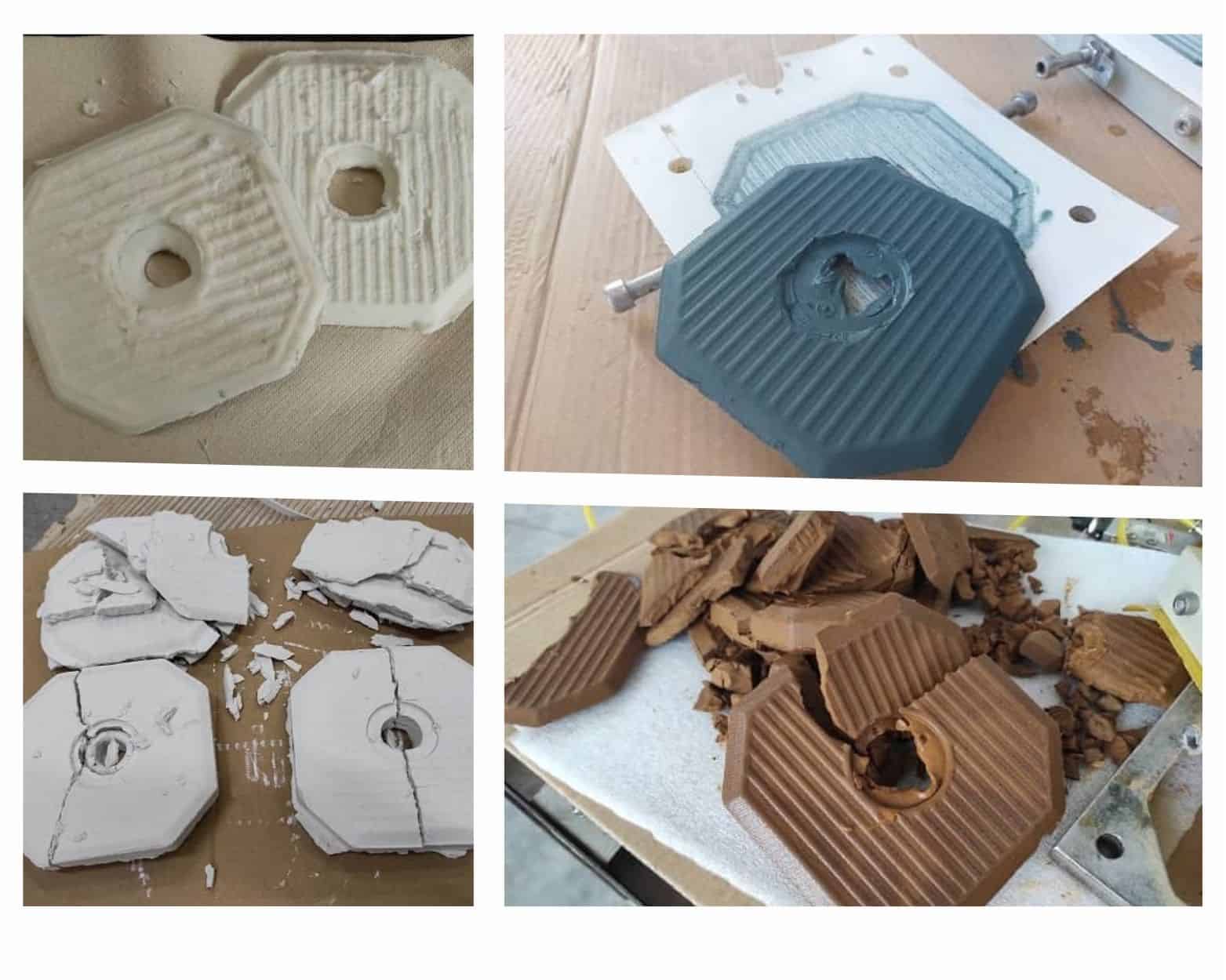
A finished filter cake is a mix of retained solids and residual moisture trapped in the pore spaces between particles. The exact composition and appearance vary widely by application:
- Municipal and industrial sludge — typically dark, dense, and moderately soft; solids content depends heavily on upstream flocculant dosing
- Mining and mineral tailings — coarser particles, faster drainage, often the easiest cakes to dewater to a low moisture content
- Chemical and pharmaceutical process solids — can range from fine, slow-draining powders to fibrous or crystalline material, often requiring cake washing to remove residual mother liquor
- Food and beverage processing — cakes are frequently a saleable or reusable byproduct, so consistency and hygiene matter as much as dryness
Typical Filter Cake Moisture Content by Industry
Buyers often ask what “good” cake dryness looks like before they’ve even chosen a press. These figures are general industry reference ranges — actual results depend on slurry characteristics, polymer conditioning, and press configuration:
| Application | Typical Cake Solids Content | Notes |
|---|---|---|
| Municipal sludge dewatering | 25–35% solids | Highly dependent on flocculant dose and sludge age |
| Mining / mineral processing tailings | 70–85% solids | Coarser particles drain fast, respond well to chamber plates |
| Chemical / industrial wastewater sludge | 30–45% solids | Wide range depending on chemistry and particle fineness |
| Food & beverage byproducts | 20–40% solids | Often prioritizes consistency and cleanability over maximum dryness |
If your target sits at the high end of these ranges, plate selection stops being a minor spec and becomes the deciding factor in whether you hit your dryness target at all.
Chamber Plates vs. Membrane Plates: Which Produces a Drier Cake?
This is the single design decision with the biggest impact on final cake moisture, and it’s worth understanding before comparing press models.
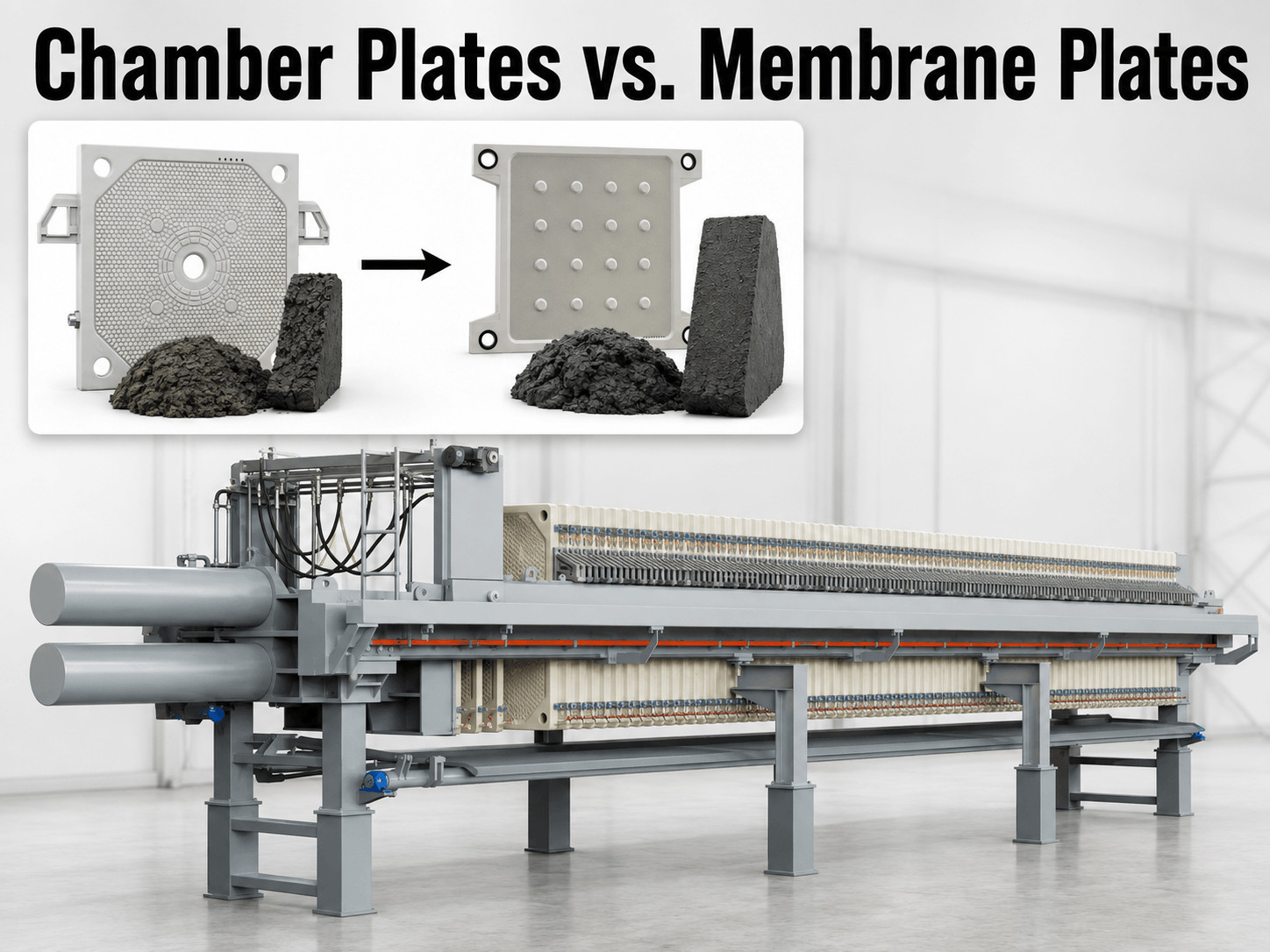
A chamber filter plate relies purely on pumping pressure. The chamber has to fill completely with slurry before the cake reaches its full thickness, and dewatering happens entirely through that filling pressure. As the cake thickens, filtrate flow slows and new cake builds more slowly — filtration becomes progressively less efficient the closer the chamber gets to full.
A membrane filter plate works differently. Filtration stops once flow becomes inefficient — the chamber doesn’t need to be completely full — and a squeezing medium (air or water) is then introduced behind a flexible membrane, which physically presses the cake to drive out additional moisture. Because this mechanical squeeze isn’t limited by flow resistance the way pressure filtration is, membrane plates typically reach a lower final moisture content, often in less overall cycle time.
| Factor | Chamber Filter Plate | Membrane Filter Plate |
|---|---|---|
| Dewatering method | Pressure filling only | Filling + mechanical membrane squeeze |
| Typical final cake moisture | Higher | Lower |
| Cycle time for equivalent dryness | Longer | Shorter |
| Best suited for | Coarse, fast-draining slurries; simpler processes | Fine, slow-draining slurries; applications needing lower moisture |
| Relative equipment cost | Lower | Higher |
| Cake washing / pre-squeeze capability | Limited | Better process control |
Neither option is universally “better” — it depends on your slurry and your target moisture content. But if you’re evaluating quotes that look similar on paper, this is the spec that actually explains the price and performance difference.
What Determines Filter Cake Quality
Beyond the chamber vs. membrane decision, several factors interact to determine how a cake turns out:
Filter cloth selection. Cloth micron rating and weave determine how cleanly that initial bridging layer forms. Too coarse, and solids pass through before the cake can form; too fine, and the cloth blinds prematurely, slowing every subsequent cycle.
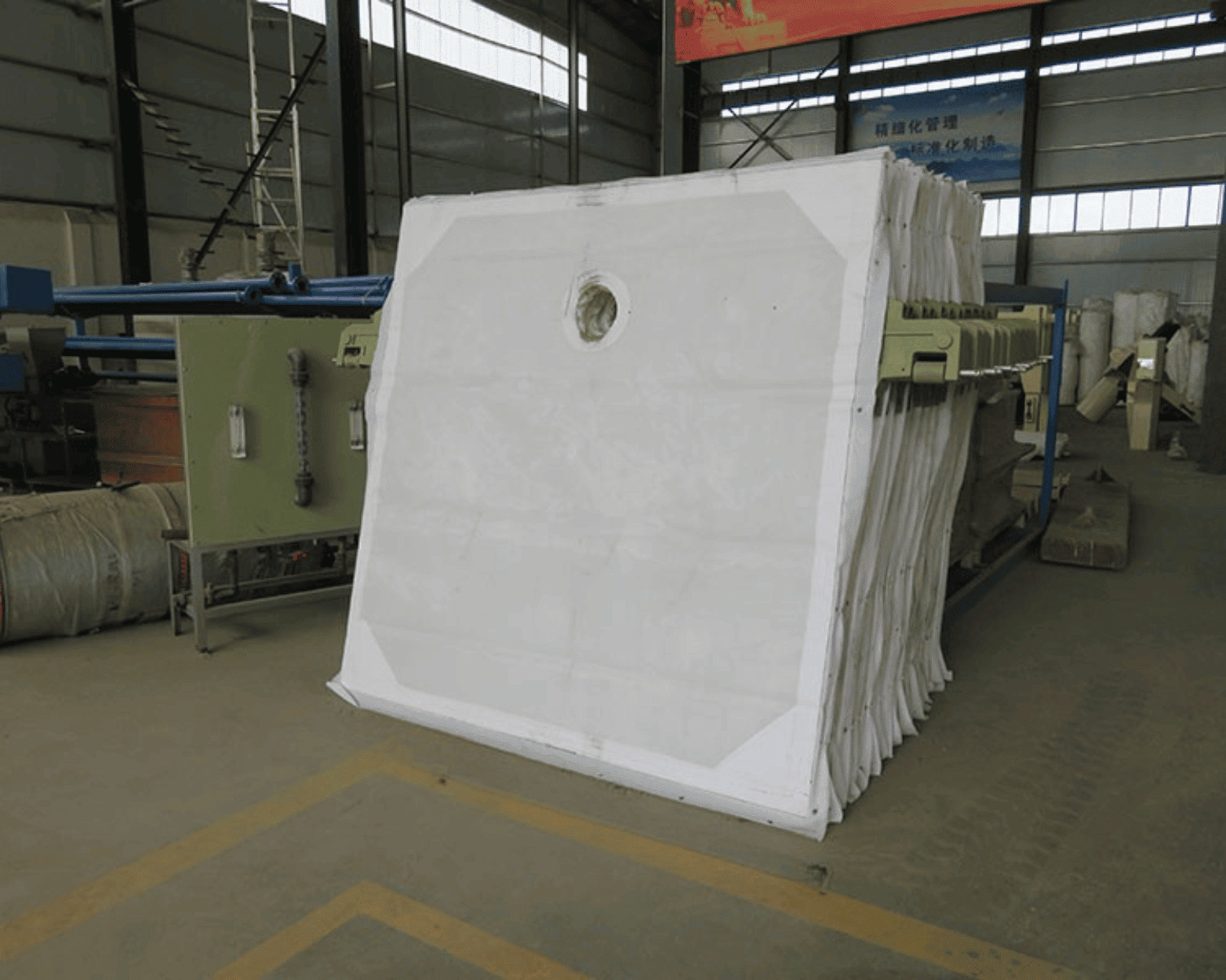
Chamber depth and plate design. Deeper chambers hold more cake per cycle but take longer to fill and dewater evenly. Plate flatness and recess consistency also affect whether the cake forms uniformly edge-to-center — uneven chambers are a common cause of inconsistent cake thickness.
Closing pressure and cycle time. Insufficient closing pressure leaves pockets of trapped moisture; cutting a cycle short before the cake fully consolidates produces a weaker, wetter cake that may not hold together during discharge.
Particle size of the feed. As noted above, finer particles create denser cakes with much higher flow resistance, which directly extends cycle time and limits achievable dryness with pressure alone.
Flocculant/polymer conditioning. Upstream chemical dosing affects floc structure and therefore cake permeability. This is primarily a process-chemistry variable rather than an equipment one, but it interacts closely with plate and cloth selection — a well-conditioned slurry gets more benefit from a properly matched plate design, and a poorly conditioned one will underperform even on the best equipment.
Cake Washing and Cake Dry Blowing
Two optional steps are worth understanding if your process needs more than a standard dewatering cycle:
Cake washing introduces a wash liquid into the chamber after filtration to displace residual mother liquor or dissolved contaminants trapped in the cake pores — common in chemical and pharmaceutical processes where product purity or waste compliance is critical.
Cake dry blowing pushes compressed air through the formed cake after filtration (and after membrane squeezing, if applicable) to displace additional free water, further increasing dry solids content before discharge. Membrane plates generally support more effective washing and blowing because the process can be more precisely controlled at each stage.
FAQ
What is filter cake made of?
Filter cake is made of the solid particles retained from a slurry during filtration, along with residual moisture held in the spaces between particles. Composition varies by application, from mineral tailings to organic sludge to process byproducts.
What is considered a good filter cake moisture content?
It depends entirely on the application — mining tailings can reach 70–85% solids, while municipal sludge often sits at 25–35% solids. The right target is set by your process requirements and disposal or reuse method, not a universal benchmark.
Do membrane filter plates always produce a drier cake than chamber plates?
For most fine or slow-draining slurries, yes — the mechanical squeeze allows dewatering beyond what pressure filling alone can achieve. For coarse, fast-draining materials, the difference is smaller, and a chamber plate may deliver comparable results at lower cost.
Why does my filter cake take longer to dewater over time?
As the cake thickens, flow resistance increases and filtrate output slows — this is a normal characteristic of pressure filtration, not necessarily an equipment fault. If cycle times are increasing beyond your baseline, check cloth condition, closing pressure, and feed particle size.
Can chamber plates and membrane plates be used in the same press?
Yes, some configurations mix plate types, though most filter presses are built with a single plate type sized to the primary application. Your press manufacturer can advise on whether a mixed configuration suits your process.
How does chamber depth affect cake output?
Deeper chambers hold more material per cycle, reducing the number of cycles needed for a given throughput, but they also take longer to fill and dewater evenly. Chamber depth should be matched to your slurry’s drainage characteristics, not chosen for maximum capacity alone.
Conclusion
Choosing between chamber and membrane plates — and getting the chamber depth, cloth spec, and pressure profile right for your specific slurry — is ultimately a plate engineering decision as much as a process one. If you’re specifying a new filter press or replacing worn plates and want to work through what moisture target is realistically achievable for your material, LONGONE’s engineering team can help size and customize plates around your actual process data rather than generic assumptions.