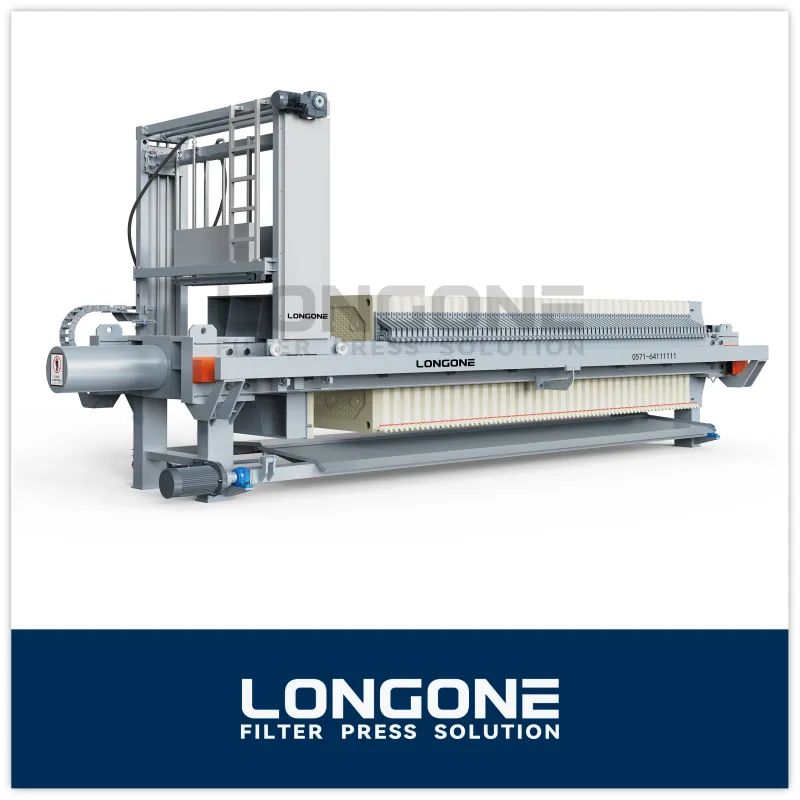
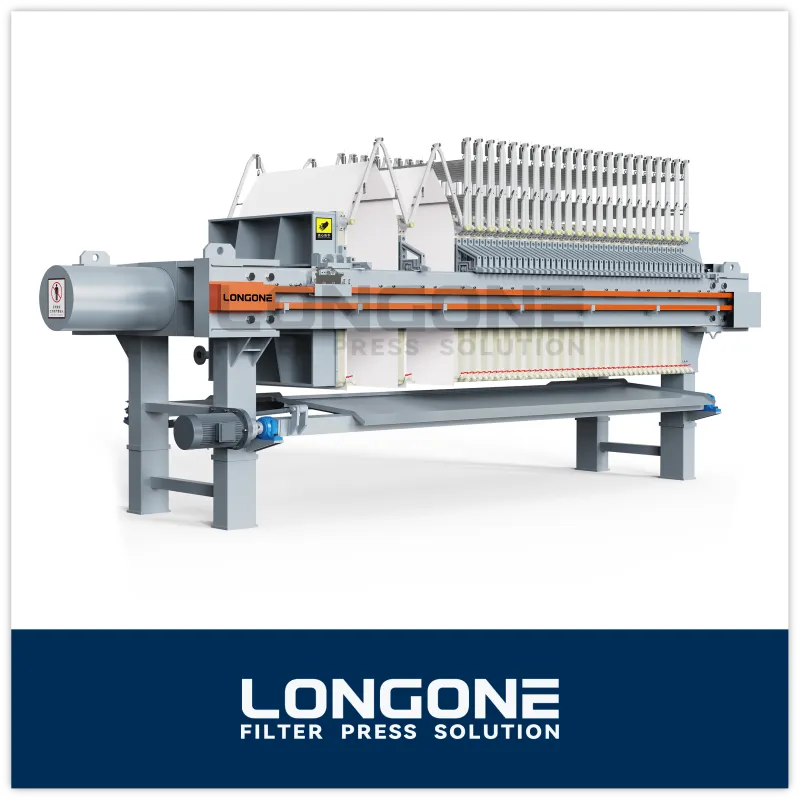
Filter press cloth cleaning usually becomes a priority when the warning signs line up. Feed pressure at the start of the cycle creeps up. Cycles that once finished in a shift now run long. Then the cakes come out wet and heavy, and operators start asking whether the press is failing.
More often than not, the press is fine. The filter cloth has blinded: fine particles have lodged deep in the weave and the fabric can no longer pass liquid freely. The good news is that blinding is often reversible if you clean the right way. The bad news is that the wrong cleaning method can ruin the cloth, and sometimes the plates behind it.
This guide covers filter press cloth cleaning from start to finish: how to diagnose blinding, how to choose between physical and chemical methods, how to protect your filter plates while you work, and when to replace the cloth instead of washing it again.
Why Filter Press Cloth Blinds and How to Diagnose the Cause
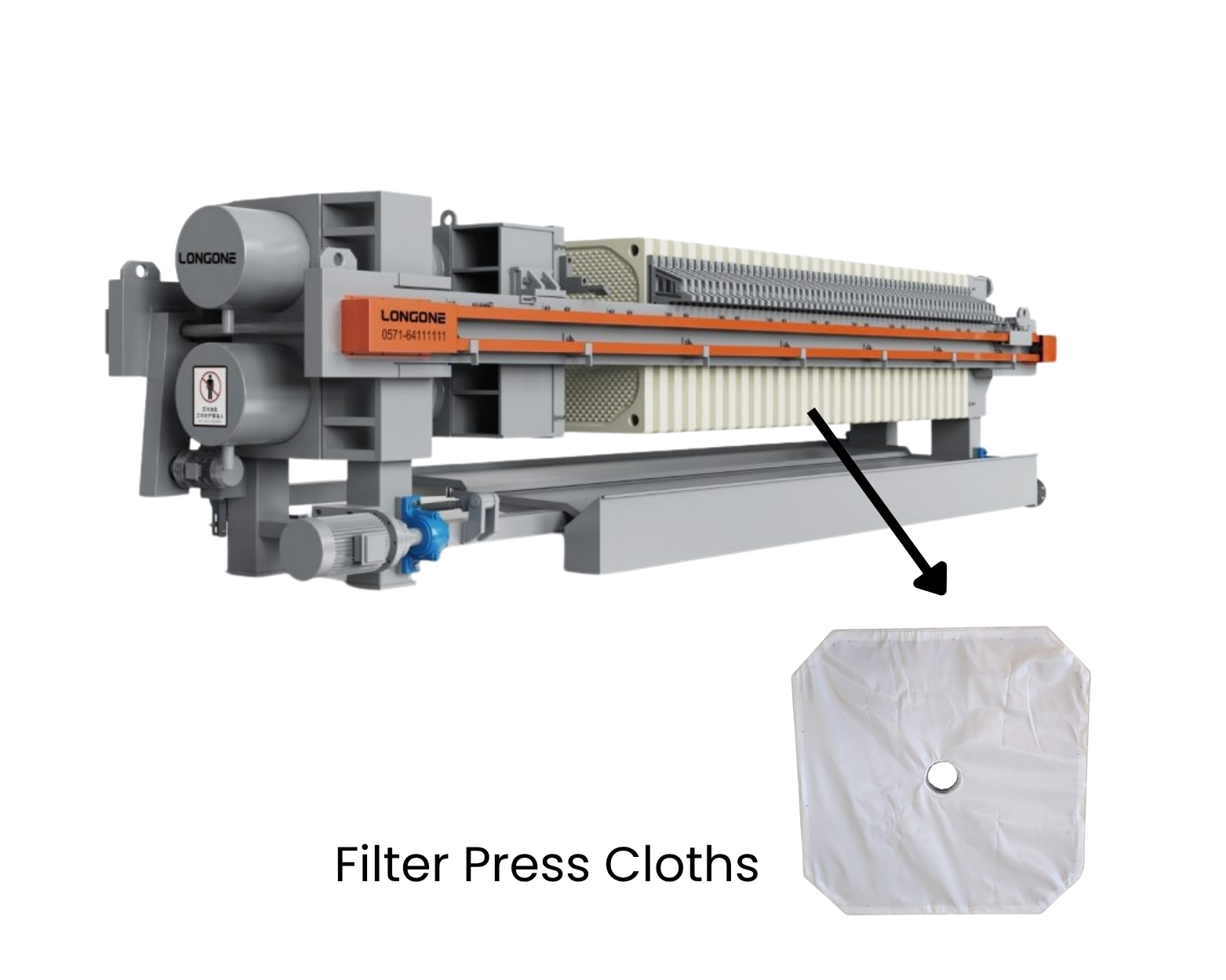
The filter cloth is the first barrier between slurry and filtrate. It holds back solids so a cake can build up while liquid passes through. For this to work, the cloth has to stay porous.
During normal operation, microscopic particles slowly work their way into the depth of the weave. Over many cycles they reduce the open area of the fabric, so filtration slows and cakes hold more moisture. This gradual plugging is called blinding.
Not all blinding is the same, and the cause decides the cure:
- Metal hydroxides and mineral scale are common in metal finishing and lime-based slurries. They often dissolve in acid.
- Oils, greases and organic residues respond better to alkaline or detergent washes.
- Very fine inert solids are usually flushed out with water alone.
- Abrasion or “slamming”, where slurry hits the cloth too hard at the start of a cycle, packs particles into the fabric and speeds up blinding.
Before you choose a cleaning method, look at what your slurry contains and what the deposits look like on the cloth. That five-minute check prevents most cleaning mistakes.
When to Filter Press Cloth Cleaning: Warning Signs Your Filter Cloth Needs Washing
Cleaning on a fixed calendar wastes time when the cloth is fine and comes too late when it is not. A symptom-based approach is more reliable. Wash the cloth when you see one or more of these:
- Rising initial filtration pressure. The press needs more pressure to start moving liquid through the cloth.
- Longer filtration cycles. Cycle time keeps stretching under unchanged operating conditions.
- Wetter filter cakes. Cake moisture climbs even though feed and pressing time are the same.
Some operators also schedule a routine deep clean every one to three months as a baseline, then shorten or extend the interval based on these signals. The right rhythm depends on your slurry, your cloth material and how hard the press runs. Keeping simple records of cycle time and feed pressure makes the pattern easy to spot.
Physical Cleaning Methods: Brushing and Water Spray Pressure Limits
Physical cleaning is the gentlest place to start, and for many applications it is all you need.
Manual brushing
For small presses or lightly contaminated cloth, rinse the surface with clean water first to remove loose material. Then scrub gently with a soft-bristled brush, using a small amount of neutral detergent if needed. Apply even pressure so you do not leave marks or roughen the fabric. Brushing is cheap and simple, but it is slow on large presses and does little for deeply embedded particles.
Cold water pressure spraying
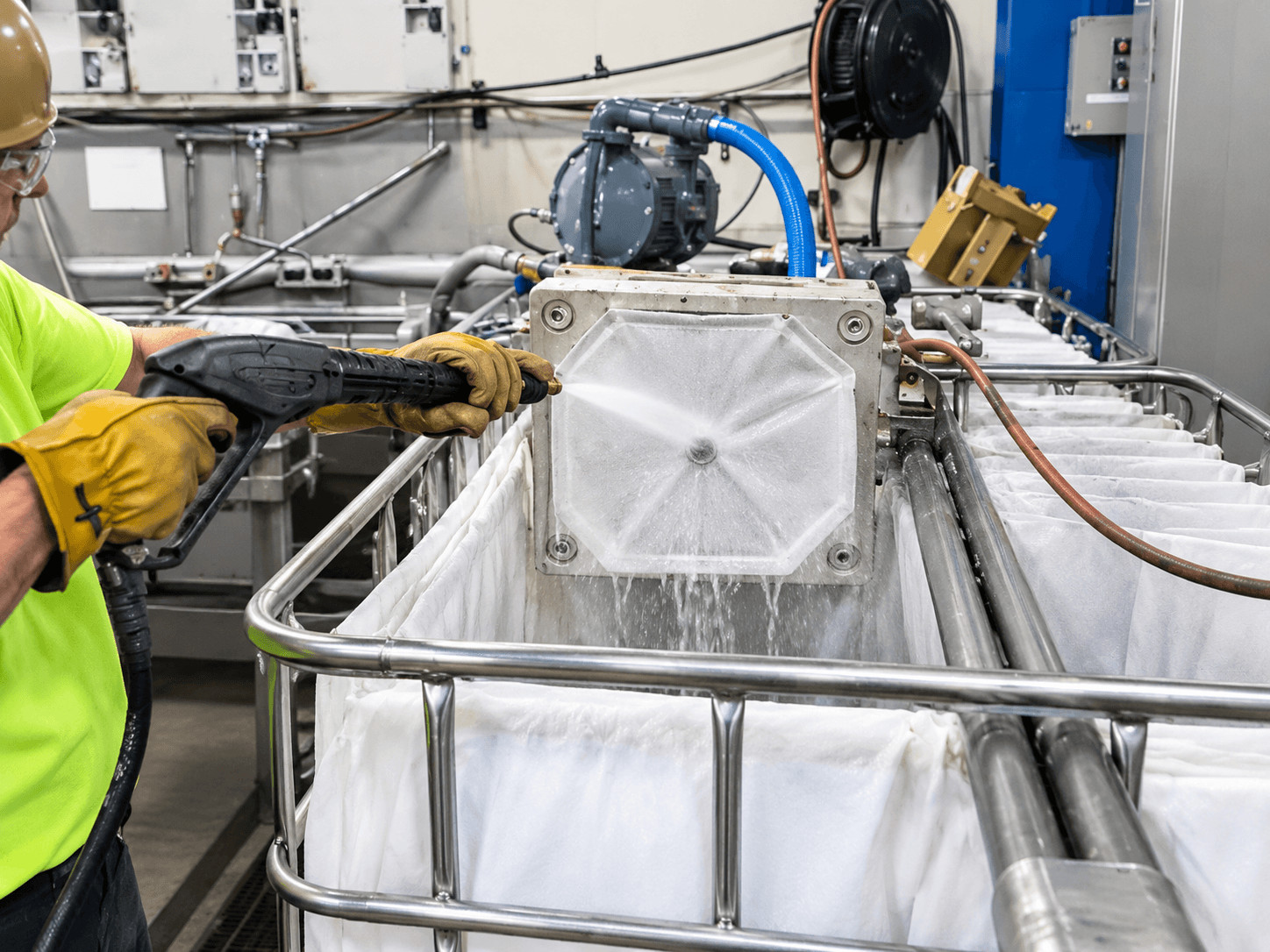
A portable cold water sprayer is one of the most practical ways to clean cloths while they stay on the plates. The spray does two jobs: it flushes the surface and drives particles out of the depth of the weave.
Take care, because this is also where cloth gets damaged:
- Use a fan-shaped nozzle rather than a pinpoint jet.
- Stay a few feet back from the cloth and keep the wand moving.
- Do not hold the spray on one spot.
- Start low and raise pressure only if needed.
Published guidance on safe spray pressure varies. Many industry sources recommend keeping pressure below roughly 1,000 PSI for cloth left on the press, while other references cite much higher figures for specific cloth types. Because cloth construction differs, treat any single number as a starting point and confirm the limit with your cloth supplier.
Chemical Cleaning: Acid, Alkaline and Detergent Washes Done Safely
When water alone cannot restore permeability, chemistry can dissolve what the spray cannot reach. It is also where the most expensive mistakes happen.
Acid washing
Acid washing works well on sludge from metal finishing and on lime-based slurries, where deposits dissolve in acid. It only works if the chemistry is reversible. It is generally ineffective on biological or food-related fouling.
Key points:
- Hydrochloric (muriatic) acid is the usual choice. A solution of about 5 to 10% in water is a common starting point, and some operations use stronger solutions depending on what the deposits are. Start low and increase only if results are poor.
- Avoid sulfuric acid if calcium is present. It can form gypsum, which lodges in the cloth and blinds it permanently.
- Nitric acid is unsuitable because it is an oxidizing agent, and phosphoric acid is usually too costly to be practical.
- Check the cloth material. Polypropylene tolerates hydrochloric acid well. Nylon and some other fibers should not be exposed to very low pH.
There are two common ways to apply acid:
- In-press recirculation. Acid is pumped through the closed press and returned to a holding tank, typically for one to two hours. It calls for an acid-resistant, low-pressure pump, suitable plumbing and a way to isolate the press from the sludge line. Remove loose cake from the cloths first, and finish by blowing down with low-pressure air to purge the acid. One widely used guideline is to size the acid tank at about one and a half times the press chamber volume, so the press can fill completely and still circulate.
- Acid dip. Cloths or plates are soaked in a tank of weaker acid, roughly 3 to 5%, usually overnight. It is less efficient than washing in place and takes longer to clear the depth of the weave.
Alkaline and detergent washes
For oils, greases and organic residues, an alkaline solution or a compatible detergent is usually more effective than acid. If the residue is acidic in nature, a sodium hydroxide or sodium carbonate solution is a typical option. Soak times of one to two hours are common, adjusted to how heavy the contamination is.
Safety and compatibility
Always wear appropriate PPE, handle acid with care and ventilate the area. Never mix cleaning chemicals. Before any chemical wash, check the cloth manufacturer’s chemical resistance data. A cleaner that dissolves deposits but weakens the fibers only trades one problem for another.
Choosing a method at a glance
| Method | Best for | Main risk | Key precaution |
|---|---|---|---|
| Manual brushing | Light contamination, small presses | Slow; surface-only cleaning | Soft brush, even pressure |
| Cold water spray | Routine cleaning, fine solids | Cutting or fraying cloth | Fan nozzle, distance, moderate pressure |
| In-press acid wash | Metal hydroxides, scale, lime sludge | Leaks, acid attack on components | Reversible chemistry only; gasketed plates; low-pressure pump |
| Acid dip | Cloth removed from press | Slow; plates can float if soaked | Weak acid; keep items submerged |
| Alkaline or detergent wash | Oils, greases, organics | Fiber damage from wrong chemistry | Confirm compatibility with cloth |
Protecting Your Filter Plates While You Clean the Cloth
Most cleaning advice stops at the cloth. But on a filter press, the cloth and the plate work as a single system, and cleaning that ignores the plate can quietly shorten its life.
A few things worth keeping in mind:
- Sealing surfaces and feed eyes. These areas take the brunt of a careless spray wand. Aggressive jets can wear or damage the edges that keep the chambers sealed, which shows up later as leaks between plates.
- Gaskets and metal fittings. Spent acid can attack gaskets, fasteners and other non-polymer parts. If you wash in place, make sure the plates are designed to contain liquid at their edges. Acid washing on non-gasketed plates carries a real risk of leakage between plates unless extra containment is in place.
- Water temperature. Polypropylene plates have temperature limits, and very hot wash water can stress the material. Check your plate specification before using heated water or steam.
- Buoyancy during dip washing. Polypropylene is lighter than water, so plates and cloth will float in a soak tank and need to be held under so the whole surface is treated.
- Drainage channels. After cleaning, check that channels and ports are clear. Debris loosened from the cloth can settle there and cause uneven drainage on the next cycle.
The principle is simple: a cleaning method is only good if it restores the cloth without costing you plate performance. If you are unsure whether a wash procedure suits your plates, ask the plate manufacturer for the material and pressure and temperature ratings before you commit.
Preventing Blinding and Knowing When to Replace the Cloth
The cheapest cleaning is the one you never have to do. A few operating habits slow blinding considerably.
Prevention
- Ramp up feed pressure gradually. A very high starting pressure packs solids into the cloth in a dense layer. A gentler start deposits a soft layer that itself becomes the filtering medium, which improves filterability. An automatic feed pump control system can do this consistently.
- Consider a pre-coat. A thin layer of a porous material such as perlite or diatomaceous earth protects the cloth from wear and reduces blinding.
- Match cloth to slurry. Cloth material, weave and air permeability should suit your solids and chemistry. A poor match blinds faster no matter how well you clean.
- Reinforce wear points. If cloths fail early around the center feed, reinforced barrel necks can help.
- Handle and store carefully. Keep spare cloth clean, dry and away from direct sunlight, and avoid creasing it.
When cleaning is no longer enough
Cleaning restores permeability. It cannot repair damage. Consider replacement when:
- performance does not recover after a thorough wash,
- you see tears, holes or visible thinning,
- solids break through into the filtrate,
- cake moisture stays high even with normal cycles,
- required operating pressure keeps climbing.
Replacing a worn cloth on schedule usually costs less than the throughput and energy you lose by running a failing one.
Çözüm
Cleaning routines work best when they are designed around your specific slurry, cloth and plates. If you are reviewing your filter press setup or plate specifications, the LONGONE team is happy to share technical data to help you plan a wash procedure that protects both.
SSS
How often should I clean a filter press cloth?
There is no universal interval. Clean when initial feed pressure rises, cycles lengthen or cakes turn wet. Some operations add a routine deep clean every one to three months as a baseline, then adjust based on their own records.
Can I clean filter press cloth without removing it from the press?
Yes, in many cases. Cold water spraying and in-press acid recirculation are both done with the cloth in place. Washing in place with acid requires plates that seal well enough to contain the liquid.
Which acid is best for cleaning filter cloth?
Hydrochloric acid is the usual choice for reversible deposits such as metal hydroxides and scale. Avoid sulfuric acid where calcium is present, because gypsum can form and blind the cloth permanently. Always check that the cloth material tolerates the acid.
How do I know if my filter cloth needs replacing instead of cleaning?
If performance does not recover after proper cleaning, or the cloth shows tears, thinning or solids breakthrough, replacement is the better option.