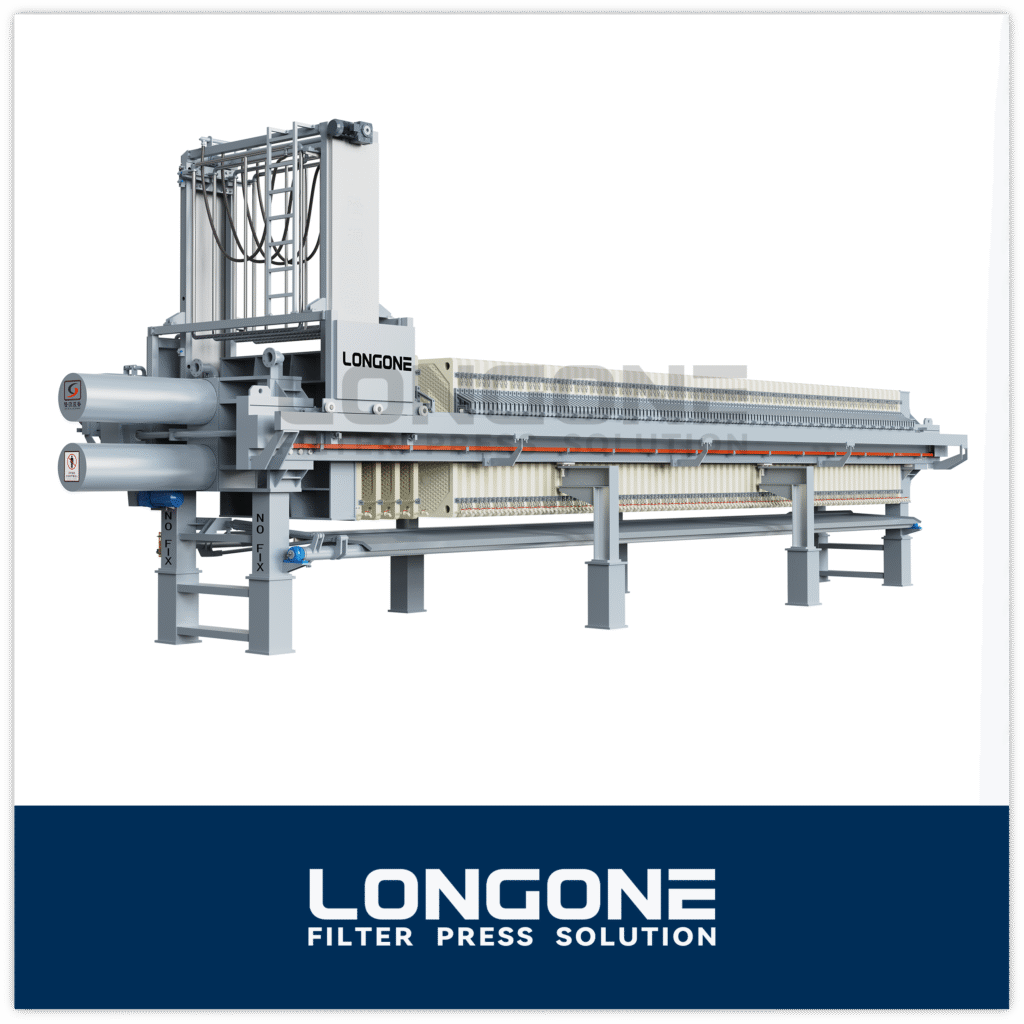
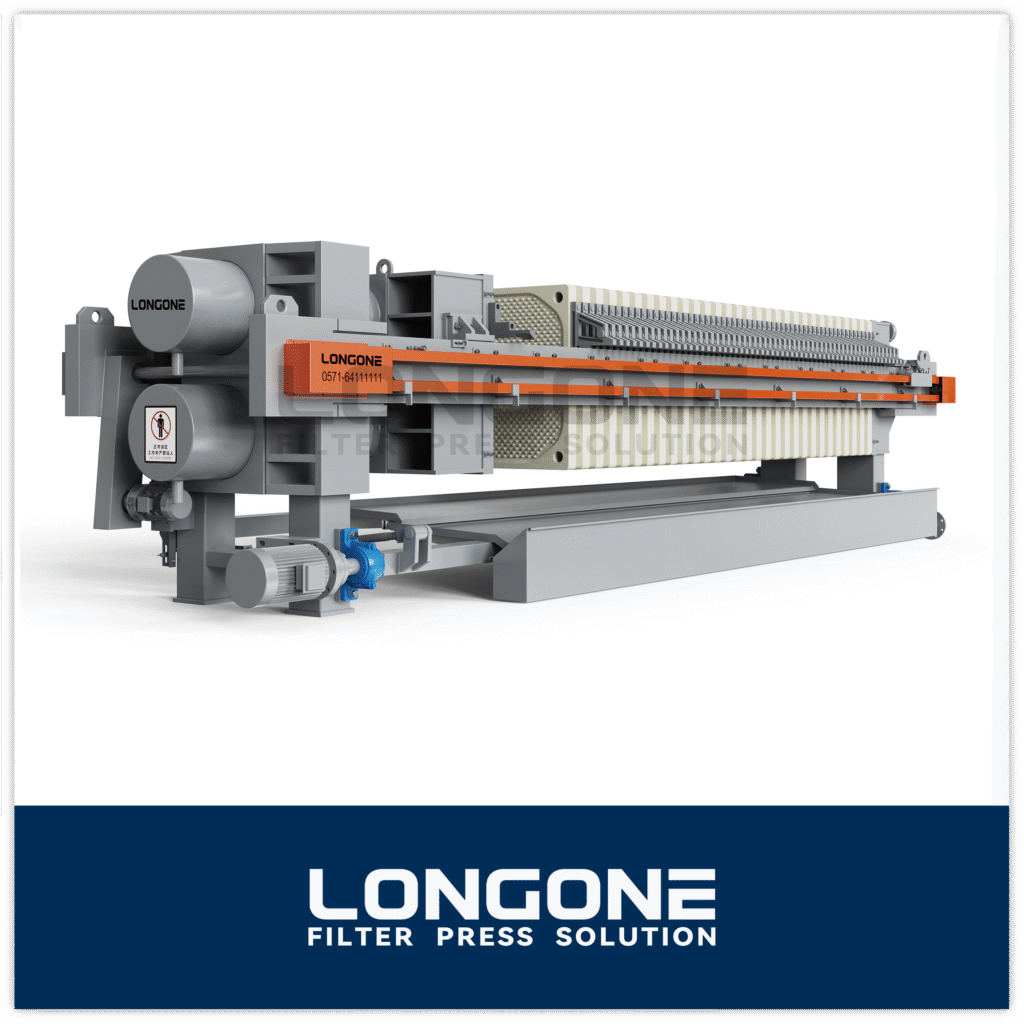
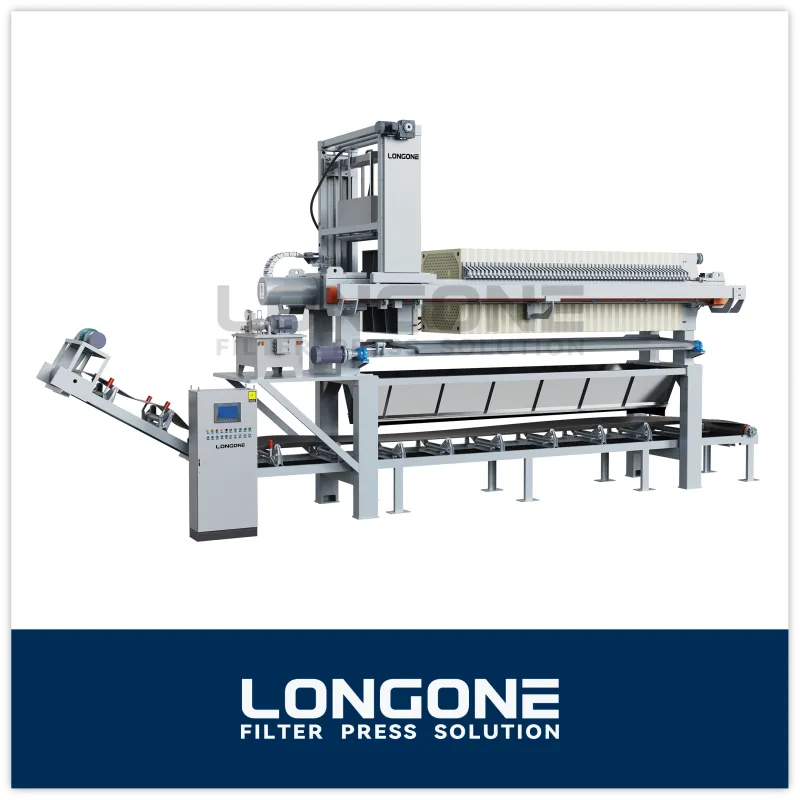
If your plant filters a few hundred liters of slurry per batch, does it make sense to pay for a fully automatic filter press with a hydraulic station, a PLC and a plate shifter? For many small and mid-size operations, the honest answer is no. A manual filter press does the same basic job at a fraction of the cost and complexity, as long as it is matched to the right workload.
This guide explains how a manual filter press works, what it is made of, which types are available, where it performs best, and how it compares with hydraulic and automatic units. The goal is to help you decide based on your slurry, your batch size and your labor situation, not on a spec sheet alone.
What Is a Manual Filter Press and How Does It Work?
A manual filter press is a batch (intermittent) pressure filter used for solid-liquid separation. Slurry is pumped into a series of chambers formed between filter plates. The filter cloth holds back the solids, which build up as filter cake, while the clear filtrate flows out through the discharge ports.
What makes it “manual” is how the plates are clamped. Instead of a hydraulic cylinder, the operator turns a hand wheel or a hand-driven screw to push the plate pack together and hold it under closing force. When filtration is finished, the operator backs off the screw, separates the plates and discharges the cake by hand.
A typical filtration cycle looks like this:
- Close and tighten the plate pack with the hand wheel or screw.
- Feed slurry into the chambers with a feed pump.
- Filter until the chambers are full and filtrate flow drops.
- Wash the cake or blow it with air, if the process requires it.
- Release the closing force and open the plates.
- Discharge the cake, inspect and rinse the cloths, and start the next batch.
Because the cycle is intermittent, a manual filter press suits work that runs in batches rather than continuously around the clock.
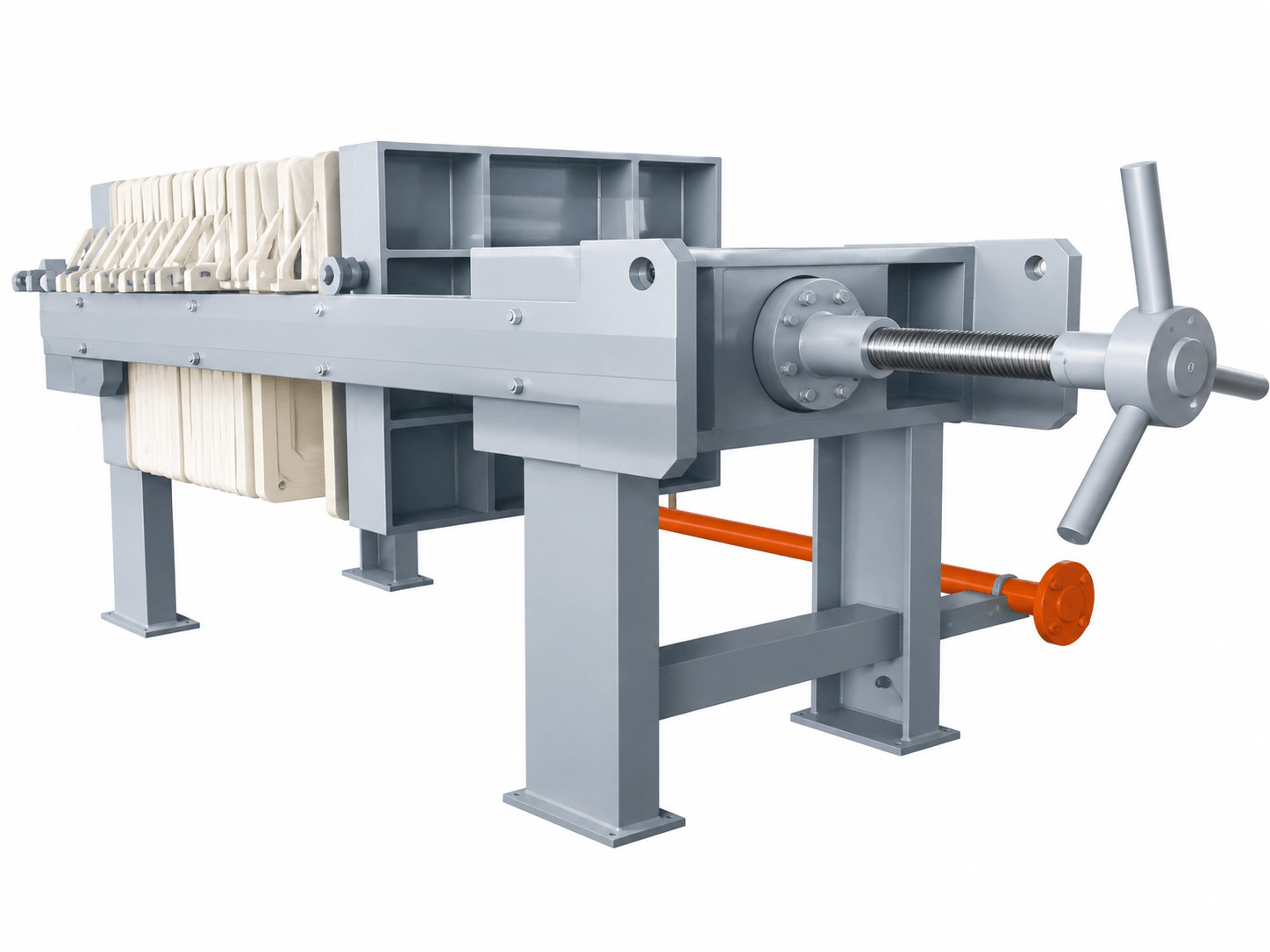
Key Components: Frame, Filter Plates, Filter Cloth and Screw Closing Mechanism
Understanding the parts helps you judge quality and troubleshoot problems later.
Frame. The frame carries the whole plate pack. It usually consists of a fixed thrust plate at one end (where the feed inlet is), a movable compression plate at the other, and side beams or a main beam that support the plates. A rigid frame keeps the plates aligned, which directly affects sealing.
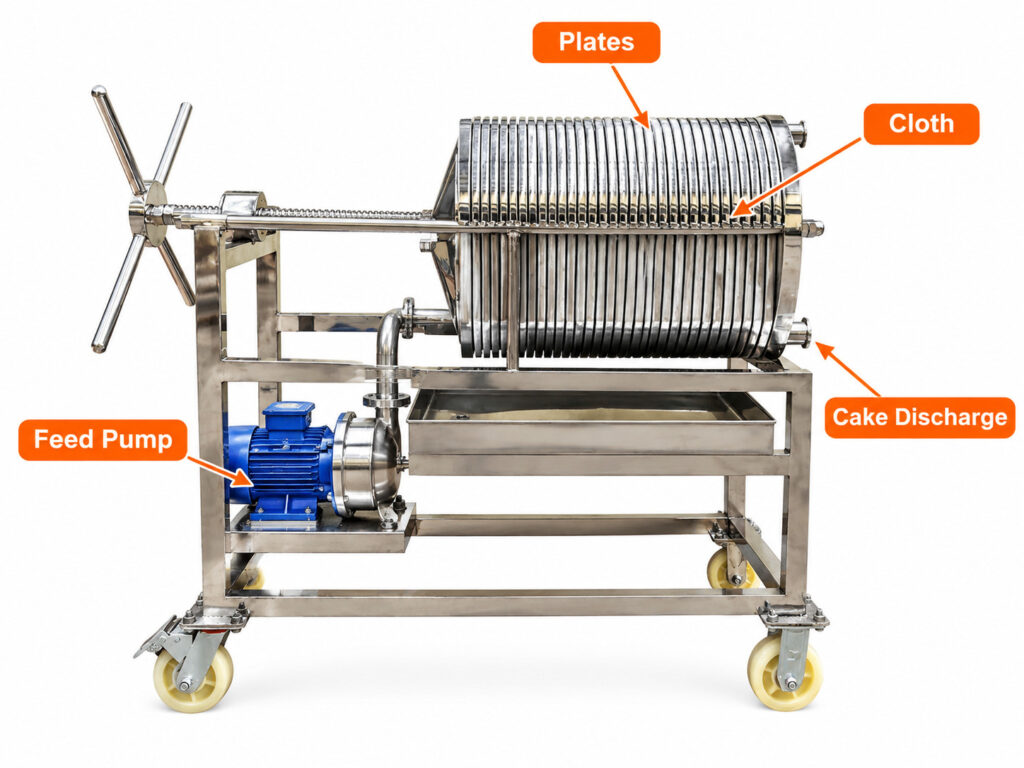
Filter plates. Plates form the filtration chambers. Material selection matters: polypropylene is common for general chemical, mineral and wastewater duty, while stainless steel plates are used where hygiene, higher temperatures or strong corrosion resistance are needed. Plate style also matters, and we cover that in the next section.
Filter cloth. The cloth is where filtration actually happens. Its weave, material and permeability determine filtrate clarity, cake release and cycle time. In practice, many “machine problems” turn out to be cloth problems: blinding, tearing or the wrong micron rating for the slurry.
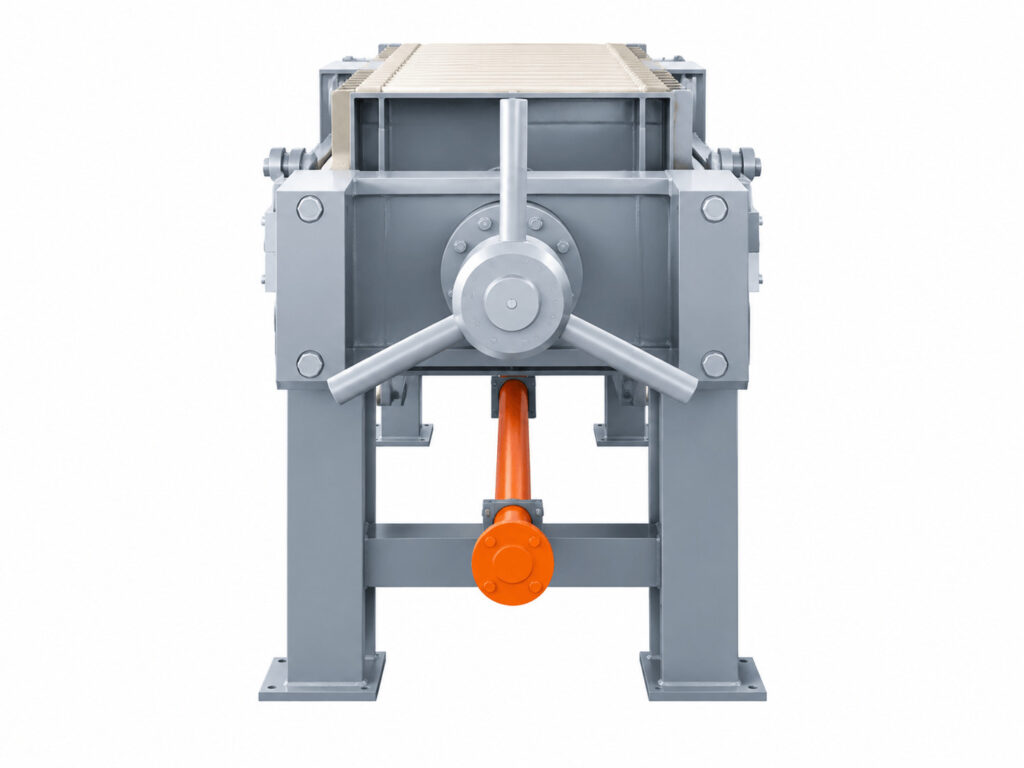
Screw closing mechanism. A hand wheel drives a screw that pushes the compression plate against the plate pack. It is mechanically simple and easy to repair on site, with no hydraulic oil, pumps or electrical controls to maintain. The trade-off is that closing force depends on the operator. That single point explains most of the strengths and weaknesses of manual units, and we return to it in the buying advice below.
Manual Filter Press Types: Plate-and-Frame, Recessed Plate and Stainless Steel Models
Manual filter presses are usually described by plate design and construction material.
Plate-and-frame type. Flat plates alternate with hollow frames. The frame sets the cake thickness, and the cloth is clamped between each plate and frame. This design is straightforward and works well for slurries that form a stable cake and for jobs where cake washing is needed.
Recessed plate type. Each plate has a recessed surface, so two neighboring plates form a chamber on their own without separate frames. Recessed plates generally handle slightly higher feed pressure than plate-and-frame designs and are easier to keep sealed, which is why they are widely used for mineral, chemical and industrial wastewater slurries.
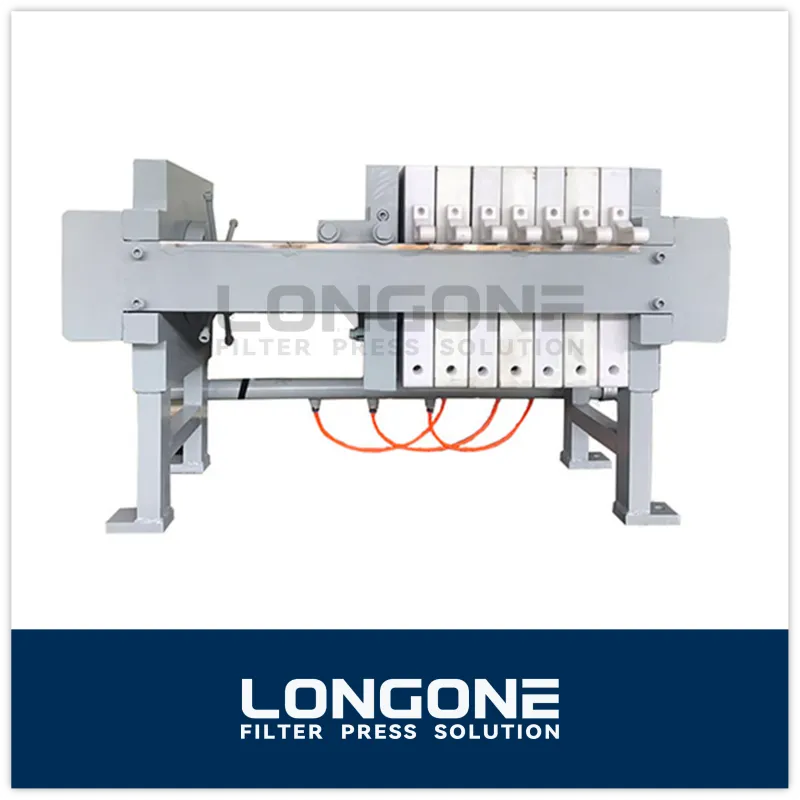
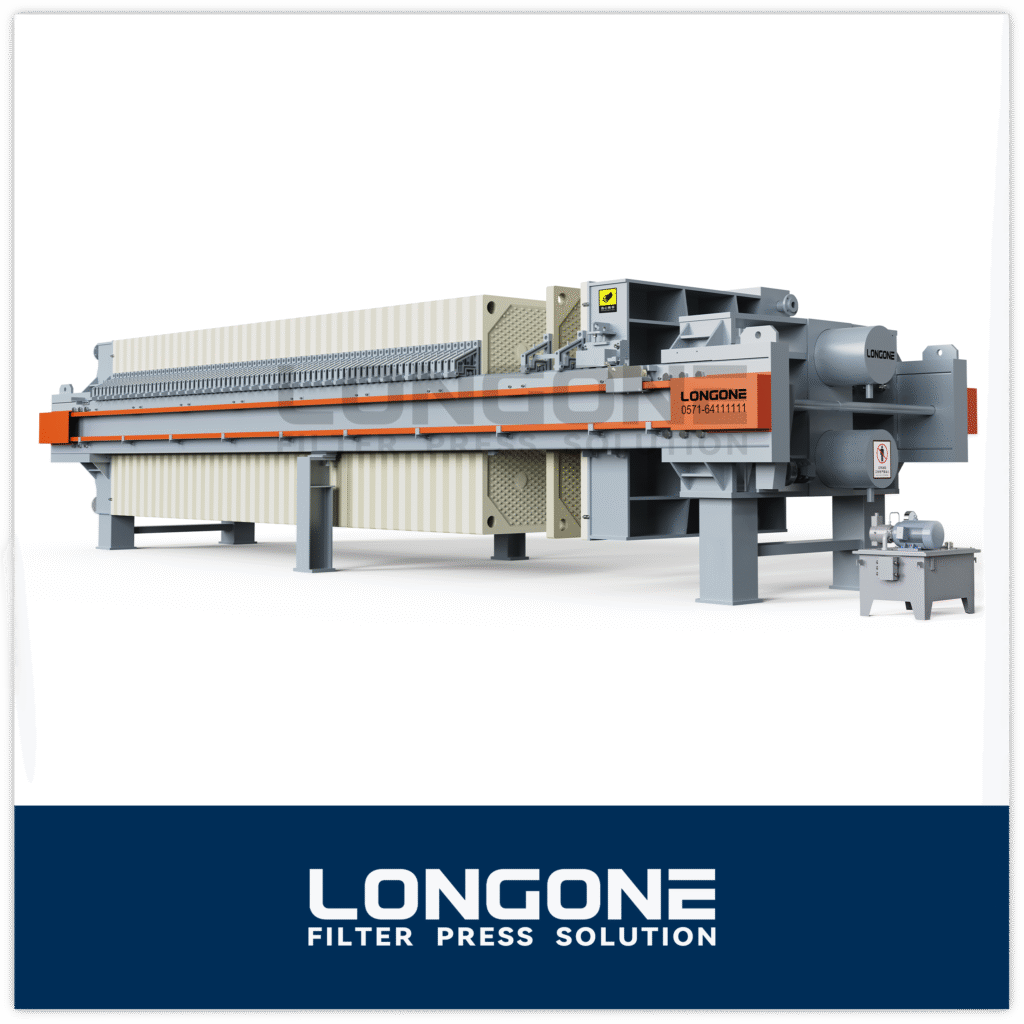
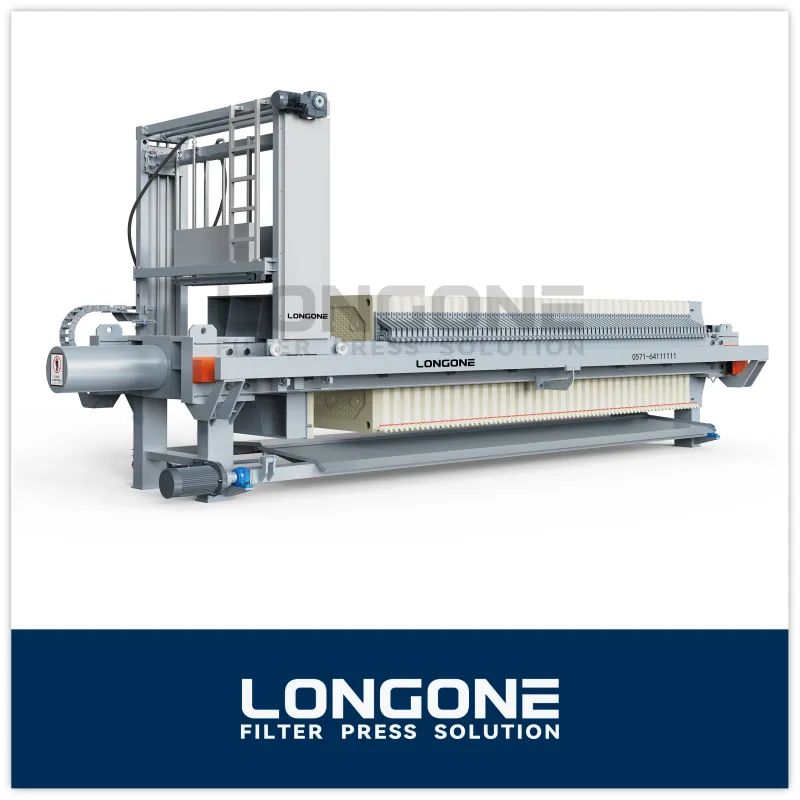
Carbon steel frame models. For heavier industrial slurries, a hand-crank filter press with a steel frame and standing legs is a practical, economical choice. LONGONE’s hand-crank plate-and-frame filter press is built in this format: a steel frame, a screw closing hand wheel and a drip tray section beneath the plate pack, suited to small-batch work in chemical, mineral and general industrial settings.
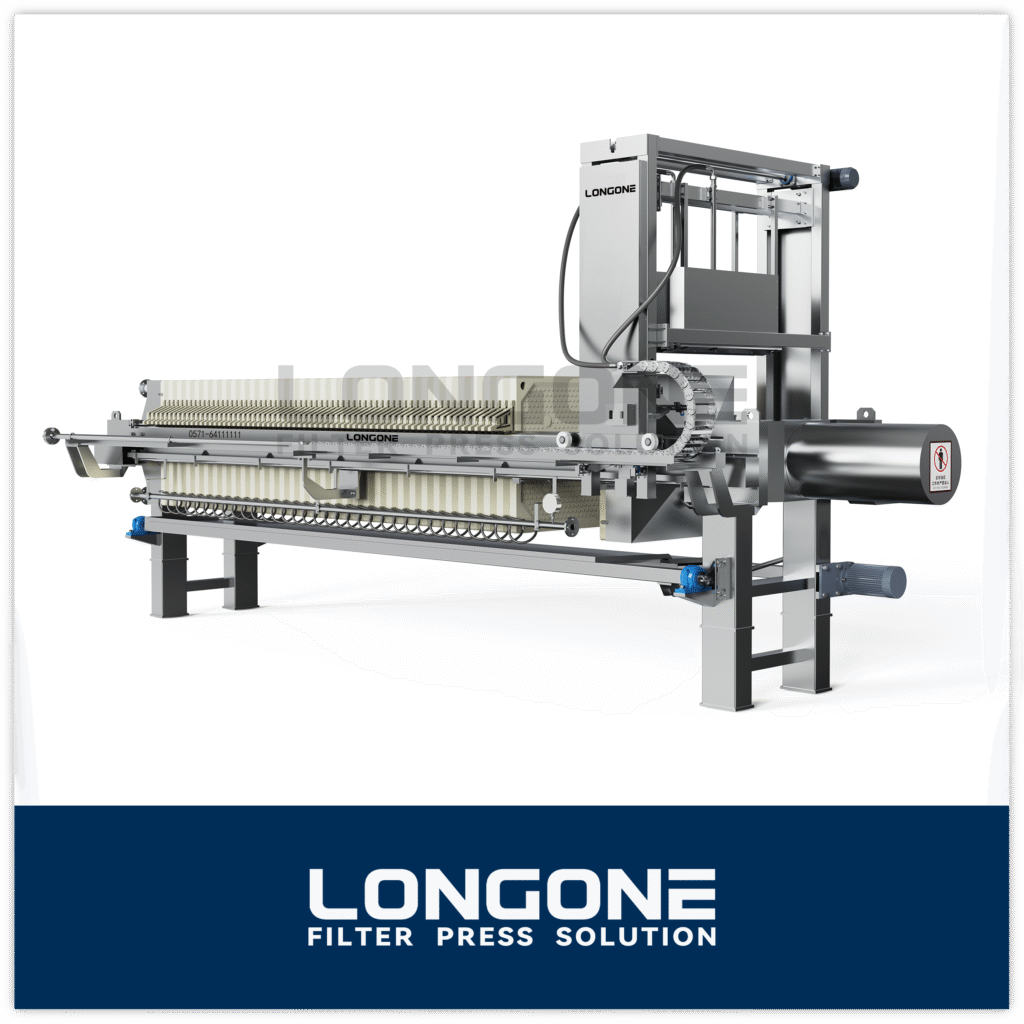
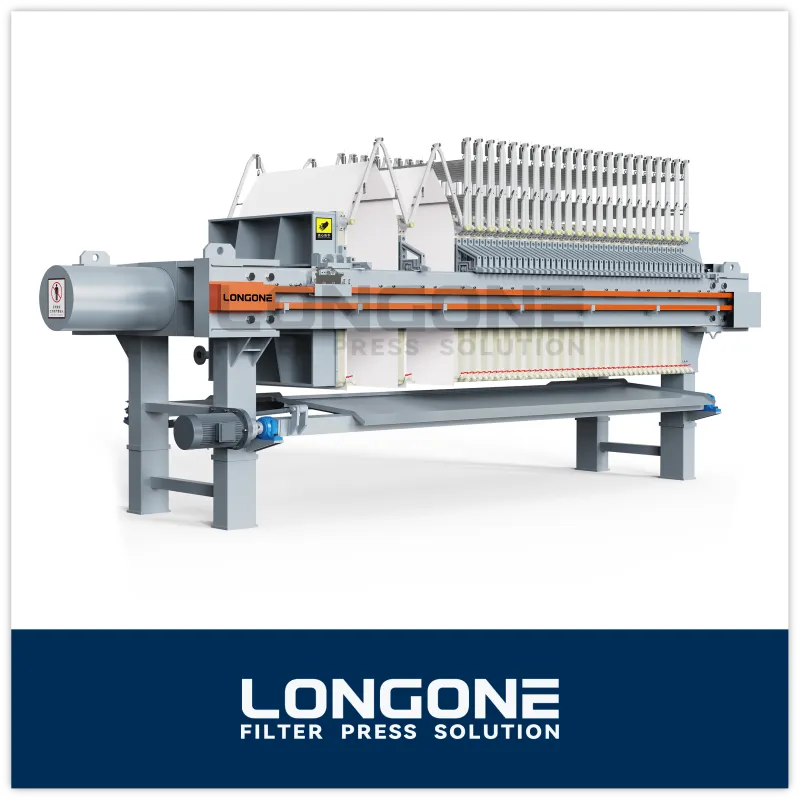
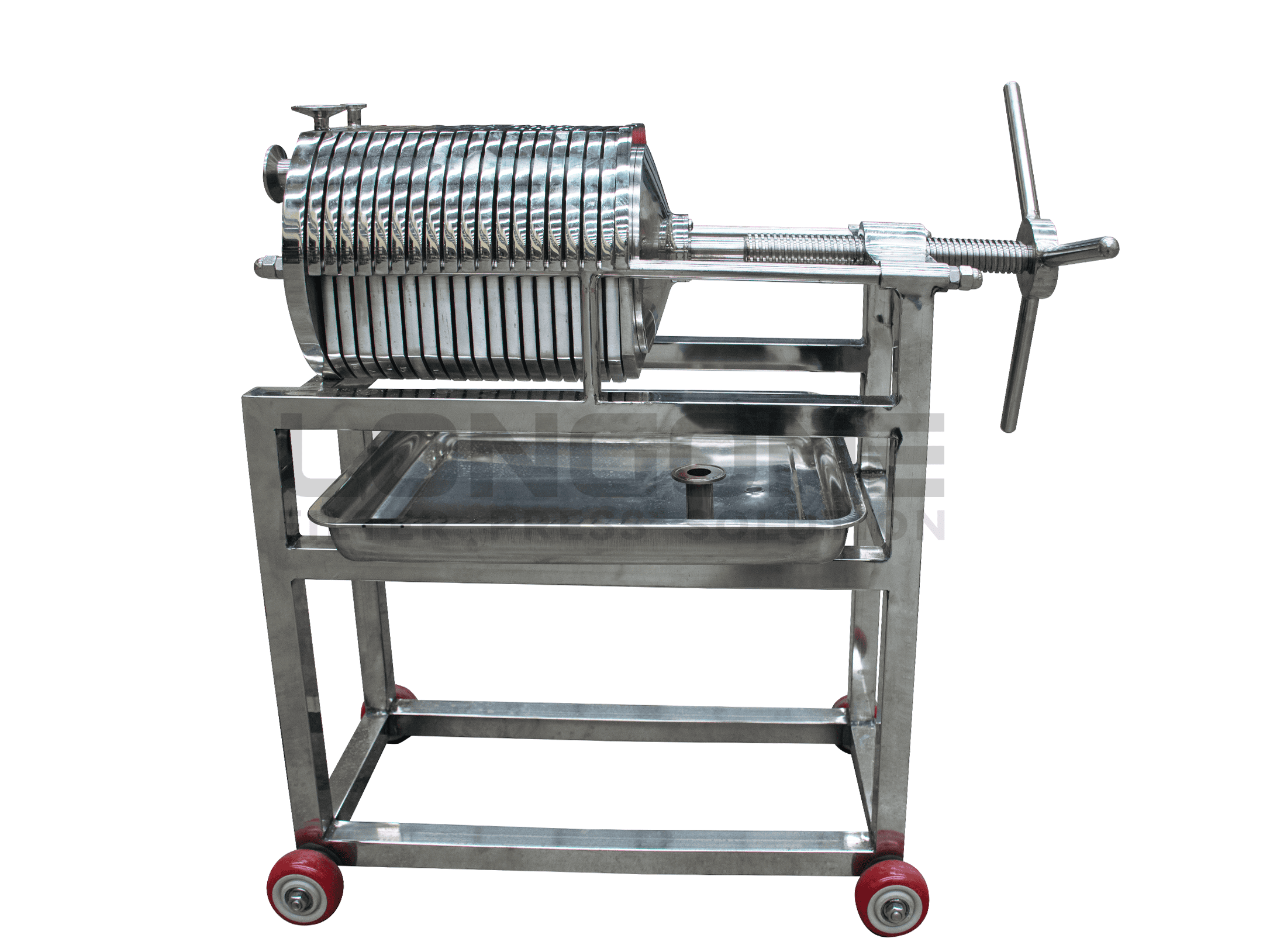
Stainless steel mobile models. Where hygiene, corrosion resistance and flexibility matter, a stainless steel manual filter press mounted on a wheeled cart is a better fit. LONGONE’s stainless steel model uses stacked round plates on a mobile frame with locking casters, so it can be rolled between workstations, cleaned easily and used for liquid clarification in food, beverage, pharmaceutical and laboratory settings.
If you are unsure which type fits, start with your slurry’s corrosiveness, the required hygiene level and whether the machine needs to move.
Where a Manual Filter Press Makes Sense: Applications and Batch Sizes
A manual filter press earns its place in operations where volume is modest and simplicity is valued. Common applications include:
- Laboratories and pilot lines: testing filterability, running trial batches and generating small samples of cake and filtrate.
- Chemical processing: small-lot production, fine chemicals and intermediate products.
- Food and beverage: clarifying juices, syrups, edible oils, wine and other liquids, typically with stainless steel construction.
- Pharmaceutical and cosmetic production: small batches where cleanliness and easy disassembly are priorities.
- Mining and mineral processing: sampling, small concentrate streams and remote sites with limited utilities.
- Wastewater treatment: small industrial sites that generate modest volumes of sludge.
The common thread is low to moderate throughput, intermittent duty, and often limited access to hydraulic service or electrical infrastructure. A manual press is also a sensible first filter press for a business that is still growing into its production volumes.
It becomes a poor fit when you need continuous multi-shift operation, very dry cake, high feed pressure, or when labor cost per cycle starts to outweigh the savings on equipment.
Manual vs. Hydraulic vs. Automatic Filter Press: When to Choose Which
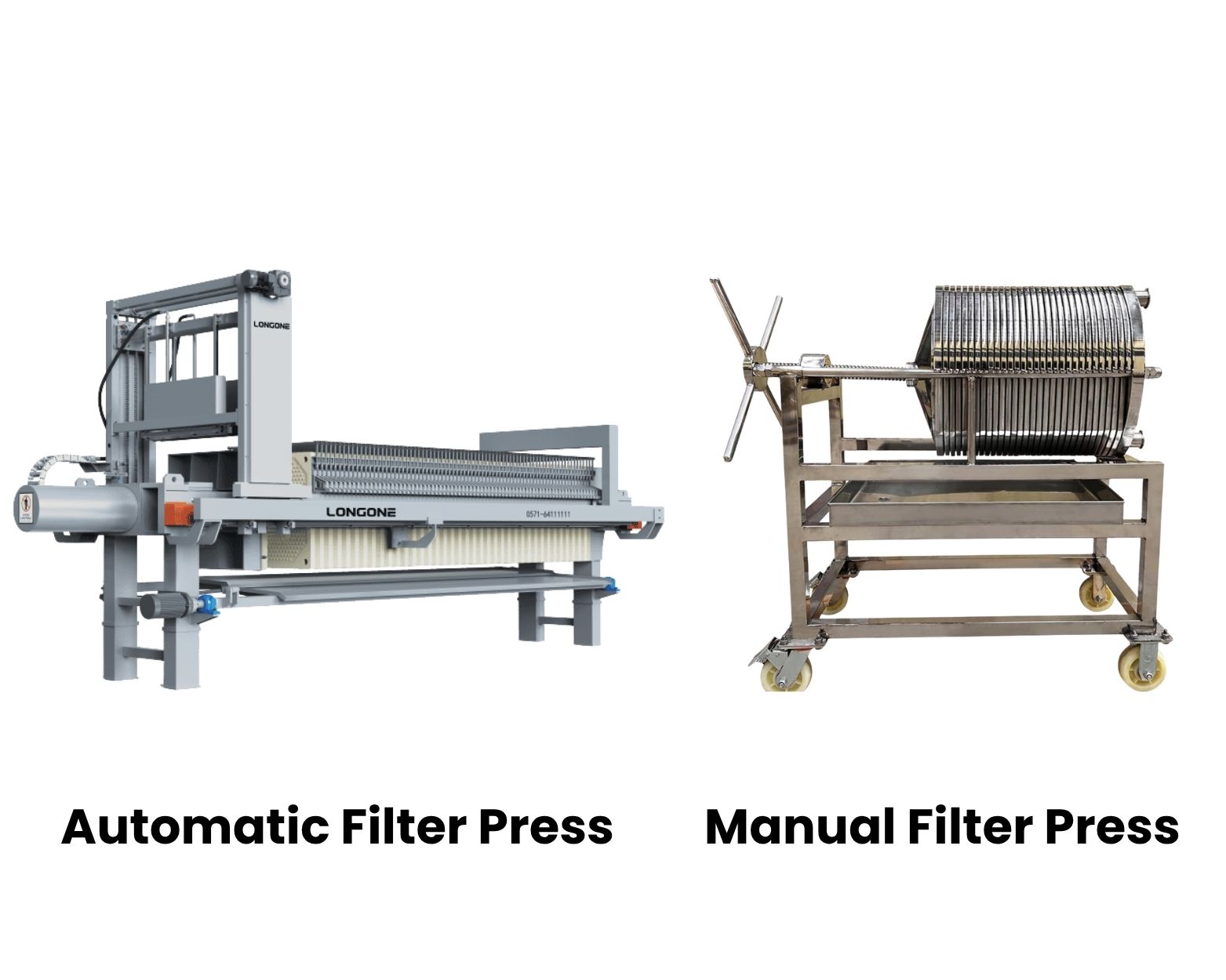
The three categories mainly differ in how plates are closed and how much of the cycle is automated. The table below summarizes the practical differences.
| Factor | Manual Filter Press | Hydraulic Filter Press | Automatic Filter Press |
|---|---|---|---|
| Plate closing | Hand wheel or screw | Hydraulic cylinder and pump | Hydraulic, with pressure holding controls |
| Closing force consistency | Depends on operator | Stable and adjustable | Stable and controlled |
| Cake discharge | Manual | Manual or semi-automatic | Automatic plate shifting and cake release |
| Labor requirement | High per cycle | Moderate | Low |
| Upfront cost | Lowest | Medium | Highest |
| Maintenance | Simple, mechanical | Hydraulic system upkeep | Hydraulic, electrical and control system upkeep |
| Best for | Small batches, labs, pilot lines, remote sites | Mid-size batch production | Continuous or high-volume production |
Choosing between them is a cost decision rather than a quality ranking. If your daily volume is small and labor is inexpensive, a manual unit is often the lowest total cost. As volume grows, labor hours, cycle consistency and operator fatigue start to matter more, and a hydraulic or automatic press begins to pay for itself. Moving up in automation is a sign your operation has grown, not a failure of the manual machine.
How to Choose and Operate a Manual Filter Press: Specs, Cloth Selection and Maintenance Tips
Define the slurry first. Before comparing machines, write down solids content, particle size, temperature, pH or corrosiveness, batch volume and the cake dryness you need. These five or six numbers narrow the choice more than any brochure.
Match the material to the duty. Carbon steel frames with polypropylene plates suit general industrial slurries. Stainless steel is worth the extra cost when hygiene, corrosion or frequent cleaning is involved.
Size for the batch, not the maximum. Choose a filtration area and chamber volume that fits your typical batch. An oversized press wastes cloth and cleaning time, and an undersized one leads to repeated cycles.
Choose cloth with care. Test filter cloth for retention, flow rate and cake release. Cloth is a consumable, so factor replacement into running cost.
Control closing force. Because the closing force is set by hand, train operators to tighten consistently and to a defined standard. Over-tightening can damage plates and cloths, while under-tightening causes leakage between plates and wasted product. Keep plate sealing surfaces clean, since a small piece of dried cake can cause a leak.
Basic maintenance habits.
- Lubricate the screw regularly and keep the threads clean.
- Rinse cloths after each batch to prevent blinding.
- Check plates for cracks or warping.
- Keep the frame aligned and the feed line free of blockages.
- For stainless steel units, clean thoroughly after each product change.
Final Thoughts
A manual filter press is a practical, economical tool when it is used for the right job: small batches, moderate pressure, intermittent duty and operations that value simple, repairable equipment. The key is honest sizing. Define your slurry, batch volume and cake requirements first, and let those numbers guide the choice between manual, hydraulic and automatic.
If you are still evaluating options, our team is happy to review your material data and suggest a suitable configuration. You are welcome to send your slurry details and batch size through the contact page at longonefiltra.com.
Frequently Asked Questions
How much pressure can a manual filter press handle?
Manual filter presses are designed for relatively low feed pressure, since closing force comes from a hand-driven screw. The usable pressure depends on the plate type, frame design and manufacturer, with recessed plate designs generally tolerating somewhat higher pressure than plate-and-frame designs. Always confirm the rated working pressure with the manufacturer for your specific model.
Is a manual filter press better than a hydraulic filter press?
Neither is better in every case. A manual unit costs less and is easier to maintain, making it a good fit for small batches and intermittent use. A hydraulic unit gives more consistent closing force and less physical effort, which suits larger or more frequent production.
Can a manual filter press be used for food or beverage filtration?
Yes, when it is built in food-suitable materials. Stainless steel models with easy-to-clean plates are commonly used for clarifying liquids such as juices, syrups and oils. Confirm that the materials and cloth meet your local food-contact requirements.
How long does a filtration cycle take?
It depends on the slurry, the cloth, the feed rate and the cake thickness. A batch may take from tens of minutes to several hours including feeding, washing, pressing, opening and discharge. Running a small test batch is the most reliable way to estimate cycle time for your material.
How do I prevent leaks between plates?
Tighten the plate pack evenly and to a consistent standard, keep sealing surfaces and cloth edges clean and flat, replace worn or wrinkled cloths, and avoid overfilling the chambers. Persistent leaks often point to warped plates or misaligned frames.