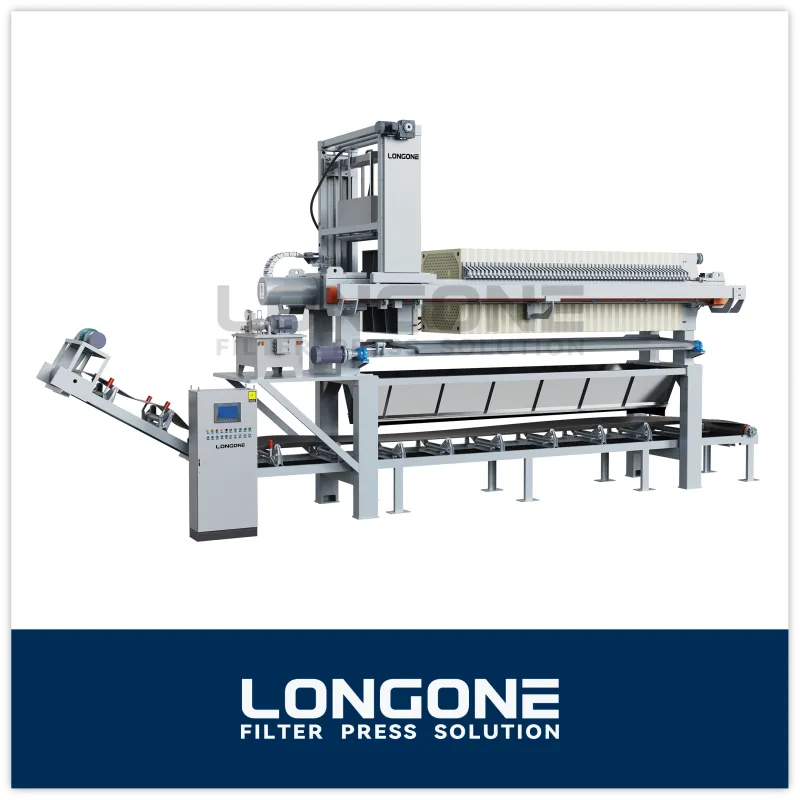
A filter press that performed perfectly in the sales presentation can start struggling within months of commissioning at a mine. The reason is rarely the press itself. Mining slurry changes with the orebody, the grind size, the reagents and even the season, and equipment that was sized for one condition is quietly forced to cope with another. Cycle times stretch, cake comes out wetter than promised, and plates and cloths wear faster than the budget allowed.
This guide explains how a mining filter press works, where it delivers the most value, and which specification decisions matter most before you buy. It is written for plant managers, process engineers and procurement teams who need a filter press to keep running when conditions are not ideal.
Why Mining Slurries Are the Toughest Test for a Filter Press
Filter presses are used in food, chemicals, pharmaceuticals and wastewater treatment, but mining is one of the most demanding environments they operate in. Three characteristics explain why.
Abrasion. Ground ore contains hard, angular particles. Under high feed pressure, these particles scour plate surfaces, feed ports, cloth fibers and sealing edges. Wear that a municipal sludge application would take a decade to produce can appear much sooner in a concentrator.
Chemistry. Slurries from leaching and flotation circuits may be acidic, alkaline or carry residual reagents. Materials that are fine in neutral water can degrade, swell or become brittle when exposed to process chemistry over thousands of cycles.
Variability. Particle size distribution, solids concentration and clay content can shift from one ore batch to the next. Fine particles blind cloths. Sticky clays slow drainage. A sudden drop in feed density changes how the chamber fills.
Because of this, the right question is not “Can a filter press dewater this material?” It almost always can. The better question is “Can this specific press, with these plates and this cloth, keep dewatering this material at an acceptable cost per ton for years?”
How a Mining Filter Press Works: From Slurry Feed to Cake Discharge
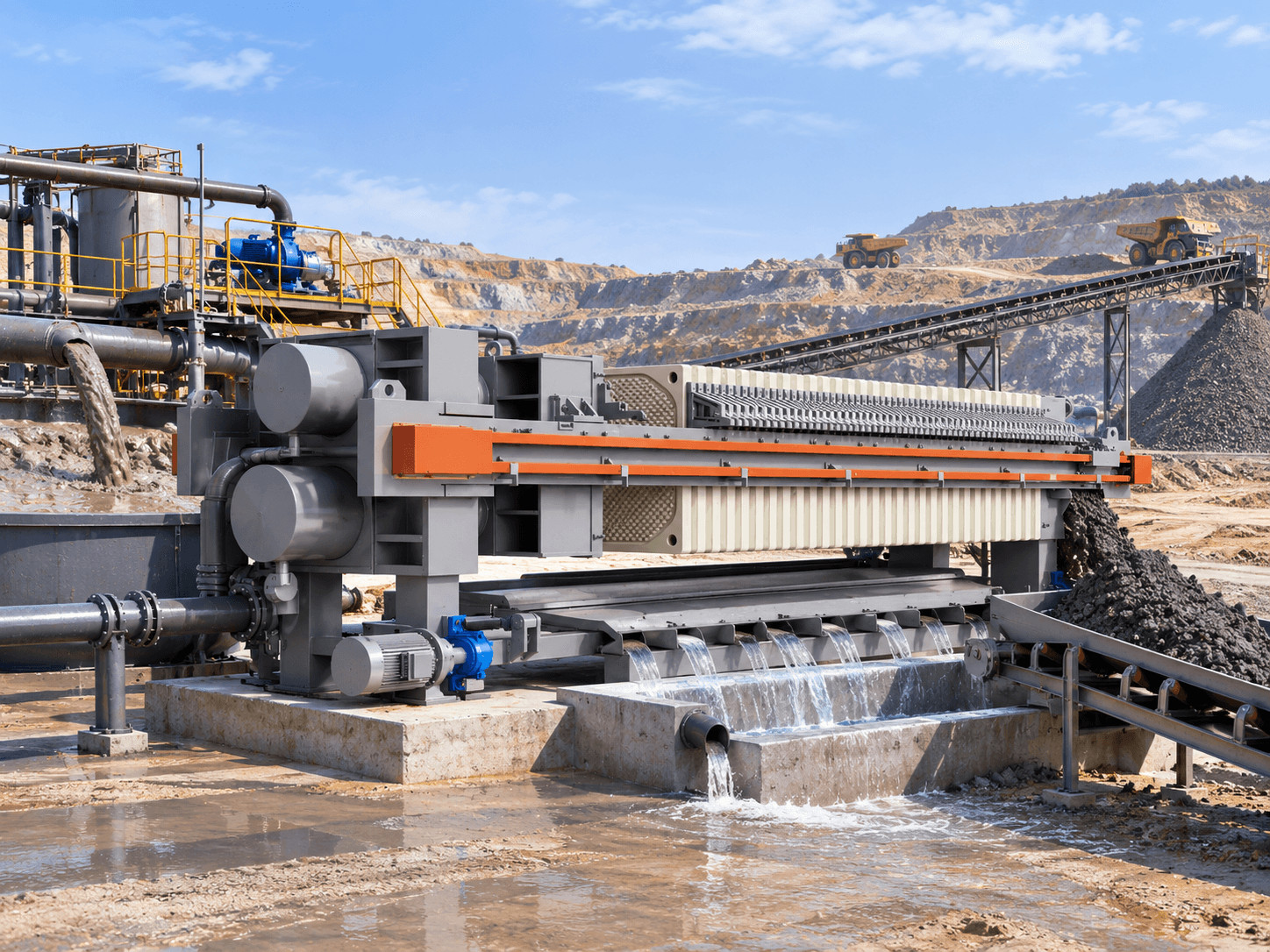
A filter press separates solids from liquid by forcing slurry through filter cloth under pressure. The process repeats in a batch cycle with four main stages.
1. Feeding. A feed pump sends slurry into the chambers formed between adjacent filter plates. Each plate is covered with filter cloth. Liquid passes through the cloth and drains away as filtrate, while solid particles are retained.
2. Filtration. As feed continues, solids build up on the cloth and form a cake. The cake itself becomes part of the filter medium, which is why filtrate often becomes clearer as the cycle progresses. Feed pressure rises until the chambers are full.
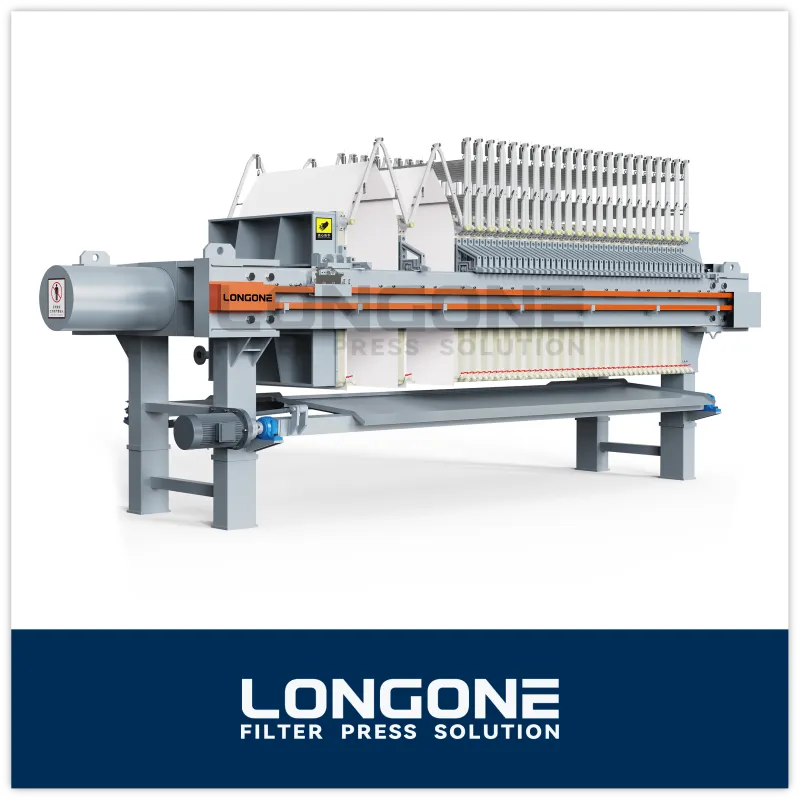
3. Pressing (optional). In a membrane filter press, flexible membranes on the plates are inflated with water or air after filling. They squeeze the cake mechanically and push out additional moisture. Recessed chamber presses skip this step.
4. Discharge. The hydraulic system releases the plate pack, the plates are separated, and the cake drops out, either by gravity or with the help of cake breakers and a discharge hopper. The plates close again and the next cycle begins.
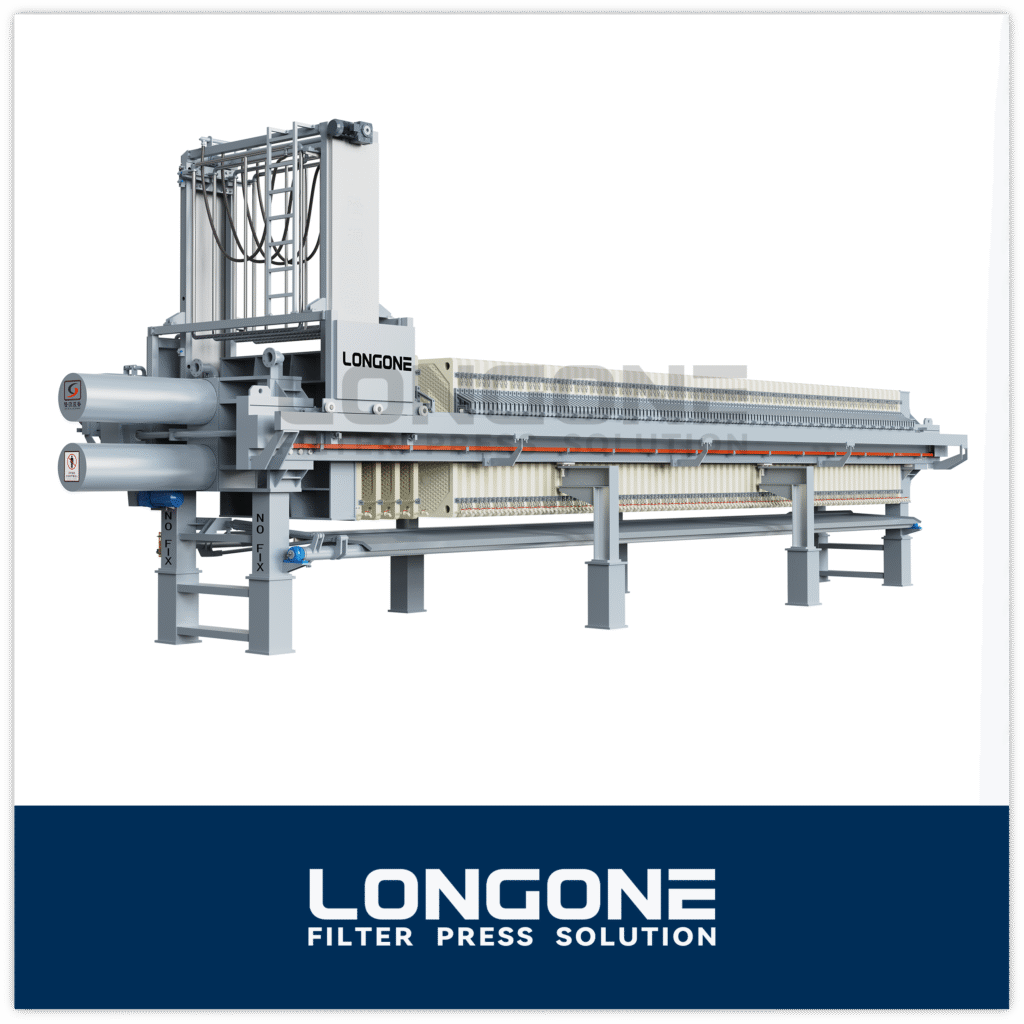
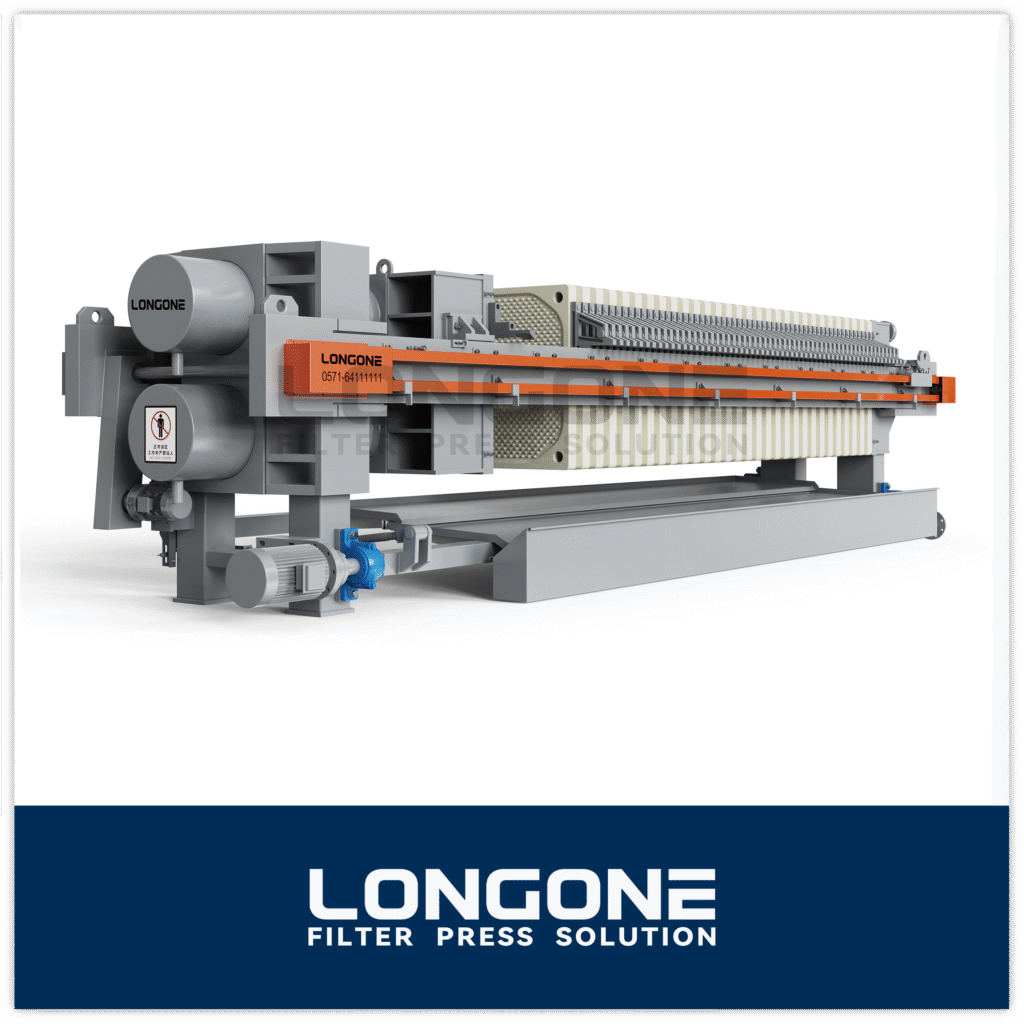
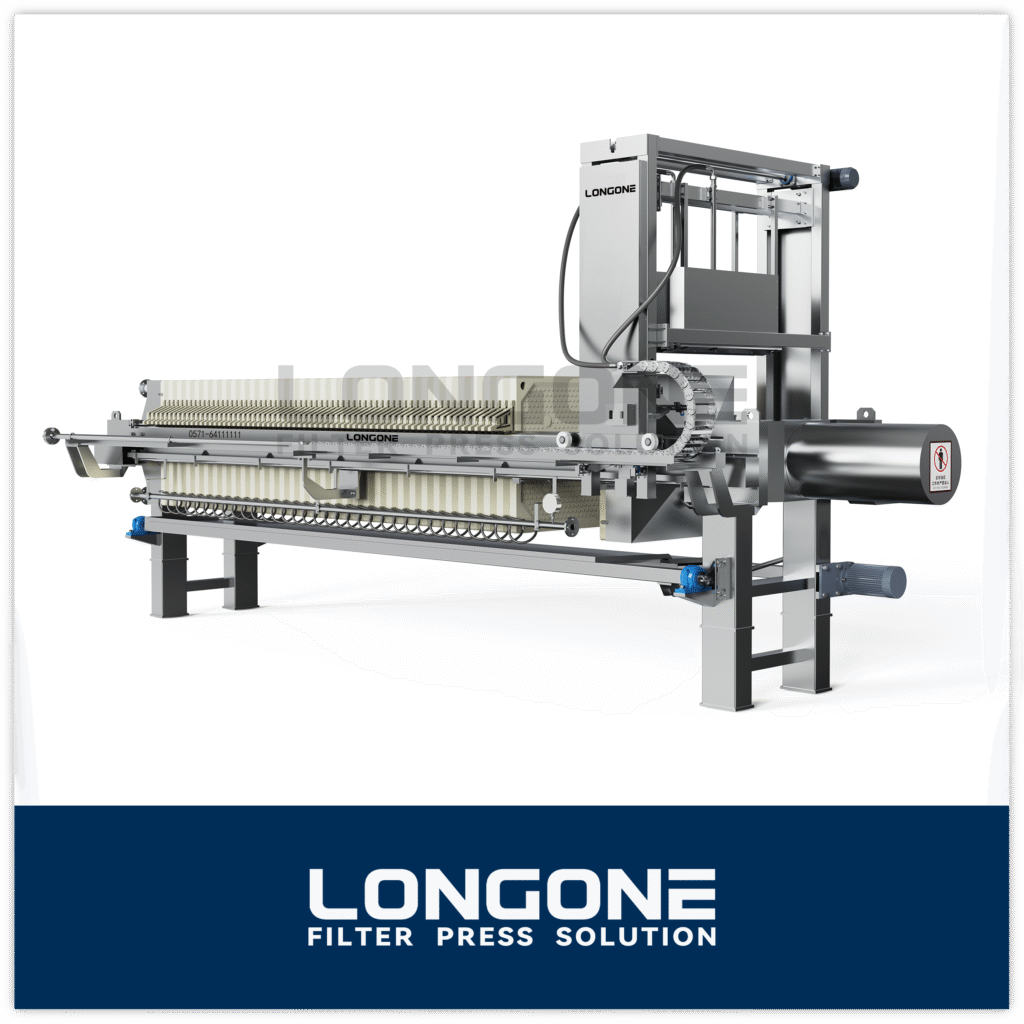
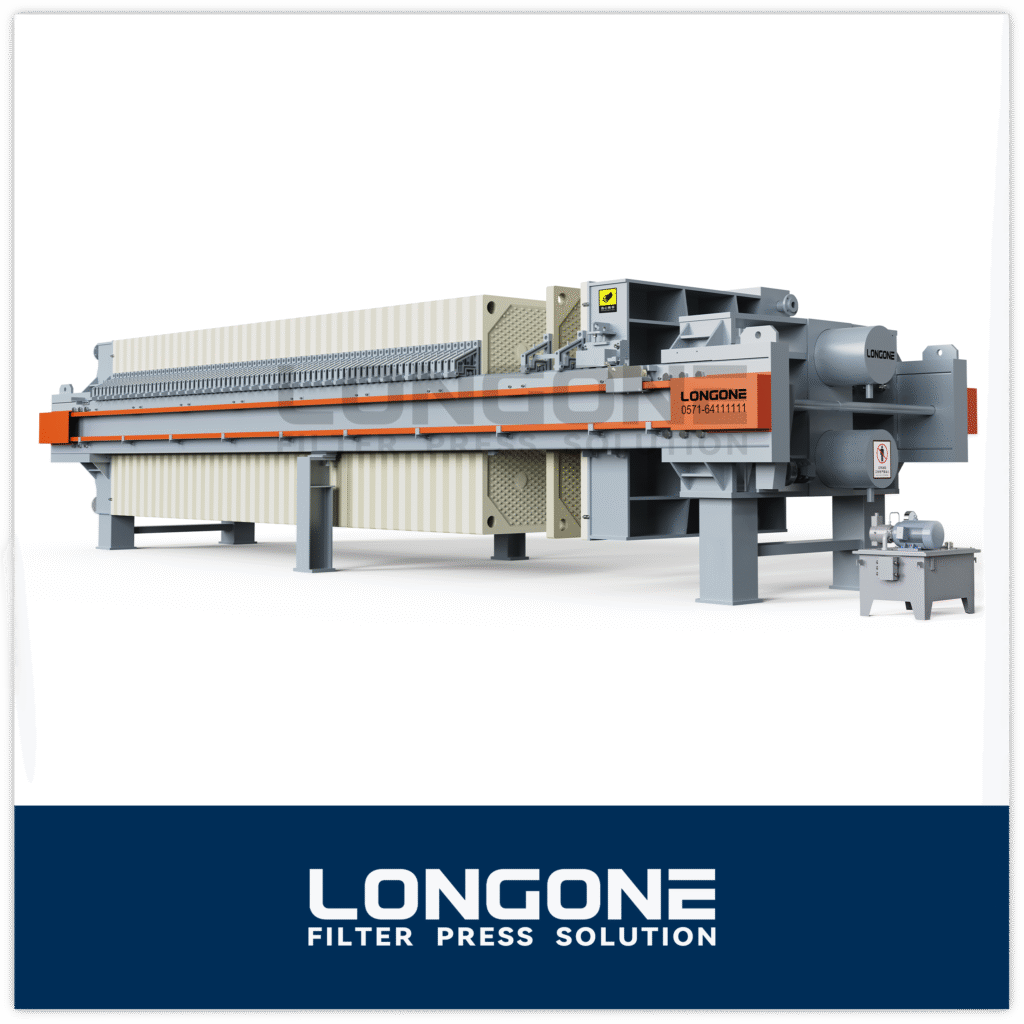
The main components behind this cycle are the frame, the filter plates, the filter cloths, the hydraulic closing system, the feed pump and the control system. In mining, each of these is exposed to heavier duty than in most other industries. The plates and cloths in particular are wear items that determine long-term performance, and we return to them below.
Core Mining Applications: Tailings, Concentrates and Water Recovery
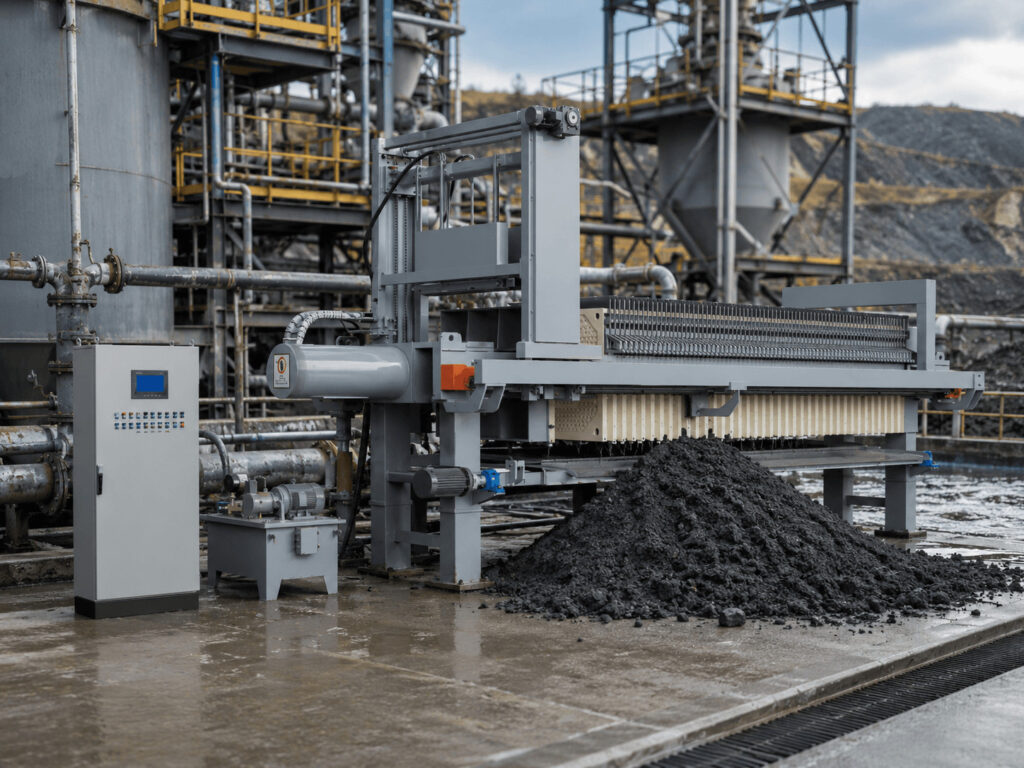
Filter presses appear at several points in a mineral processing flowsheet. Three applications account for most of the demand.
Tailings Dewatering and Dry Stacking
Conventional tailings storage keeps large volumes of water locked in impoundments, with the environmental and safety risks that come with them. Filtering tailings into a stackable cake reduces the water content enough to allow dry stacking, which can reduce dependence on large tailings ponds and lower the risk associated with dam failure. It also returns process water to the plant instead of leaving it in storage.
For operations in water-scarce regions or under tightening environmental permits, this is often the strongest business case for a filter press: recovered water and a smaller, safer storage footprint.
Concentrate Dewatering
Concentrates such as copper, lead, zinc and iron are usually sold by weight. Every unit of excess moisture is water you pay to transport and, in some contracts, water you are penalized for. Filter presses produce a cake with low residual moisture that is easier to handle, ship and feed to downstream smelting or drying. Lower moisture means lower freight per ton of contained metal and less thermal energy needed downstream.
Water Recovery and Precious Metal Circuits
Filter presses also support water recycling loops and hydrometallurgical steps. In gold and silver recovery, for example, the Merrill-Crowe process uses filtration to separate the precipitated precious metals after zinc cementation. In wastewater circuits, presses remove solids and heavy metal hydroxides before water is reused or discharged. In these applications, filtrate clarity and reliable solids capture matter as much as cake dryness.
Other materials commonly handled include coal slurry, slag, kaolin and various non-ferrous and non-metallic mineral products.
Recessed Chamber vs. Membrane Filter Press: Which Suits Your Ore?
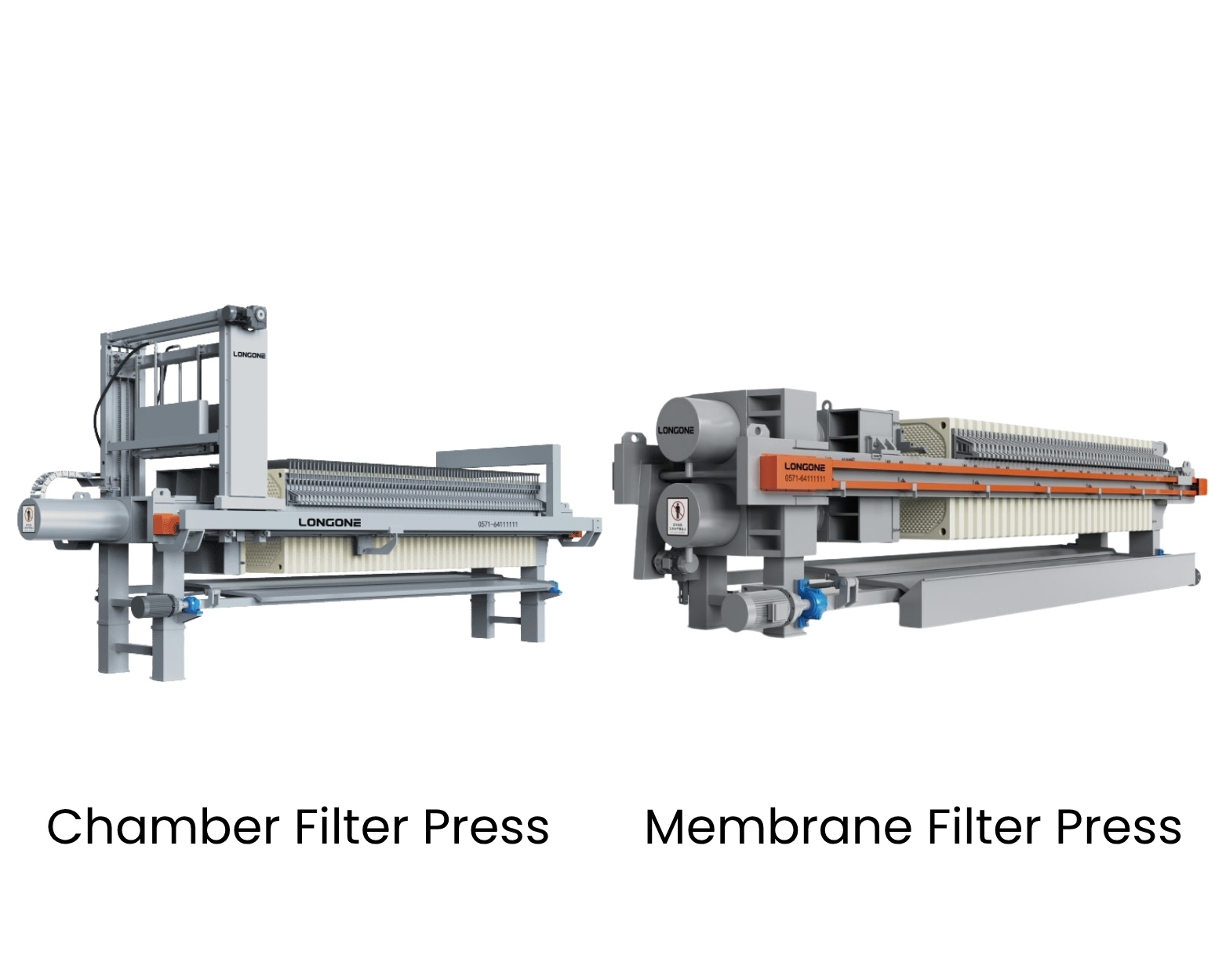
The most important equipment decision is usually the plate type. Both designs use the same basic principle, but they behave differently in cycle time, cake moisture and cost.
| Factor | Recessed Chamber Filter Press | Filtropressa a membrana |
|---|---|---|
| Dewatering method | Feed pressure only | Feed pressure plus mechanical squeeze |
| Cake moisture | Higher | Lower, as the squeeze removes additional liquid |
| Cake uniformity | More variable, depending on chamber fill | More uniform across the chamber |
| Cycle time | Simpler cycle, but feeding often runs longer to reach dryness | Added squeeze step, often with a shorter or more efficient filtration phase |
| Capital cost | Lower | Higher, due to membrane plates and squeeze system |
| Maintenance | Fewer components to service | Membranes need inspection and eventual replacement |
| Best fit | Free-draining materials, moderate dryness targets, budget-limited projects | Fine or compressible slurries, strict moisture targets, dry stack tailings, high-value concentrates |
The right choice depends on what the cake needs to do next. If cake moisture only needs to meet a handling limit, a recessed chamber press may be enough. If moisture directly affects transport cost, contract penalties, stackability or downstream drying energy, the extra investment in a membrane press is often recovered through lower operating costs.
Slurry behavior matters as well. Fine, slimy or compressible material usually gains the most from the squeeze step, while coarse, free-draining material may not.
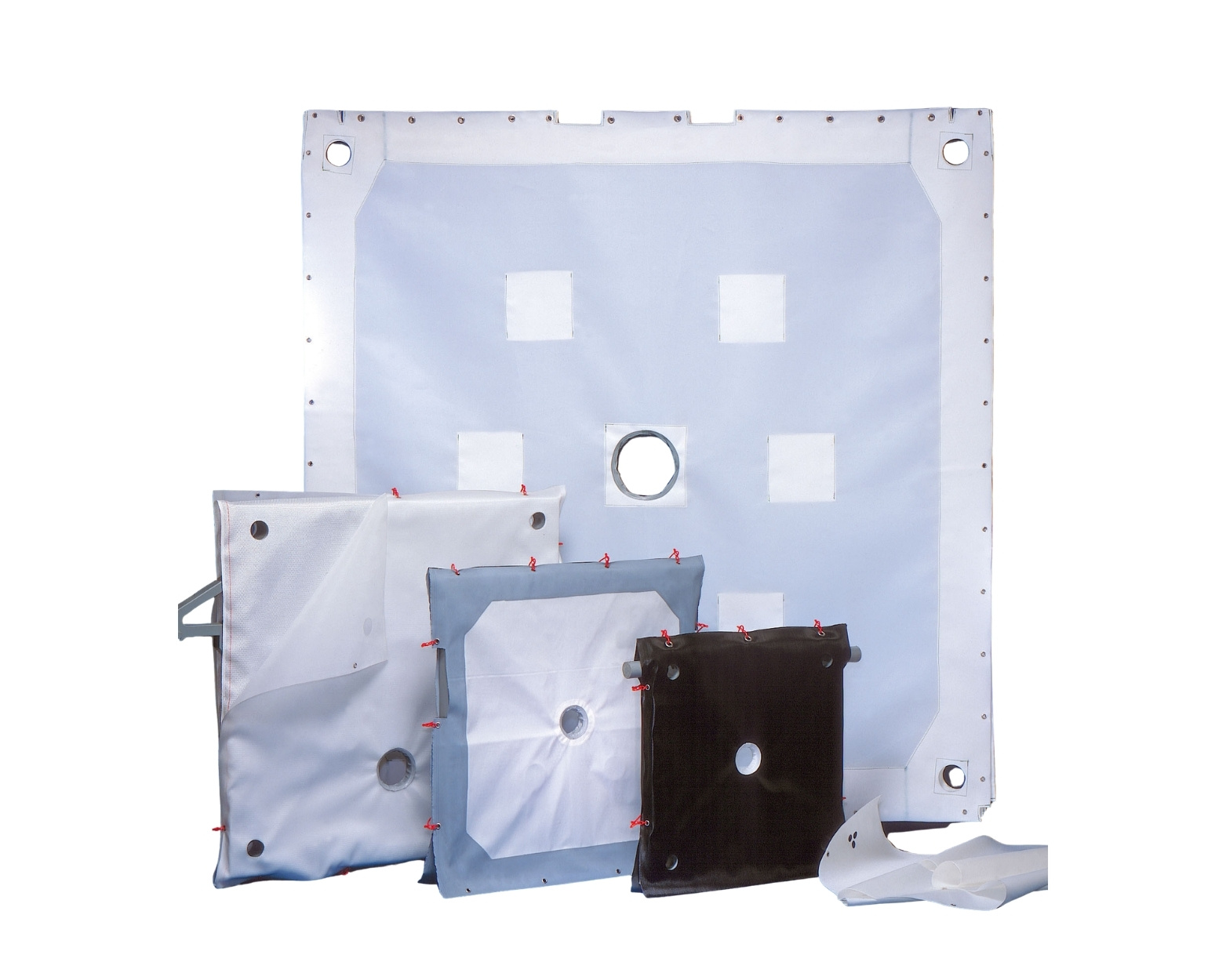
Filter Plates and Cloths: Where Mining Filter Press Performance Is Won or Lost
Frames and hydraulics tend to attract most of the attention in a purchase decision. In daily operation, however, plates and cloths decide whether the press keeps its promised throughput.
Filter Plates
Filter plates carry the full feed pressure, the clamping force and the abrasion of the slurry. For mining duty, several details deserve attention:
- Material and reinforcement. Polypropylene is the most common plate material, but formulation and structural reinforcement vary widely between manufacturers. Plates that are not properly molded and reinforced can warp, crack around the feed eye or fail at the corners under repeated pressure cycles.
- Pressure rating. Filter presses typically operate somewhere in the range of 6 to 16 bar depending on design and application. Confirm the rated operating pressure, and check that both plates and the rest of the system are designed for the pressure you actually plan to use.
- Feed eye and sealing surfaces. These are the first areas to show abrasion wear. Sealing surface condition also affects leakage between plates, which is a common cause of messy operation and cloth damage.
- Membrane quality (for membrane plates). Membrane material, thickness and bonding method influence how many squeeze cycles the plate can tolerate.
A cracked plate is more than a spare part cost. It can stop a cycle, contaminate the surrounding area and take the whole press offline until the plate is replaced.

Filter Cloths
Cloth selection is often treated as a purchasing detail, but it strongly affects cycle time and cake moisture. Cloth choice depends on:
- Particle size distribution. Fine solids need tighter cloth, and coarse solids can use more open weaves.
- Air permeability and weave. Too open and fines pass through, so filtrate turns cloudy. Too tight and the cloth blinds early, so cycles get longer and cake gets wetter.
- Chemical and abrasion resistance. Fiber type and finishing should suit the slurry chemistry and temperature.
- Cleanability. Cake release and washing behavior determine how often the cloth must be cleaned or replaced.
Cloth is a consumable. Building its replacement cost and downtime into the operating budget from the start gives a more honest cost-per-ton picture than looking at equipment price alone.
At LONGONE, we manufacture filter press plates and complete filter press machines, and we see the same pattern across mining projects: the presses that run longest are the ones where plate structure, cloth selection and operating pressure were matched to the real slurry before the order was placed.
How to Size and Specify a Mining Filter Press: A Buyer’s Checklist
A good specification starts with data about your own slurry rather than a catalog capacity number. Work through the following points before requesting quotations.
1. Run a filtration test on your actual slurry. Laboratory or pilot testing shows filtration rate, achievable cake moisture, cake release and cloth behavior. It is the most reliable basis for sizing and the best defense against surprises after commissioning. Test multiple ore types or blends if your feed varies.
2. Define your throughput and solids loading. Know your dry tons per hour or day, feed solids concentration and how much the feed varies. Slurry that arrives too dilute may need thickening before filtration to keep the press efficient.
3. Set a realistic moisture target. Decide the cake moisture you actually need for transport, stacking or downstream processing, and let that target drive the choice between recessed and membrane plates.
4. Match the pump and feed system. The feed pump must handle abrasive solids at the required pressure and flow. An undersized or poorly matched pump can limit filtration performance regardless of press quality.
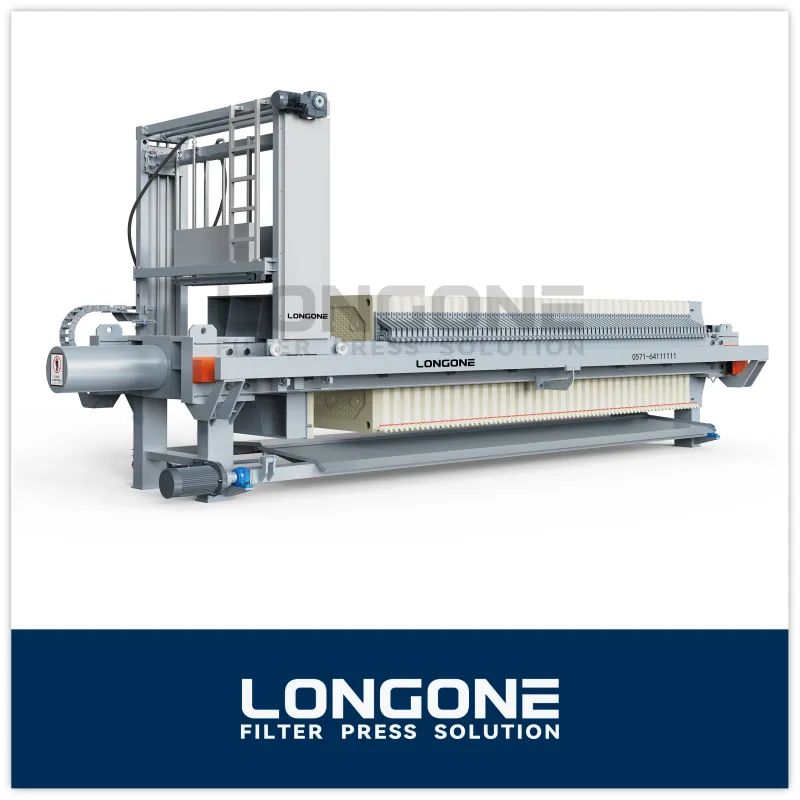
5. Plan the level of automation. Plate shifting, cloth washing, cake discharge and cycle control can be manual, semi-automatic or fully automatic. Higher automation reduces labor and improves consistency, and it makes most sense for high-volume, continuous operations.
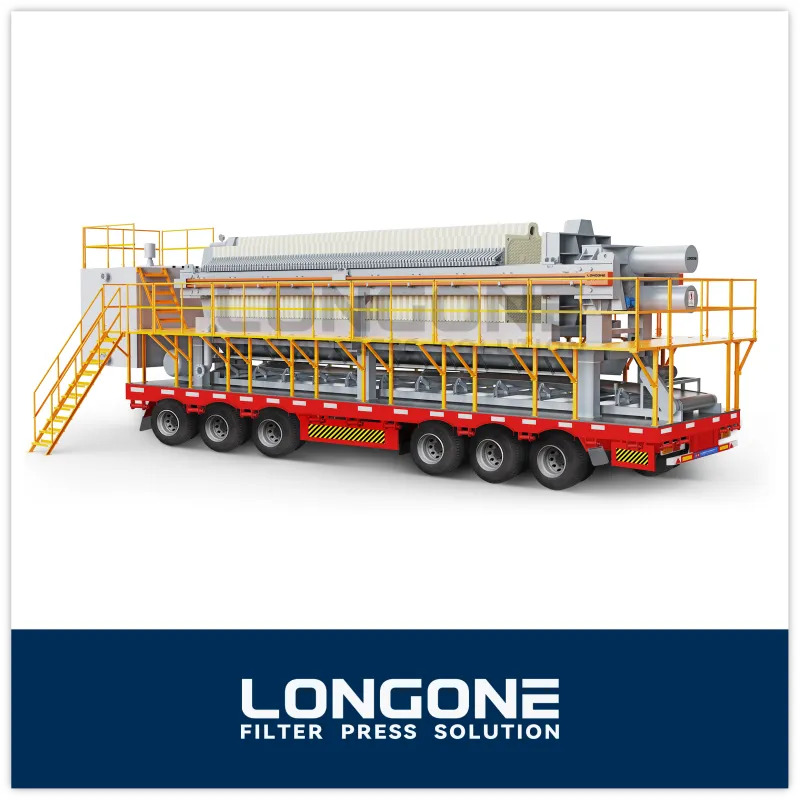
6. Check the site conditions. Consider ambient temperature, dust, available floor space, headroom for plate shifting, cake handling equipment and power supply. Outdoor installations may need a canopy or weather protection.
7. Plan spares and support from day one. Order an initial stock of plates and cloths, agree lead times for replacements and confirm the supplier’s ability to support the press for its full service life.
If you can share your slurry type, solids concentration and target throughput, we can help you narrow down a suitable press configuration and plate specification.
Conclusione
A mining filter press is a long-term production asset, not a one-time equipment purchase. The presses that deliver the best return are those specified from real slurry data, fitted with plates and cloths chosen for the actual duty, and supported with a sensible spare parts plan. Start with a filtration test, define your moisture and throughput targets, and treat plates and cloths as core parts of the specification rather than accessories.
Frequently Asked Questions
What is a filter press used for in mining?
In mining, a filter press is used to separate solids from liquid in slurries. Typical uses include dewatering tailings for dry stacking, reducing moisture in mineral concentrates, recovering process water and separating precipitated metals in hydrometallurgical circuits.
Which type of filter press is best for dry stack tailings?
Membrane filter presses are widely used for dry stack tailings because the squeeze step removes additional moisture and produces a more uniform, stackable cake. The final choice depends on tailings particle size, target moisture and throughput, so testing on your own material is recommended.
What is the difference between a recessed chamber and a membrane filter press?
A recessed chamber press dewaters using feed pressure only. A membrane press adds inflatable membranes that squeeze the cake after filling, which reduces moisture further. Membrane presses cost more upfront but often lower transport and drying costs.
How long do filter cloths last in mining applications?
There is no single figure. Cloth life depends on slurry abrasiveness, chemistry, particle size, operating pressure, cleaning method and cycle count. Tracking cycle time and cake moisture trends is a practical way to decide when a cloth needs cleaning or replacement.
What affects cake moisture in a mining filter press?
Key factors include particle size distribution, clay content, feed solids concentration, filtration and squeeze pressure, cycle time, cloth condition and plate type. Testing your slurry under different conditions shows which factors have the greatest effect on your cake.