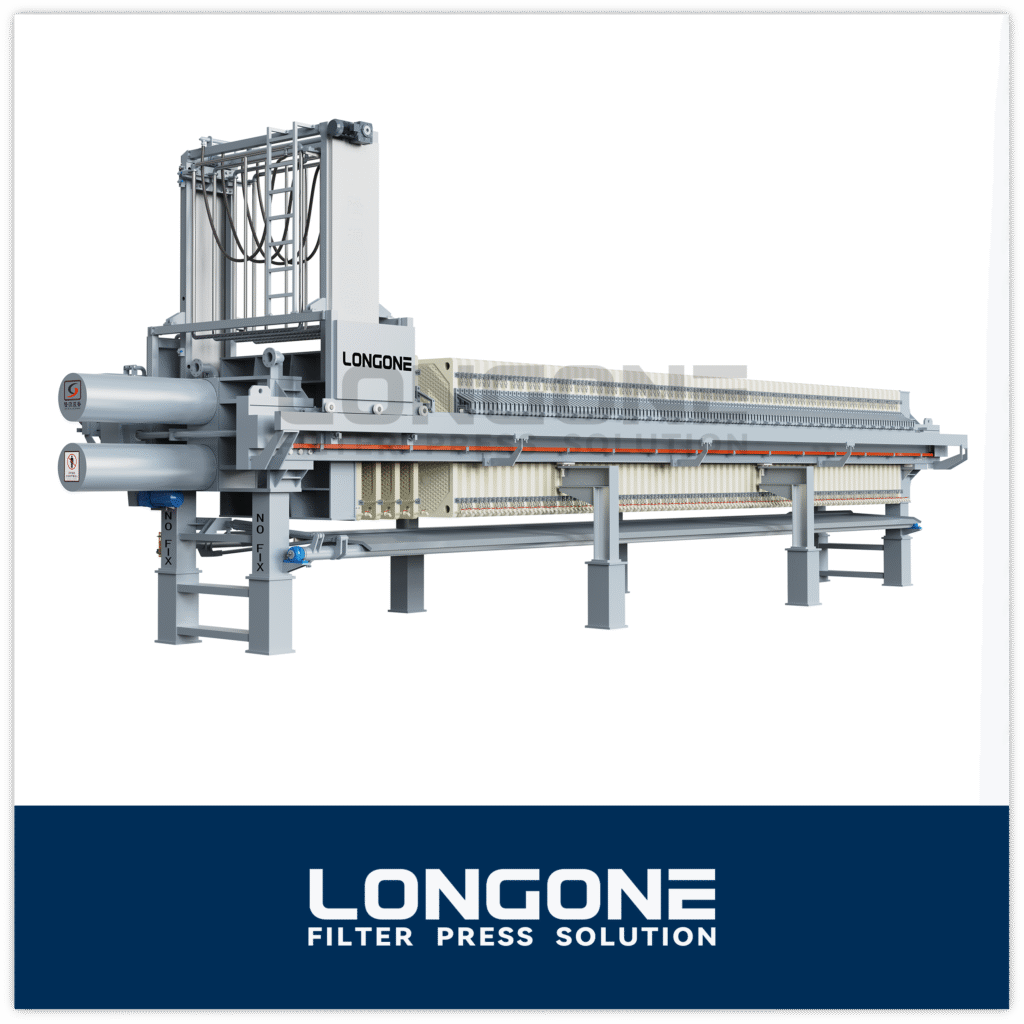
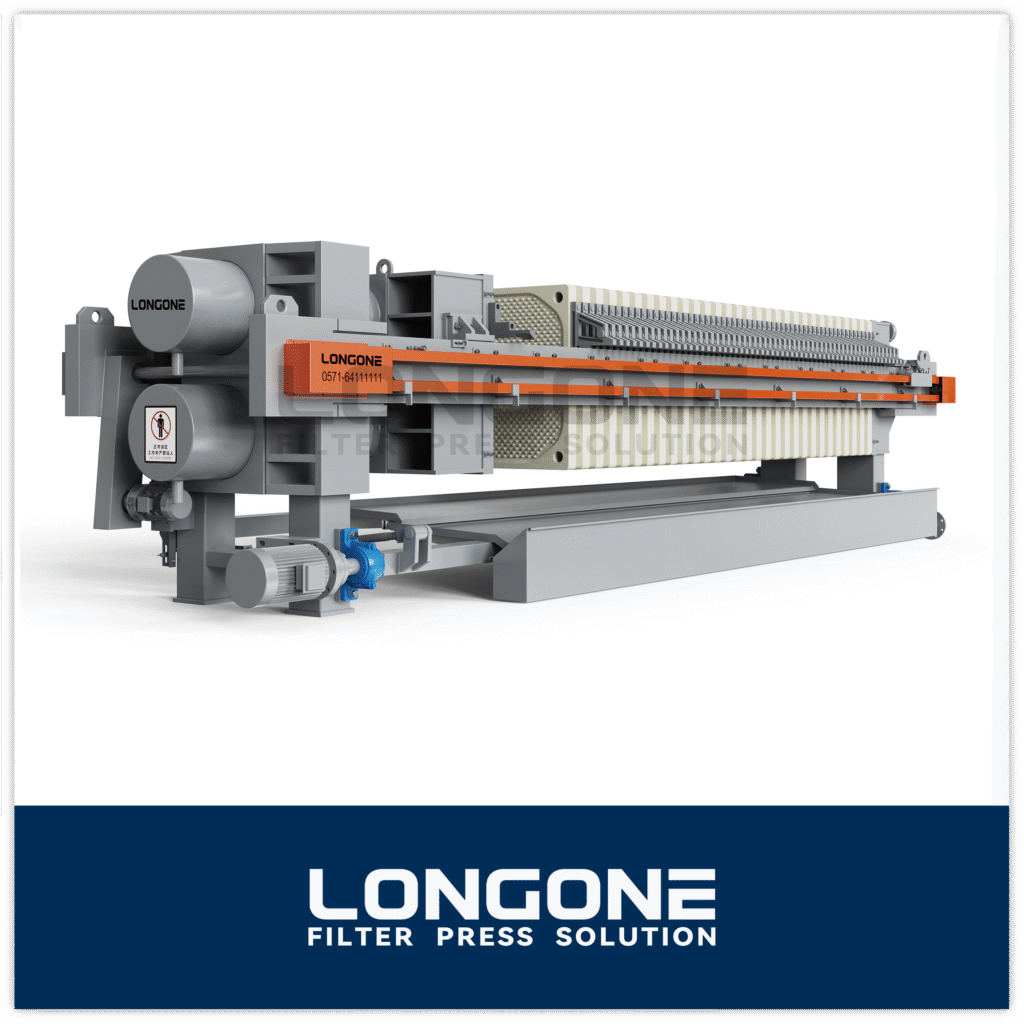
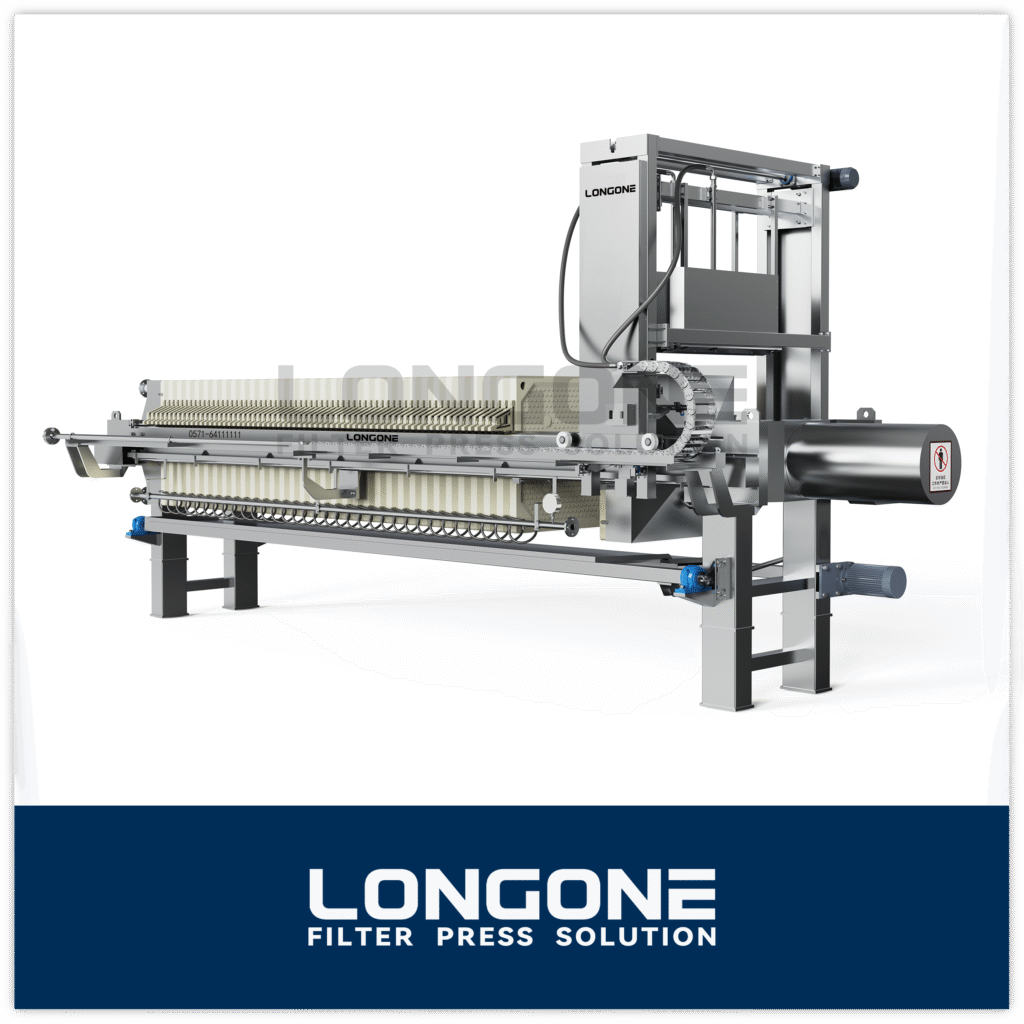
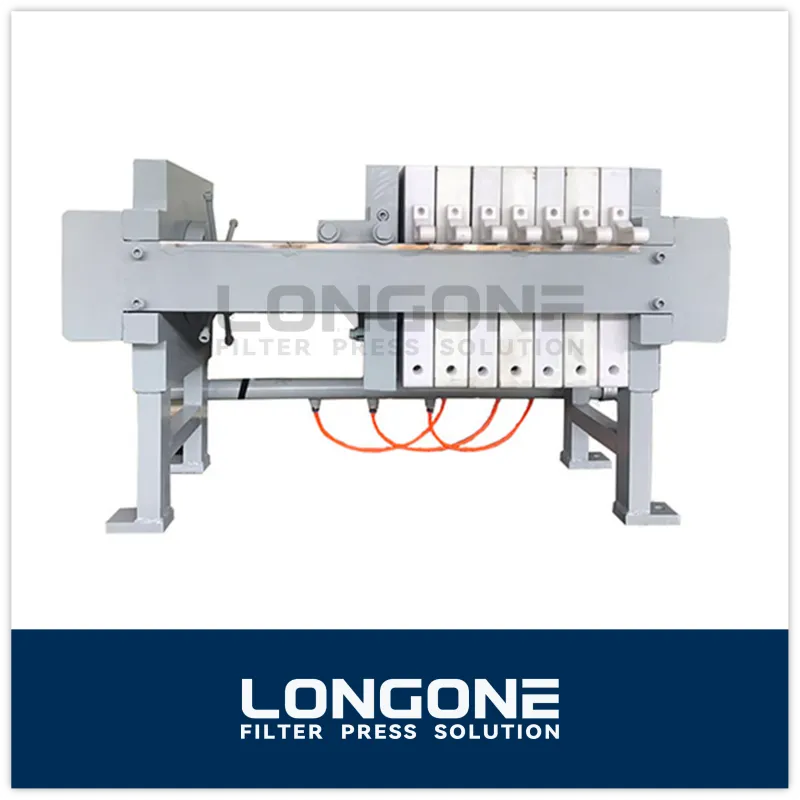
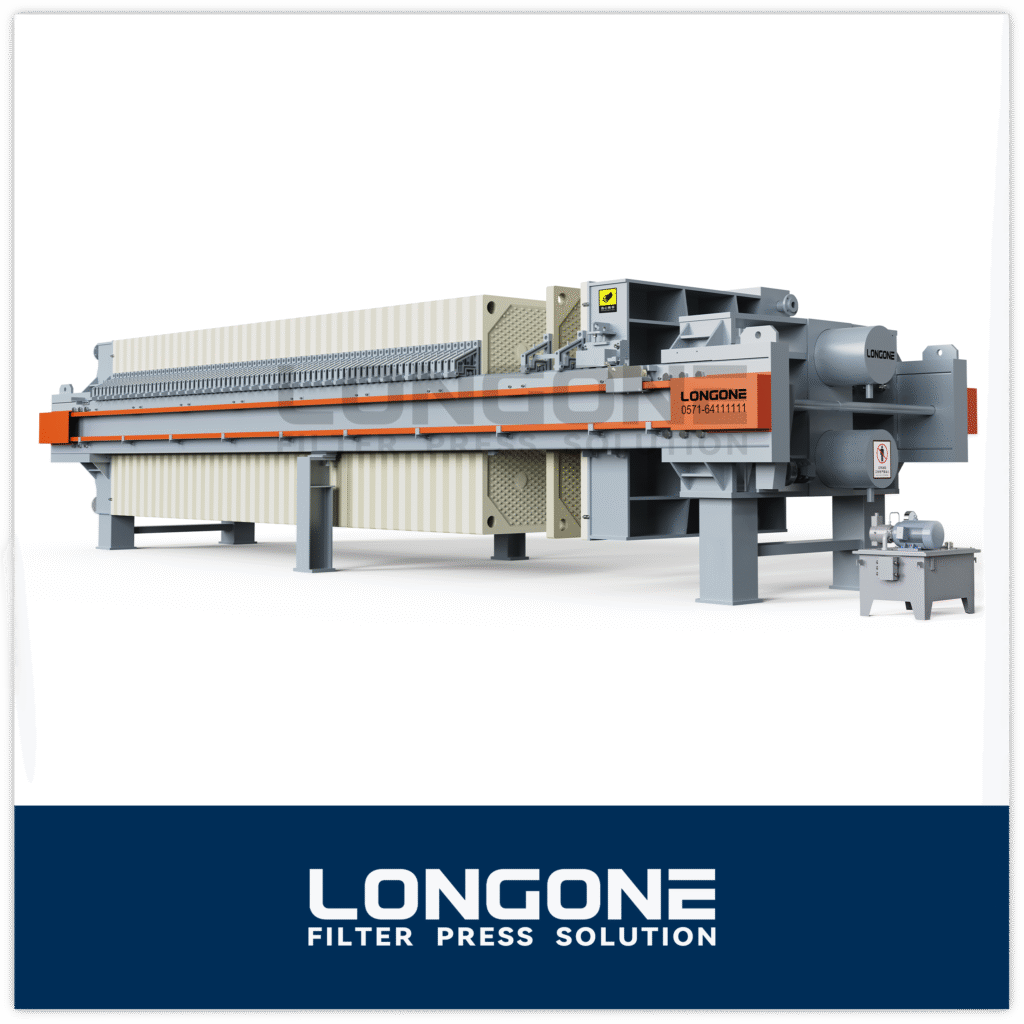
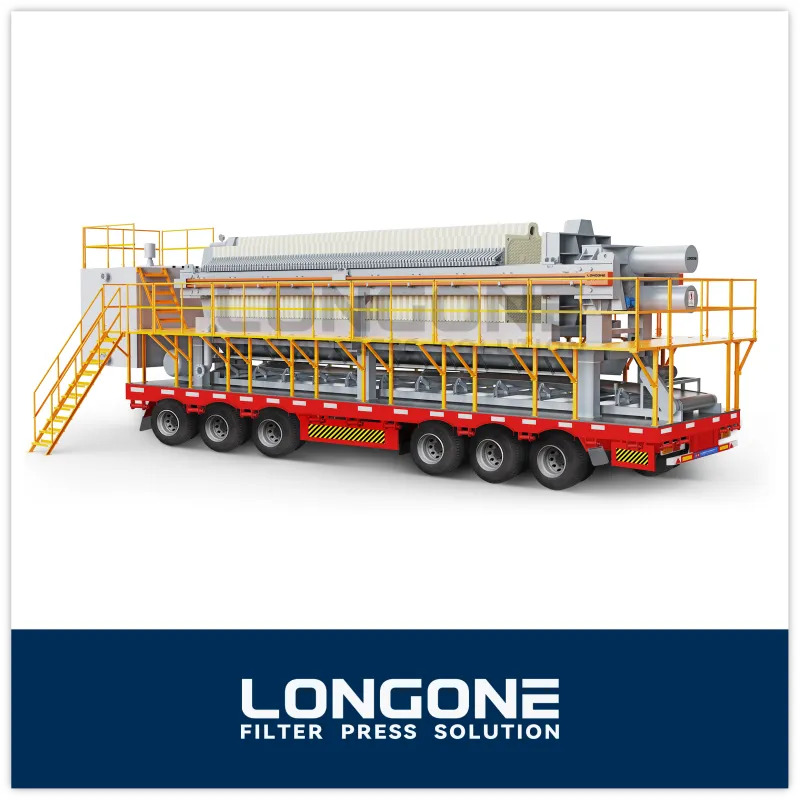
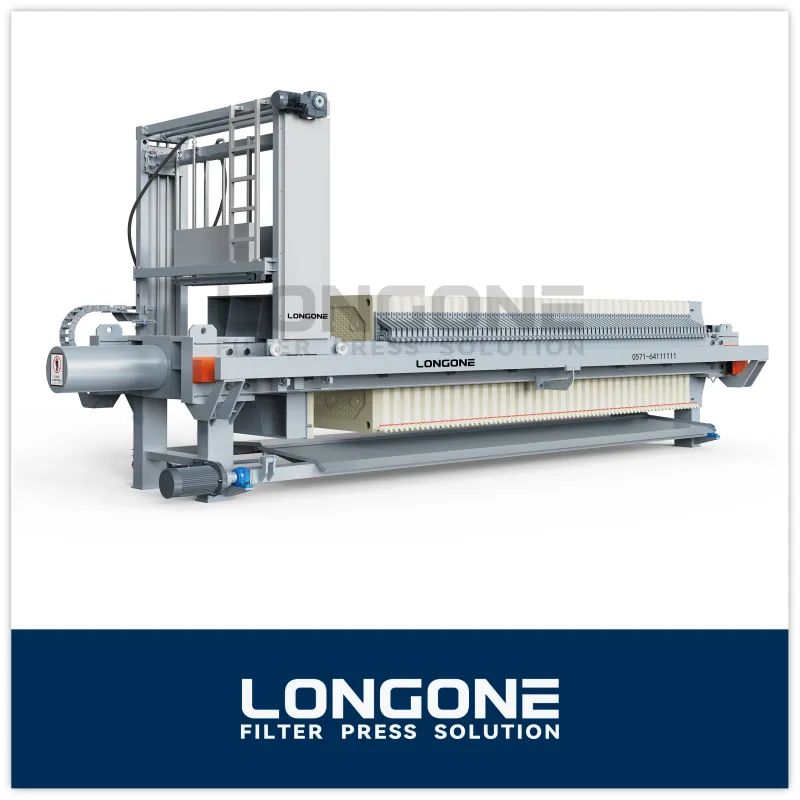
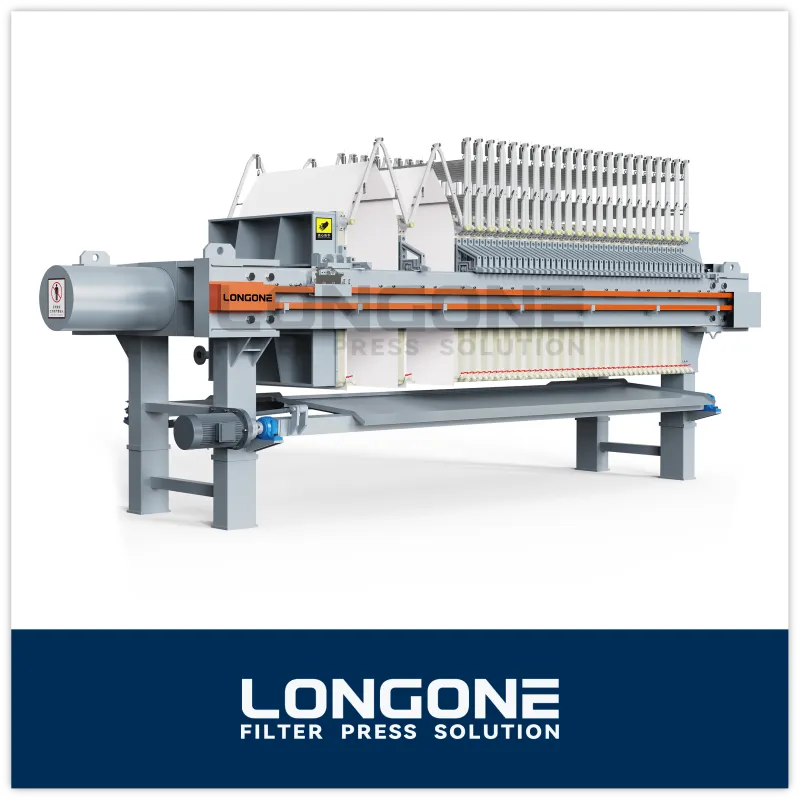
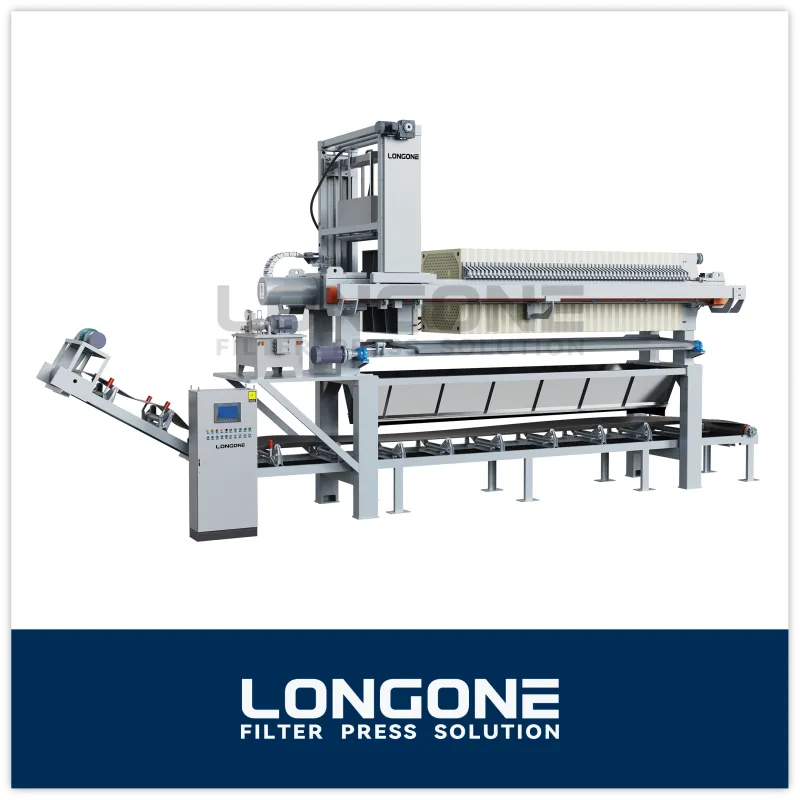
A vertical filter press is a type of solid-liquid separation equipment in which the filter plates are arranged horizontally and stacked one above another. Compared with a conventional horizontal filter press, it is designed for a higher level of automation, a smaller footprint, and better handling of fine or sticky materials. For plants that run continuously and need consistent cake discharge, a vertical filter press can remove many of the manual steps that slow down a traditional machine.
This guide explains how a vertical filter press works, what makes its structure different, where it fits best, and what buyers should check before choosing one.
What Is a Vertical Filter Press and How Does It Work?
A vertical filter press separates solids from liquids by pumping slurry into stacked filtration chambers under pressure. The liquid (filtrate) passes through the filter cloth, while the solids stay behind and form a filter cake.
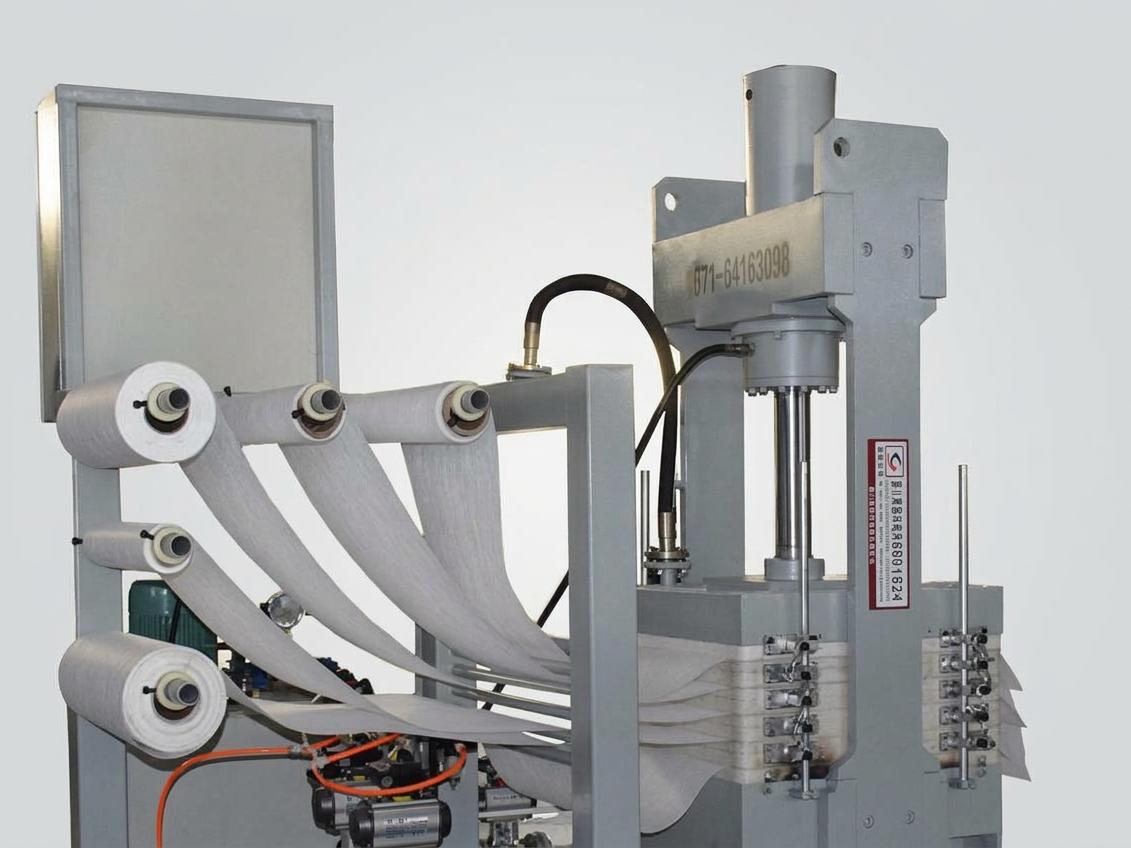
The main difference lies in the layout. Instead of plates standing side by side, the plates in a vertical filter press are stacked on top of each other. A moving filter cloth typically runs through the chambers, so when the plates open, the cloth carries the cake out of the press and releases it at the discharge point.
A typical working cycle includes these stages:
- Closing: The plate pack closes under hydraulic pressure to form sealed filtration chambers.
- Feeding and filtration: Slurry is pumped in, and filtrate flows through the cloth while solids build up as cake.
- Membrane squeezing (when equipped): Inflated diaphragms press the cake further to reduce moisture.
- Cake washing and air blowing (when required): Wash liquid removes soluble impurities, and compressed air helps push out remaining liquid.
- Opening and discharge: The plates open, and the moving cloth carries the cake out.
- Cloth washing: The cloth is cleaned before the next cycle begins.
Because the cloth movement handles discharge, the whole cycle can be controlled through a PLC with very little manual work.

Key Structural Features of a Vertical Filter Press
Understanding the main components helps buyers compare machines more accurately.
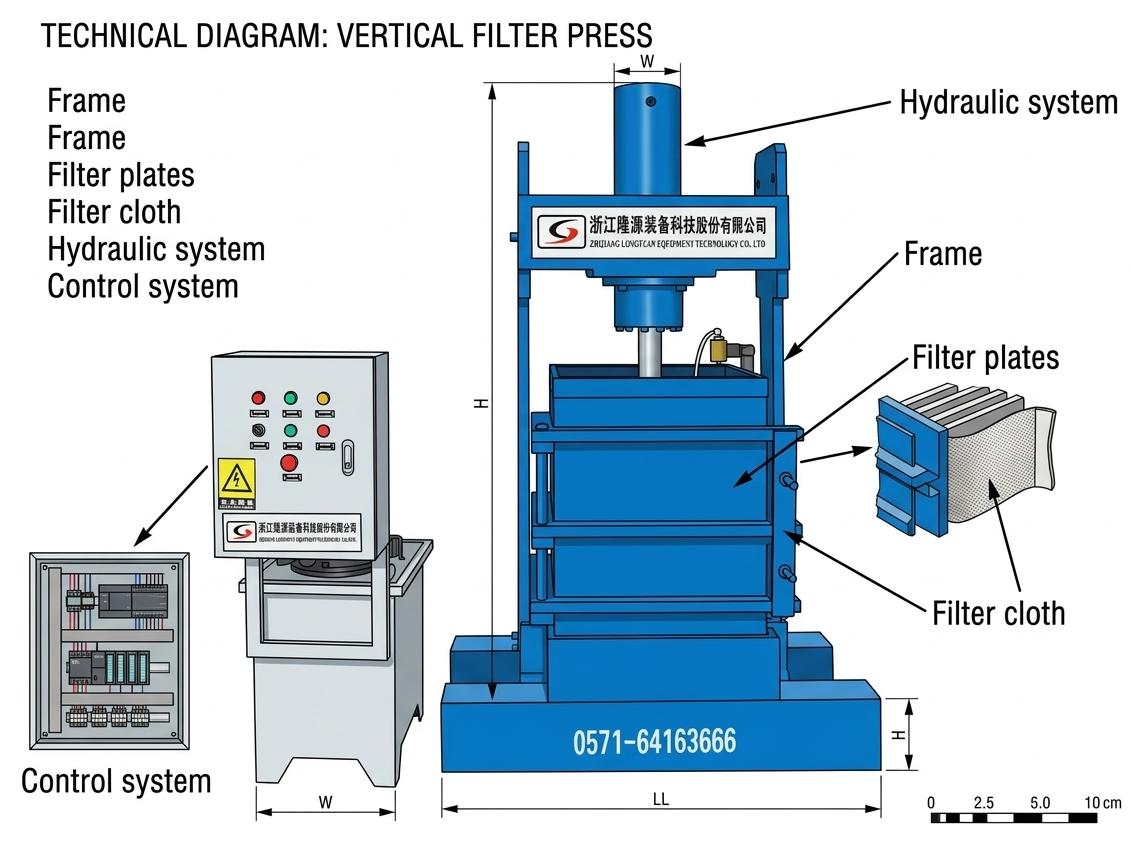
- Frame: Supports the stacked plate pack and withstands the closing force during filtration.
- Filter plates: Form the filtration chambers. Chamber plates and membrane plates can both be used, depending on the dewatering target.
- Moving filter cloth: Runs through the plate pack and carries the cake out when the press opens. It is the feature that most clearly separates this design from a standard horizontal press.
- Hydraulic system: Closes and holds the plate pack, and controls opening movement.
- Cloth washing system: Cleans the cloth during the cycle to maintain filtration performance and extend cloth life.
- Control system: A PLC coordinates closing, feeding, squeezing, washing, discharge, and cloth movement.
When you evaluate a supplier, ask how each of these components is designed, which materials are used for the plates and cloth, and how the cloth tracking and washing are handled. These details affect long-term reliability more than the headline specification does.
Vertical Filter Press vs Horizontal Filter Press: What Is the Difference?
Both machines do the same basic job, but they suit different operating conditions. A horizontal filter press (such as a chamber or membrane filter press) is a proven, flexible choice for many industries. A vertical filter press focuses on automation and difficult materials.
| Feature | Vertical Filter Press | Horizontal Filter Press |
|---|---|---|
| Plate arrangement | Stacked vertically | Arranged side by side |
| Cake discharge | Moving cloth carries cake out | Plates shift and cake falls, sometimes with shaking or manual help |
| Automation level | Generally high | Ranges from manual to fully automatic |
| Floor space | Compact footprint | Longer footprint |
| Fine or sticky cake | Often easier to release | May need extra discharge measures |
| Lavage des gâteaux | Well suited to controlled washing | Possible, depending on plate design |
| Initial investment | Usually higher | Usually lower |
| Best fit | Continuous, high-value, high-automation processes | General dewatering, sludge treatment, flexible duty |
Neither design is better in every situation. The right choice depends on your material, your throughput, your labor conditions, and your budget.

Main Advantages of a Vertical Filter Press for Industrial Filtration
1. High automation and lower labor demand
Cloth-driven discharge and PLC control reduce manual intervention. This is valuable in plants that run around the clock or want to limit operator exposure to hazardous or hot materials.
2. Better handling of fine and sticky materials
Fine particles and sticky cakes can be difficult to release in a conventional press. A moving cloth helps carry the cake out more consistently, which supports stable cycle times.
3. Effective cake washing
In processes where product purity matters, washing the cake properly is critical. The vertical layout can support controlled wash flow, helping remove soluble impurities from the cake.
4. Low cake moisture potential
When combined with membrane squeezing and air blowing, a vertical filter press can produce a drier cake. Lower moisture reduces downstream drying cost, transport weight, and disposal volume.
5. Compact installation
Stacking the plates vertically reduces the floor area needed compared with a long horizontal frame. This helps in plants with limited layout space or in retrofit projects.
Typical Applications: Where Vertical Filter Presses Perform Best
A vertical filter press is most attractive where the material has high value, needs washing, or is difficult to discharge. Typical sectors include:
- Chemical processing: Fine crystals, pigments, and intermediates that need washing and consistent cake release.
- Pharmaceutical and fine chemicals: Processes that demand high purity and controlled, enclosed operation.
- Mineral processing and metallurgy: Concentrates and tailings that require efficient dewatering and stable operation.
- New energy materials: Battery-related materials where washing efficiency and moisture control are important.
- Food and specialty materials: Applications where cleanliness and automation are priorities.
For general municipal or industrial sludge dewatering with modest automation needs, a standard chamber or membrane filter press is often the more economical option. A good supplier will tell you this honestly.
How to Choose the Right Vertical Filter Press for Your Project
The best selection starts with your slurry, not with the machine type. Before requesting a quotation, gather this information:
- Material properties: Particle size, solids concentration, viscosity, temperature, and chemical nature (acidic, alkaline, corrosive).
- Throughput target: Daily or hourly volume of slurry, and the required cycle time.
- Cake requirements: Target moisture level, washing needs, and how the cake will be handled afterward.
- Automation level: How much operator involvement you can accept, and how the press connects to your existing control system.
- Site conditions: Available floor area, ceiling height, utilities, and environmental requirements.
- Budget and lifecycle cost: Compare total cost of ownership, including cloth life, energy use, maintenance, and labor savings, rather than purchase price alone.
If possible, run a filtration test on a representative sample. Test data on filtration rate, cake moisture, and washing performance gives a much more reliable basis for sizing than estimates.
Get a Selection Suggestion from LONGONE
Choosing between a vertical and a horizontal design is easier when you start with real slurry data. LONGONE is a China-based filter press manufacturer supplying complete filtration systems, filter plates, cloths, and spare parts for customers worldwide. Send us your material details, target capacity, and cake requirements, and our engineers will recommend a suitable configuration.
Explore our full range of filter press solutions or contact our team for a free selection suggestion.
FAQ
Is a vertical filter press more expensive than a horizontal one?
In most cases, yes. The moving cloth system and higher automation increase the initial investment. However, labor savings, stable operation, and better results with difficult materials can offset the difference over time in suitable applications.
Can a vertical filter press handle sticky or very fine materials?
It is often a strong option for them. The moving cloth helps release the cake, which can be a challenge in conventional presses. Final suitability should still be confirmed with a sample test.
How much floor space can a vertical filter press save?
The saving depends on the filtration area and the model, but stacking the plates vertically generally gives a more compact footprint than a long horizontal frame of similar capacity. Ceiling height must be checked during planning.