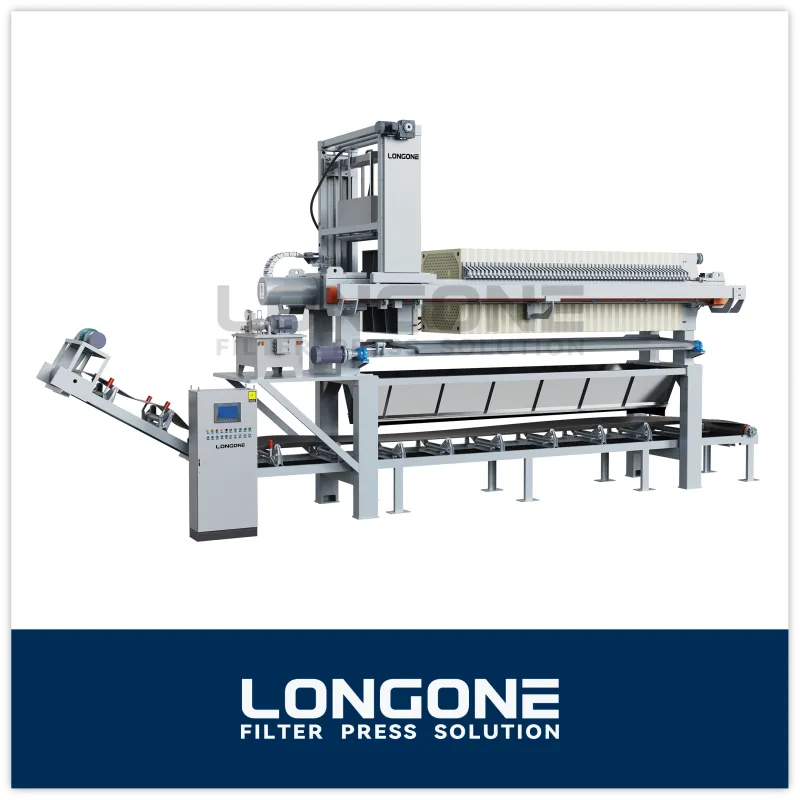
Choosing between a screw press and a filter press usually comes down to one question: how dry does the cake need to be, and what will it cost to get there? Cake dryness drives disposal volume, hauling cost and, in some industries, the value of the recovered solids. The two machines reach very different dryness levels, which is why the same sludge can leave one machine as a damp paste and the other as a firm, handleable cake.
This guide compares both technologies on the factors that matter in a real purchasing decision: how each works, where each performs best, and how to match the equipment to your material, throughput and budget.
Screw Press vs Filter Press: The Short Answer
A screw press is a continuous, low-pressure machine. It suits low-solids, fibrous or oily sludge, where steady operation, a small footprint and low energy use matter more than maximum dryness.
UN filtre-presse is a batch, high-pressure machine. It suits applications where low cake moisture, high solids capture and clear filtrate are the priority, including fine, difficult or abrasive slurries.

| Facteur | Screw Press | Filtre presse |
|---|---|---|
| Operating mode | Continuous | Batch (cyclic) |
| Dewatering pressure | Low, mechanical squeeze from a tapered screw | High, typically 0.6–1.6 MPa by feed pump or membrane squeeze |
| Typical cake solids | Roughly 15–30% | Roughly 30–50%+, depending on material and plate type |
| Typical feed solids | Low to moderate (often 1–5%) | Wide range, including thin and thick slurries |
| Fine or sticky particles | Limited tolerance, solids can pass into filtrate | Strong tolerance with proper filter cloth selection |
| Filtrate quality | Moderate | Generally clear |
| Footprint and automation | Compact, easy to automate | Larger frame, automated plate shifting and cake discharge available |
| Labor and maintenance | Low labor, screw and screen wear | Cloth and plate maintenance, lower with automation |
| Capital cost | Moderate | Moderate to high, depending on size and automation |
| Best fit | Municipal, food, paper and fibrous sludge, pre-thickening | Mining, chemical, metallurgy, industrial sludge needing low moisture |
Cake solids values vary with material, conditioning chemicals and equipment settings. Treat them as typical industry ranges rather than guarantees, and confirm with a test on your own slurry.
How a Screw Press Works and Where It Fits
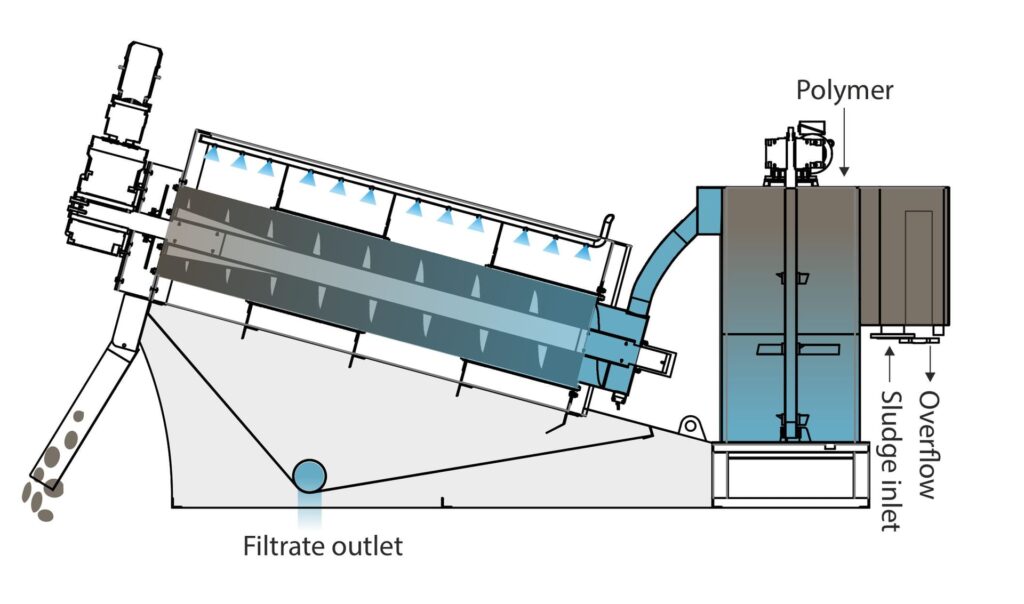
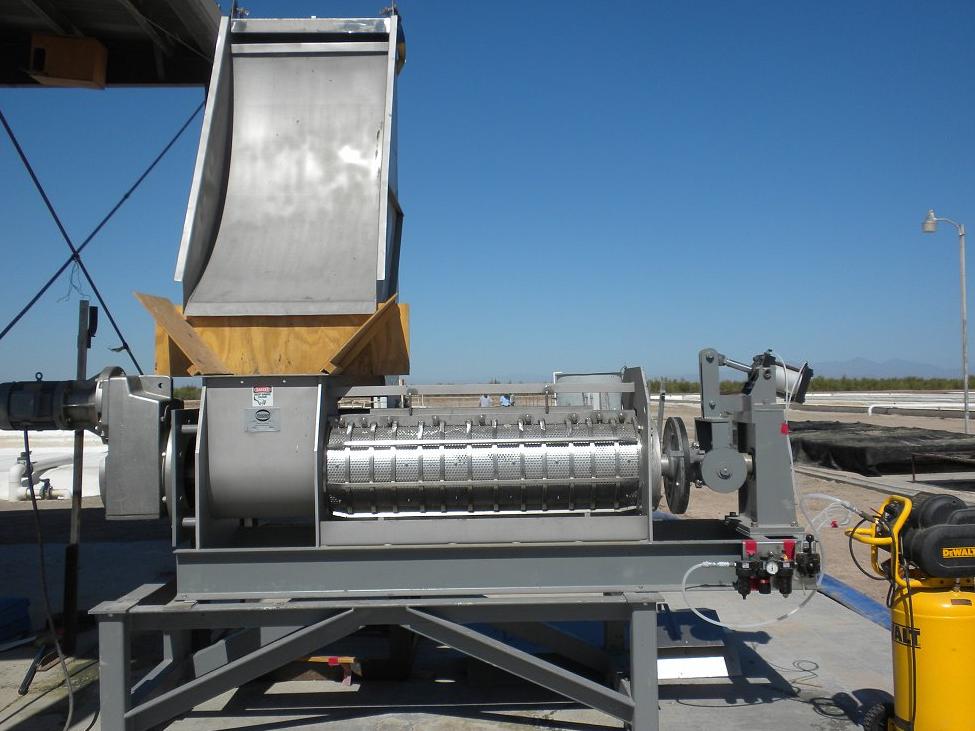
A screw press moves sludge through a cylindrical screen using a rotating screw. The screw shaft or pitch is designed so the available volume shrinks along the barrel, which gradually squeezes water out through the screen while the solids move toward a discharge point. Back pressure at the outlet, often from an adjustable cone or plate, controls how much the cake is compressed.
The advantages are practical:
- Continuous operation. Sludge goes in and cake comes out without batch cycles, which suits steady, low-volume flows.
- Low energy use and low speed. The screw turns slowly, so noise, power draw and wear on moving parts are modest.
- Small footprint and simple automation. The machine is enclosed and compact, which helps in plants with limited space.
- Low labor. Once set up, it needs little operator attention.
The limits are equally clear. Because the pressure is mechanical and relatively low, cake dryness has a ceiling. Very fine particles can pass through the screen and return to the process as solids in the filtrate. Slurries that are highly viscous, sticky or very abrasive can also reduce screen life and performance.
How a Filter Press Works and Where It Fits
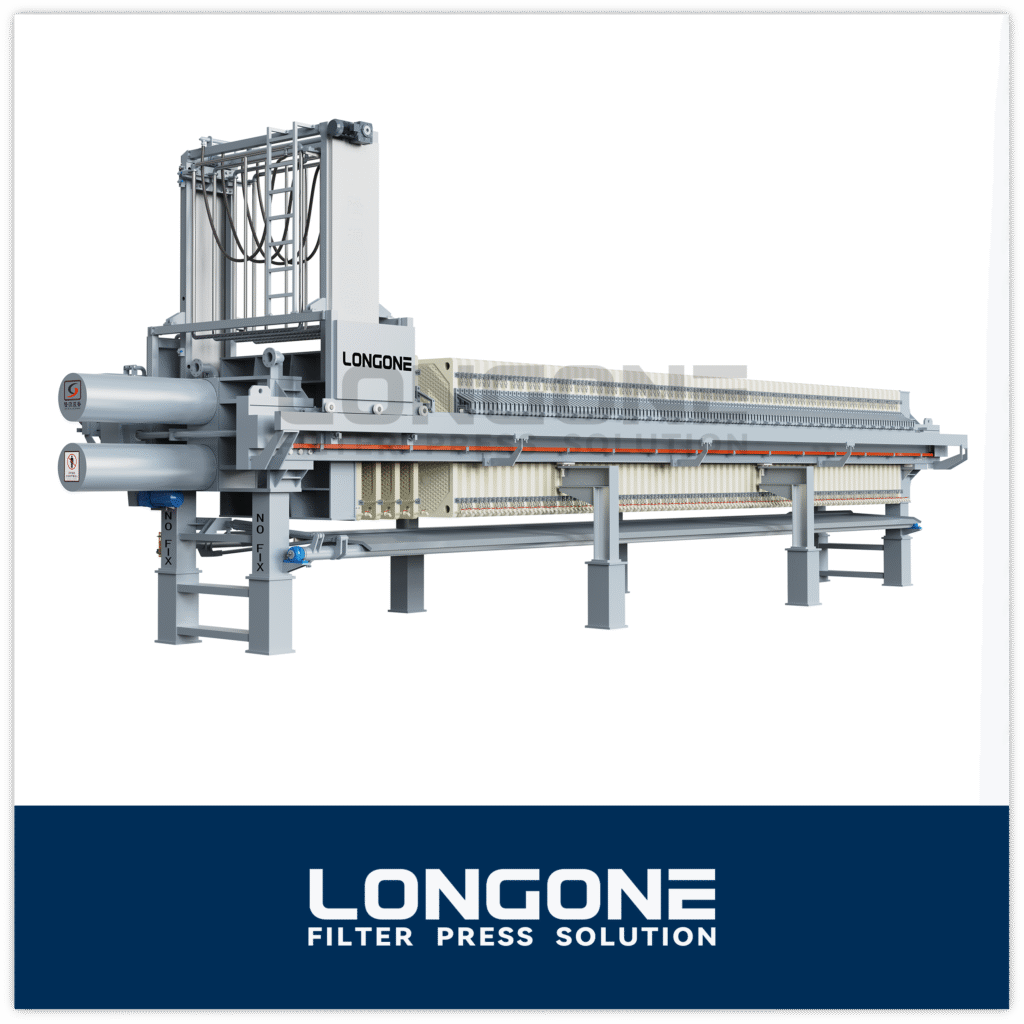
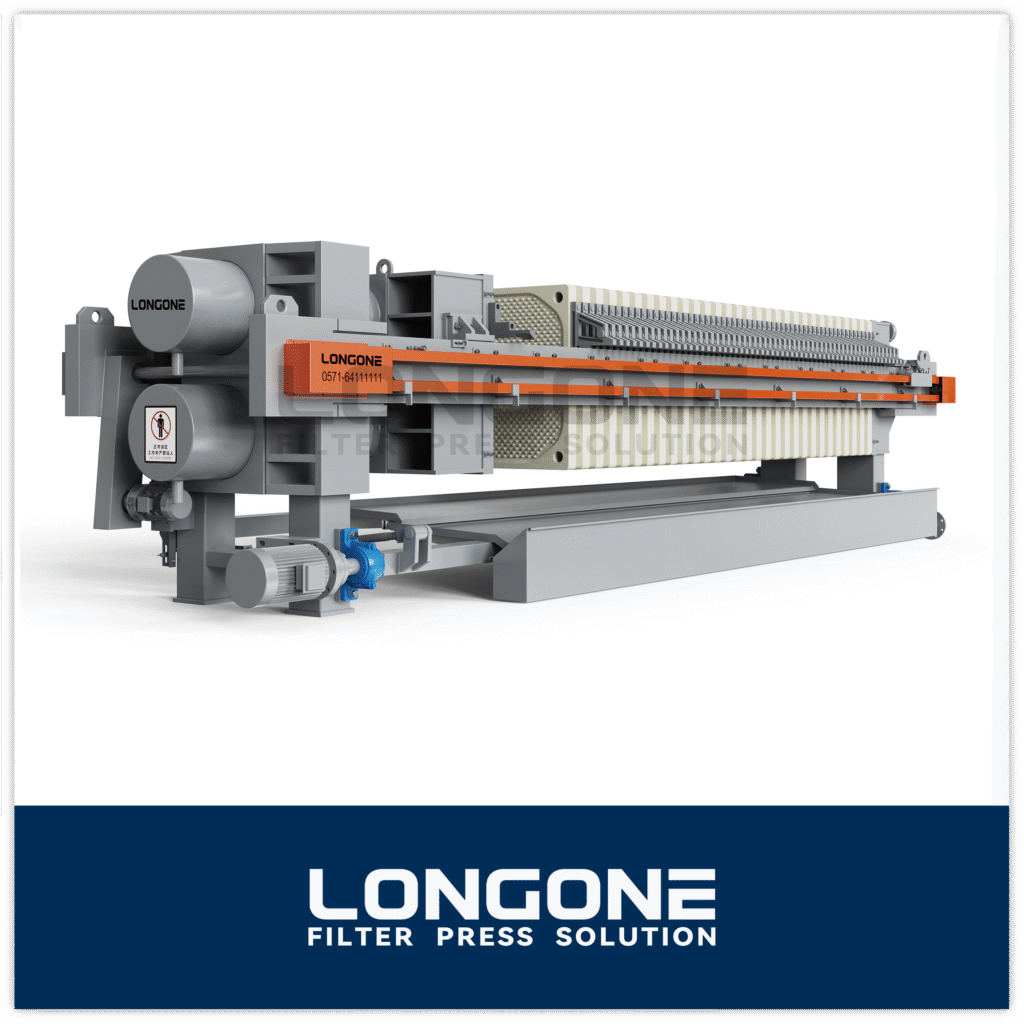
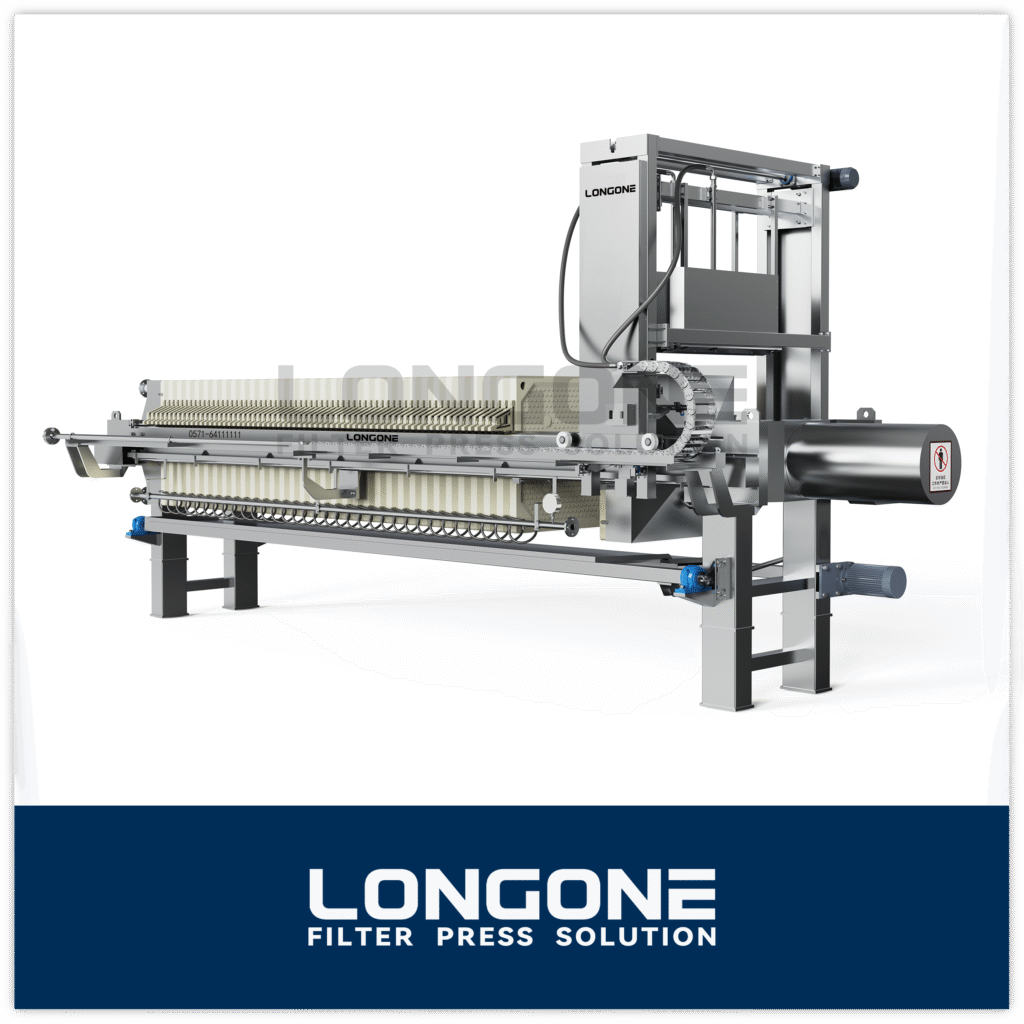
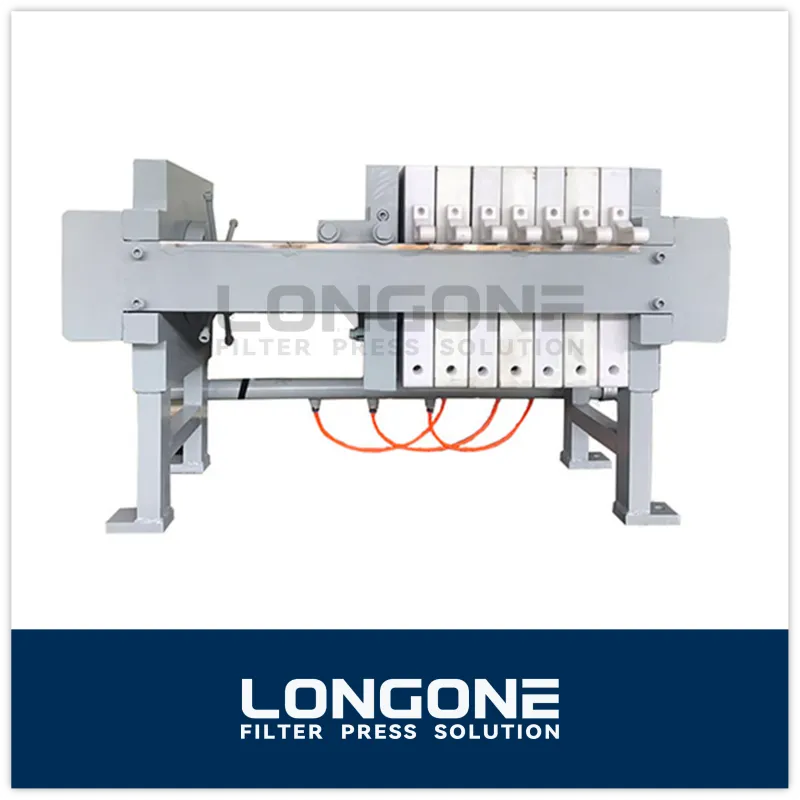
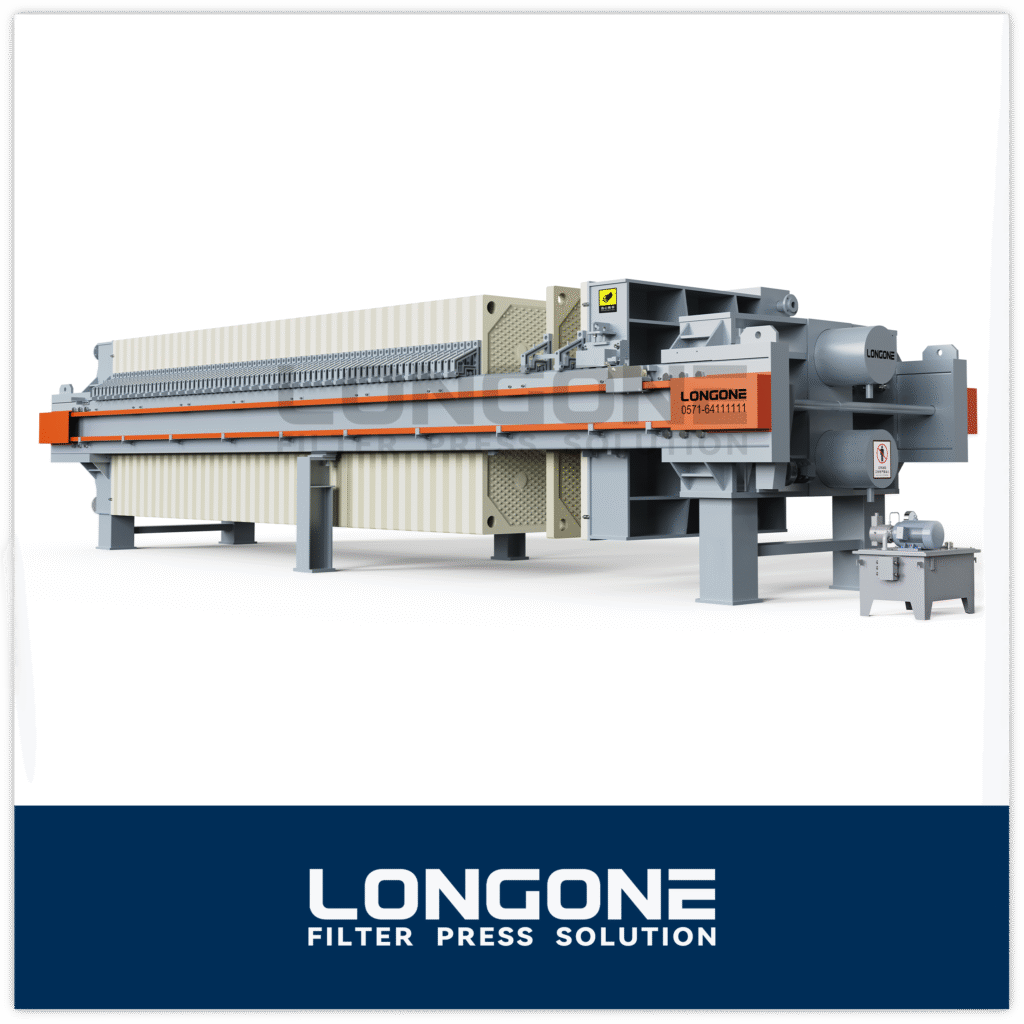
A filter press holds a stack of filter plates covered with filter cloth between a fixed head and a hydraulic closing system. Slurry is pumped into the chambers, solids build up against the cloth as a cake, and the filtrate flows out through the plate drainage channels. When the chambers are full, the press opens, the cakes discharge and the cycle starts again.
Because the feed pump can build high pressure, and because filtres-presses à membrane can add a second squeeze after filling, filter presses reach lower cake moisture than most other mechanical dewatering equipment. The core strengths are:
- Low cake moisture. This reduces the weight and volume you have to transport and dispose of.
- High solids capture. The filter cloth retains fine particles, so filtrate is generally clear and can often be reused or discharged more easily.
- Wide material range. With the right cloth and plate design, a filter press can handle fine, sticky, abrasive or chemically aggressive slurries.
- Scalable capacity. Filtration area increases by adding plates or choosing larger plate sizes.
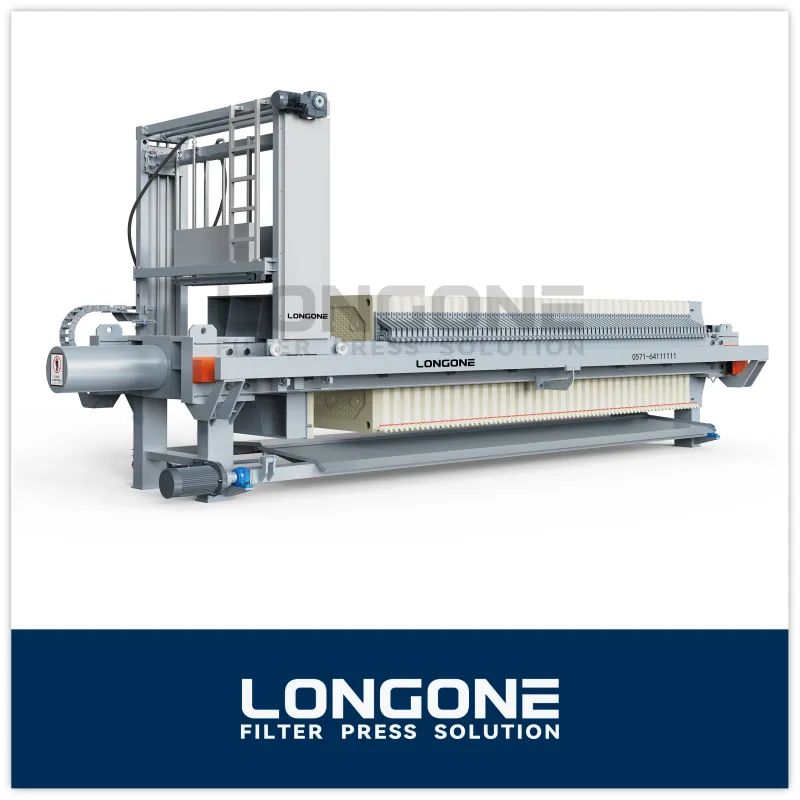
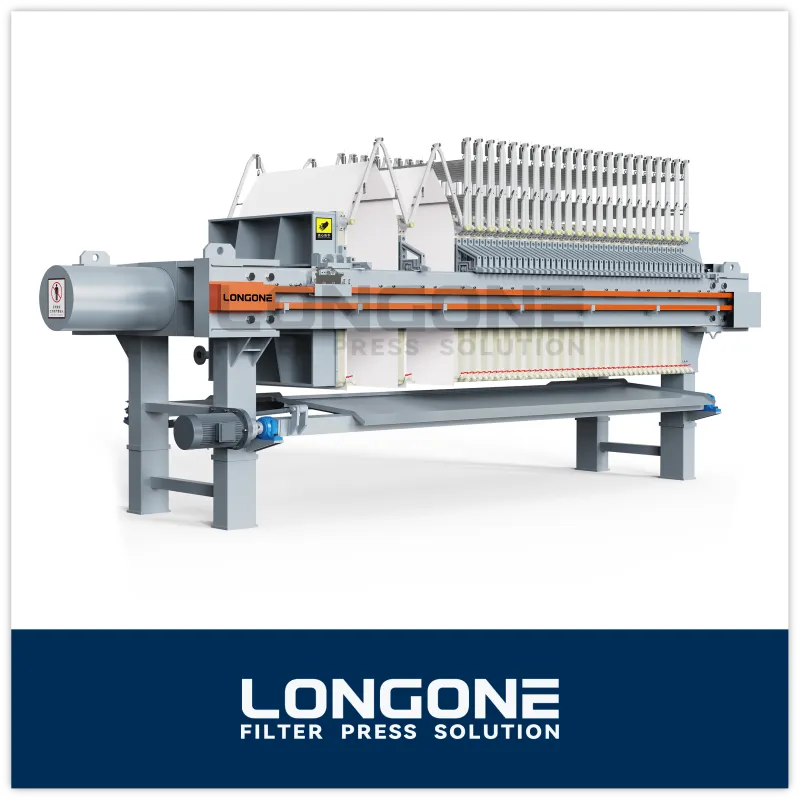
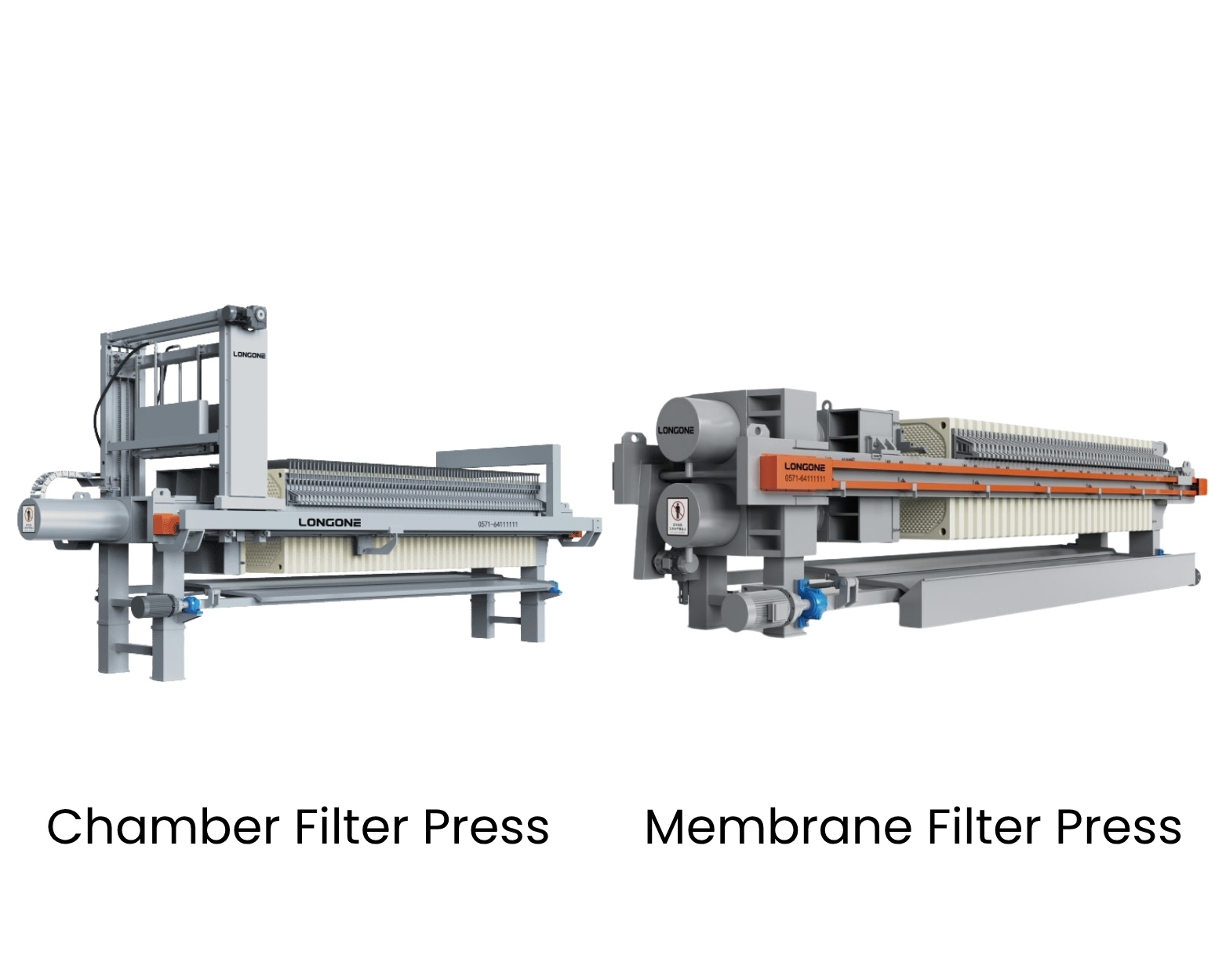
The trade-offs are the batch cycle, a larger footprint and the need to manage filter cloth wear. Automatic plate shifting, cloth washing and cake discharge systems reduce the labor involved, and PLC control keeps cycles consistent. A filtre-presse à chambre is the usual starting point for general industrial sludge, while a membrane design is chosen when the lowest possible moisture is required.
Key Differences That Affect Your Project
Cake Dryness and Disposal Cost
This is often the deciding factor. If disposal is charged by weight, a drier cake can pay back the extra investment in a filter press quickly. If the cake is reused, landfilled locally at low cost, or sent on for further drying, the lower dryness of a screw press may be perfectly acceptable.
Throughput and Operating Pattern
A screw press accepts a steady flow and delivers a steady output. A filter press works in cycles, so it normally needs a feed tank or buffer to even out the flow. For plants with fluctuating production or intermittent sludge generation, this batch pattern fits naturally. For plants with a constant low flow and no storage space, a continuous machine may be easier to integrate.
Suitability for Fine and Difficult Particles
Fine mineral particles, colloidal material and slurries with poor filterability tend to blind screens or escape through them. A filter press with the correct cloth, and conditioning where needed, is more forgiving and offers a higher capture rate.
Filtrate Quality
Where filtrate must be recycled, treated in a downstream plant or discharged under strict limits, the clearer filtrate from a filter press reduces the load on the rest of the system.
Wear Parts and Maintenance
A screw press wears at the screw flights and screens, which are specialized parts. A filter press wears mainly at the filter cloths, which are inexpensive and easy to replace, plus seals and plate edges over a longer period. A reliable supply of filter plates, cloths and hydraulic parts matters more than the nameplate specification over the life of the machine.
Labor and Automation
Both machines can be highly automated. A basic filter press requires more attention at discharge, but automatic plate shifters, cloth vibrators and conveyors close that gap in most industrial applications.
Which One Suits Your Material? Application Guide
Industry practice points to certain pairings, though every slurry should be tested.
Screw presses are commonly used for:
- Municipal and biological sludge at moderate dryness targets
- Food and beverage processing residues
- Pulp, paper and other fibrous materials
- Pre-thickening before a second dewatering stage
- Sites with limited space and steady, modest flows
Filter presses are commonly used for:
- Mining concentrates and tailings
- Chemical and pharmaceutical process slurries
- Metallurgical and steel plant sludge
- Fine, abrasive or hard-to-filter industrial sludge
- Wastewater treatment plants where disposal cost or cake handling is critical
- Any application with a specified maximum cake moisture

If your material falls between these lists, such as mixed industrial sludge with both fine solids and fibers, the decision depends on the target dryness and on how much of the solids must be captured.
How to Choose: Decision Checklist and Total Cost of Ownership
Before comparing quotes, answer these questions:
- What cake dryness do you need? Work backward from disposal cost, transport weight or the requirements of the next process step.
- What are the solids concentration and particle size of your slurry? Low-solids feed suits a screw press better, and fine particles favor a filter press.
- How does the sludge arrive? Steady flow suggests continuous equipment, while batch generation suits a filter press with a feed tank.
- How much solids capture and filtrate clarity do you need?
- What are your space, power and labor constraints?
- What is the total cost of ownership? Include capital cost, energy, consumables such as cloths or screens, labor, chemical conditioning and disposal.
Looking only at purchase price often favors the wrong machine. A cheaper unit that produces a wetter cake can cost more every month in hauling and disposal. Conversely, a high-performance press is wasted where the disposal route does not reward a drier cake.
Some plants combine both: a screw press thickens the sludge first, then a filter press completes the dewatering. This reduces the volume the filter press has to handle and can balance the continuous and batch parts of the process.
If you are unsure where your material falls, a sample test or a review of your slurry data is the most reliable starting point. Our engineering team can help assess your slurry and discuss options on request.
Conclusion
Neither technology is better in every situation. A screw press offers continuous, low-energy, compact dewatering where moderate dryness is enough. A filter press delivers drier cake, higher solids capture and clearer filtrate, with better tolerance of fine, difficult and abrasive materials.
The right choice follows from your target cake moisture, your slurry properties, your operating pattern and the full cost of handling the cake afterward. Start with the cake you need, test your own material, and compare equipment on total cost of ownership rather than purchase price alone.
FAQ
Which gives a drier cake, a screw press or a filter press?
A filter press generally produces a drier cake. Screw presses typically reach about 15–30% solids, while filter presses commonly reach 30–50% or higher, depending on the material and on whether a membrane squeeze is used.
Can a screw press replace a filter press?
It can in applications where the dryness target is moderate and the sludge is fibrous or low in fine particles. Where low cake moisture, high solids capture or difficult slurry is required, a filter press is usually the more suitable option.
Is a filter press suitable for continuous operation?
A filter press runs in batch cycles, but with a feed buffer tank and automatic plate shifting and discharge, it can support round-the-clock operation in plants with continuous sludge generation.
Which has the lower operating cost?
A screw press typically uses less energy and labor. A filter press can lower total cost when a drier cake significantly reduces disposal and transport expenses. The answer depends on your disposal route and material.
Can screw presses and filter presses be used together?
Yes. A screw press can thicken sludge before it enters a filter press, reducing the volume handled by the filter press and improving overall efficiency in some systems.