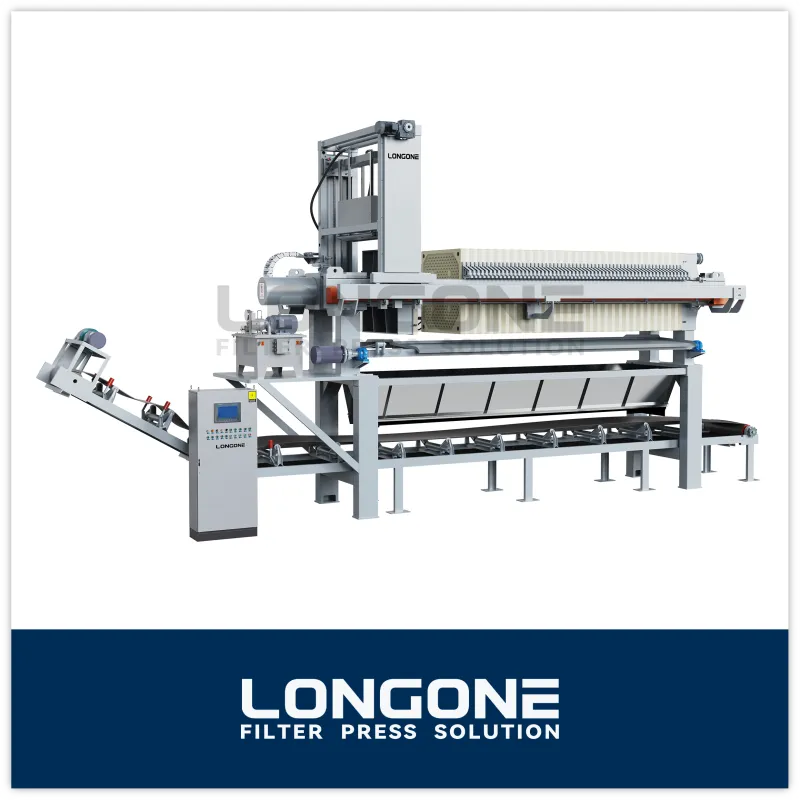
Solid-liquid separation projects almost always come down to one number: how dry does the final cake need to be, and how fast do you need to get there. When a standard recessed chamber filter press can’t hit either target, most engineers start looking at membrane squeeze technology. But before comparing suppliers or squeeze pressures, it helps to understand the plate-level decisions that actually determine whether a membrane press performs as promised over thousands of cycles — decisions that a filter plate manufacturer, rather than a general equipment reseller, is best positioned to explain.
What Is a Membrane Squeeze Filter Press?
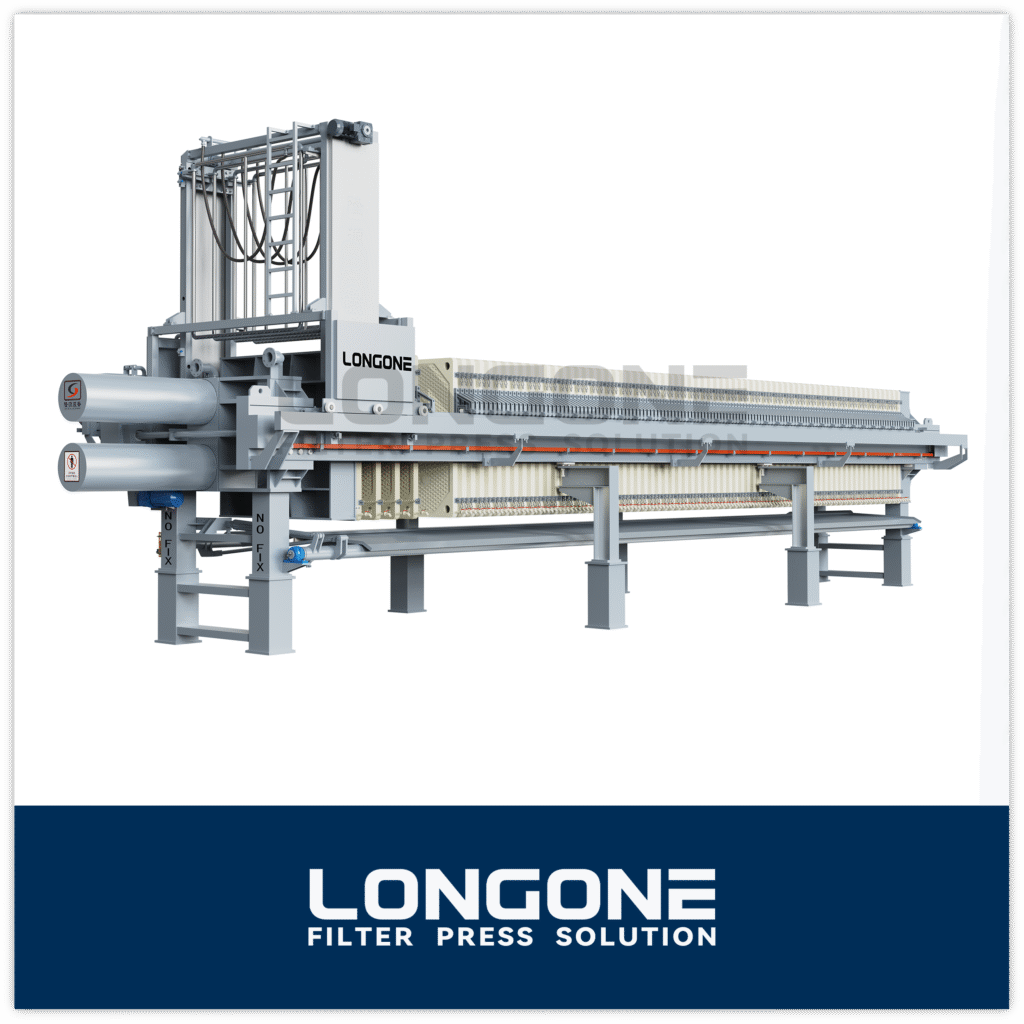
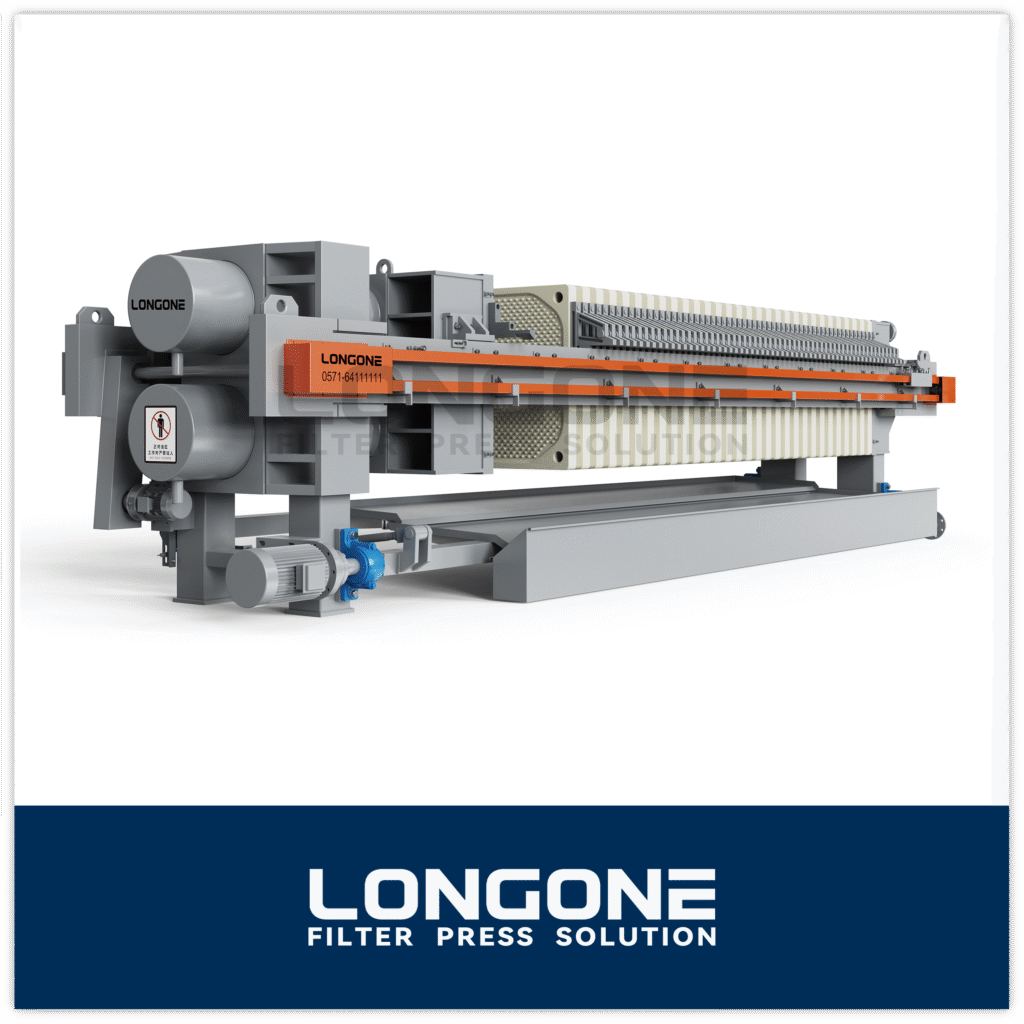
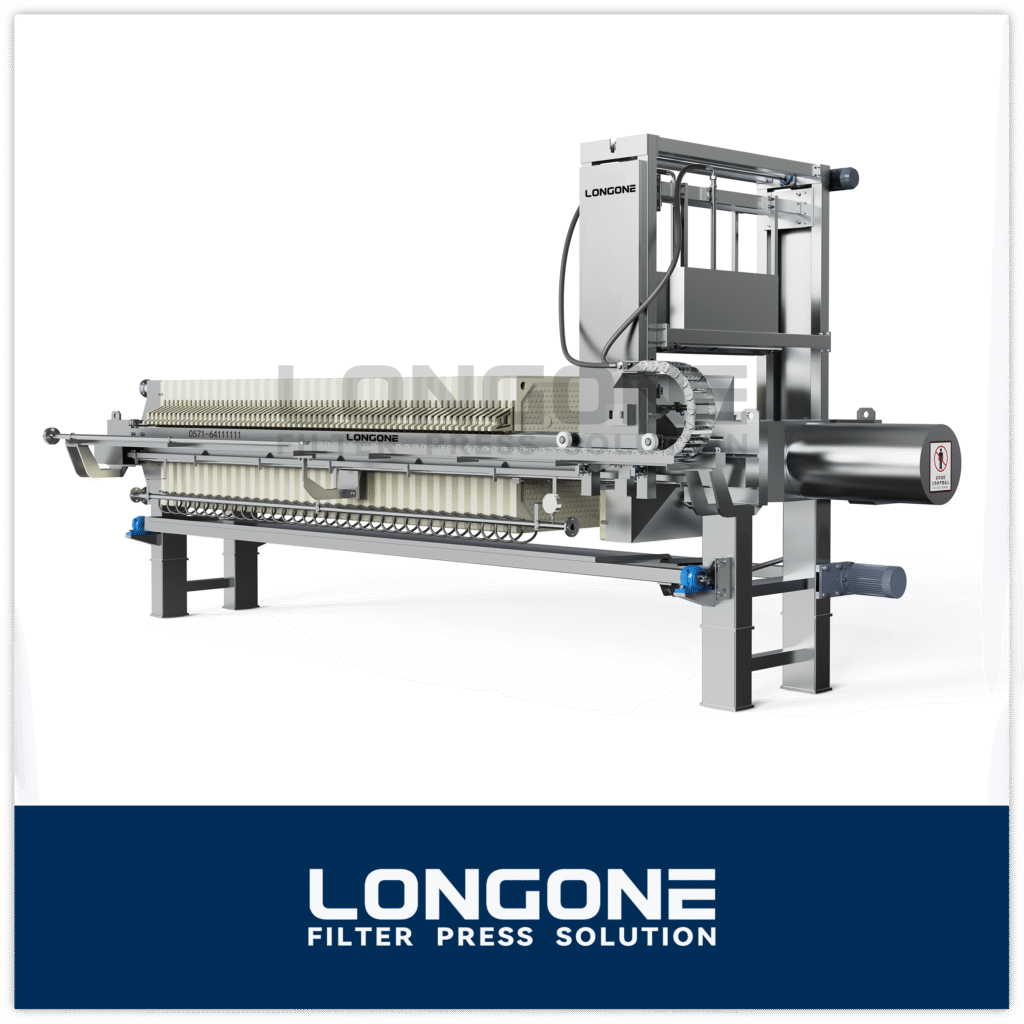
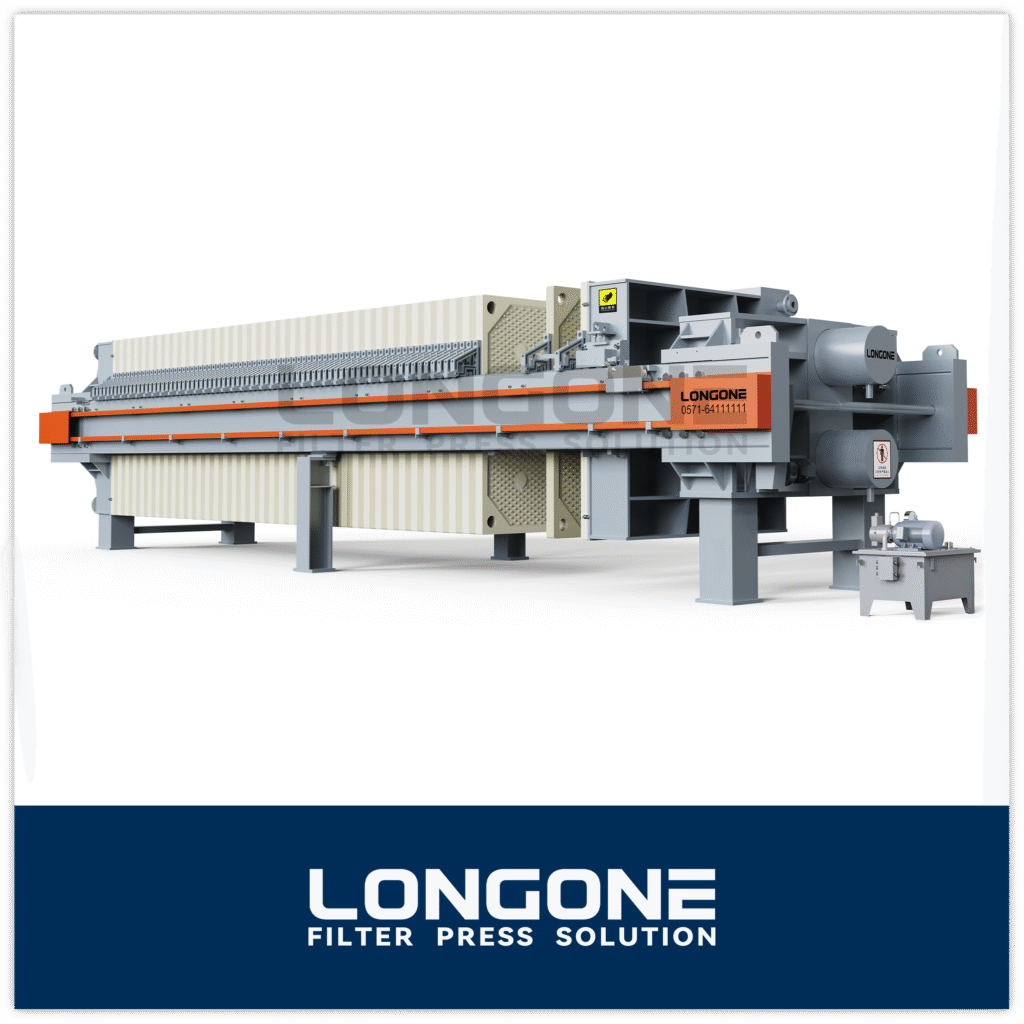
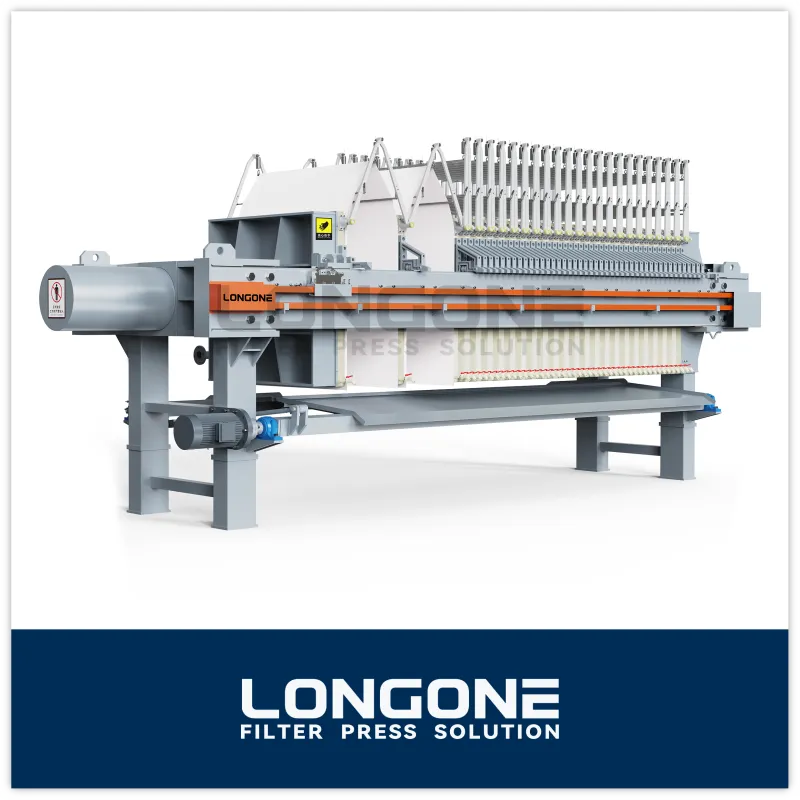
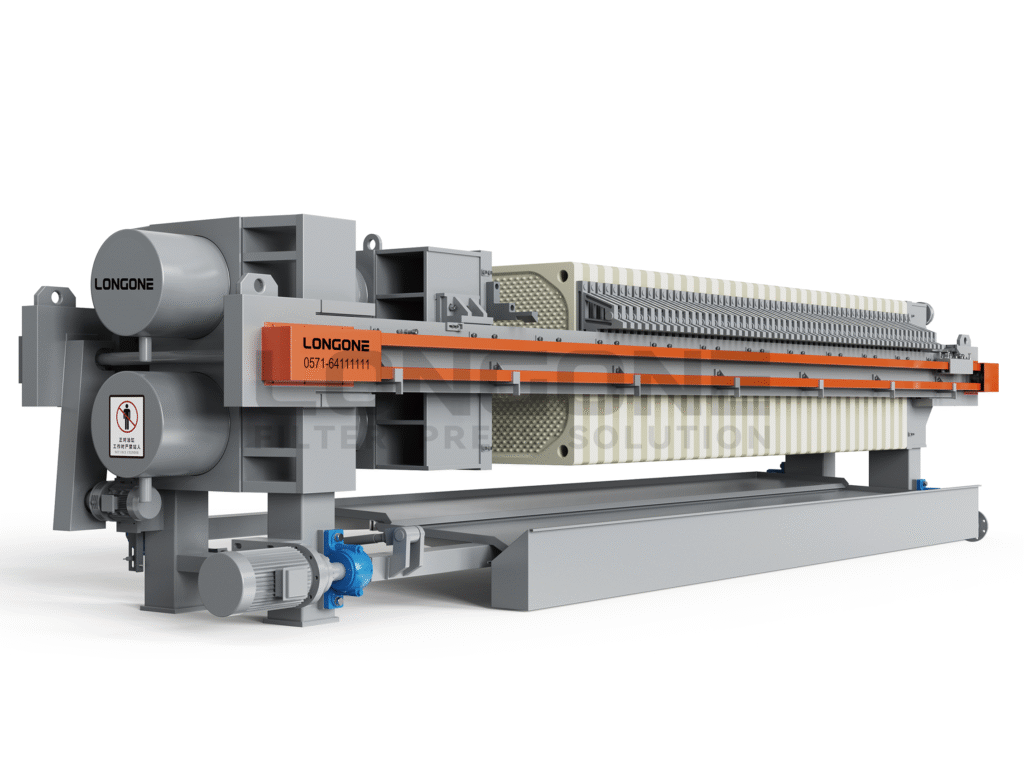
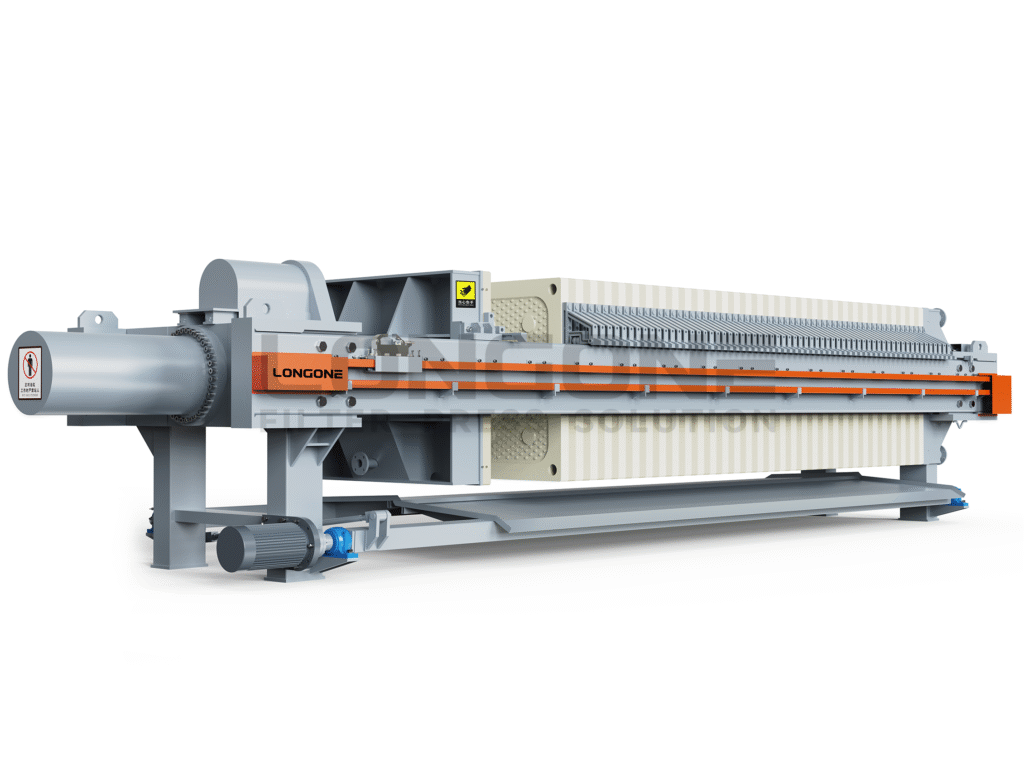
أ membrane squeeze filter press looks almost identical to a conventional plate and frame or recessed chamber press from the outside. The difference is inside the chamber: certain plates carry a flexible rubber or thermoplastic elastomer diaphragm bonded or clamped over the plate face. After the slurry has been pumped in and a filter cake has started to form against the filter cloth, this diaphragm can be inflated with water or compressed air, physically squeezing the cake from one or both sides.
A conventional press relies entirely on feed pump pressure to force liquid out of the slurry. Once the cake builds up enough resistance, filtration slows down and eventually stalls — the pump simply can’t push any harder without risking damage to the system. A membrane press adds a second, independent mechanism for removing liquid: mechanical compression that keeps working even after the feed pump has reached its practical limit. That second squeeze is what separates a membrane system from a standard chamber press, and it’s the reason the two technologies are sized and specified differently even though they share the same basic frame, hydraulic cylinder, and plate-shifting hardware.
How the Membrane Squeeze Cycle Works
The full cycle runs through a consistent sequence of stages, though the exact timing depends on slurry characteristics and target moisture content.
1. Plate closing. The hydraulic cylinder presses the full plate stack together, sealing each chamber before any slurry enters.
2. Feeding and initial filtration. Slurry is pumped into the chambers under pressure. Liquid passes through the filter cloth and drains out as filtrate while solids begin building a cake layer against the cloth surface. In most applications, the bulk of the solids — often 70-80% — load into the press during this first phase, while the feed pump can still overcome the resistance of a relatively thin cake.
3. Cake buildup and pressure plateau. As the cake thickens, resistance climbs and the feed pump slows. This is the point where a conventional press would simply extend the cycle and accept a wetter cake; a membrane press instead moves into the squeeze phase.
4. Membrane inflation and squeezing. Water or compressed air is introduced behind the diaphragm through a dedicated manifold, inflating it against the formed cake. This applies direct mechanical pressure that pushes out moisture the feed pump alone could no longer reach. Water is the more common inflation medium above roughly 1.0 MPa, since a diaphragm rupture releases a manageable water leak rather than the more hazardous failure mode associated with high-pressure air.
5. Pressure holding. The squeeze pressure is held for a set duration — determined by target moisture content and cake compressibility — to allow the compressed liquid time to drain fully before the cycle ends.
6. Pressure release and cake discharge. The membrane manifold depressurizes, the diaphragm returns to its resting position, the plates open, and the dewatered cake drops or is scraped from between the plates. The press resets for the next cycle.
Understanding this sequence matters when specifying equipment, because the squeeze stage is what most buyers underestimate when comparing cycle-time claims between suppliers — the feeding stage is largely determined by pump capacity and plate area, but the squeeze stage is determined by membrane design and manifold layout, which is a plate-level specification, not a frame-level one.
Replaceable Diaphragm vs. Welded Membrane Plates: Which Should You Choose?
This is the decision most competing guides skip past, and it’s the one with the biggest long-term cost impact.
أ welded membrane plate has the rubber or elastomer diaphragm permanently bonded to the polypropylene plate body during manufacturing. It’s a lower-cost option upfront and performs well under normal operating conditions. But if the membrane tears or wears through — which happens eventually with abrasive slurries or aggressive squeeze pressures — the entire plate has to be replaced. Lead times for welded replacement plates commonly run from several weeks to a few months, depending on the manufacturer’s backlog, which means unplanned downtime on a production line that depends on that press.
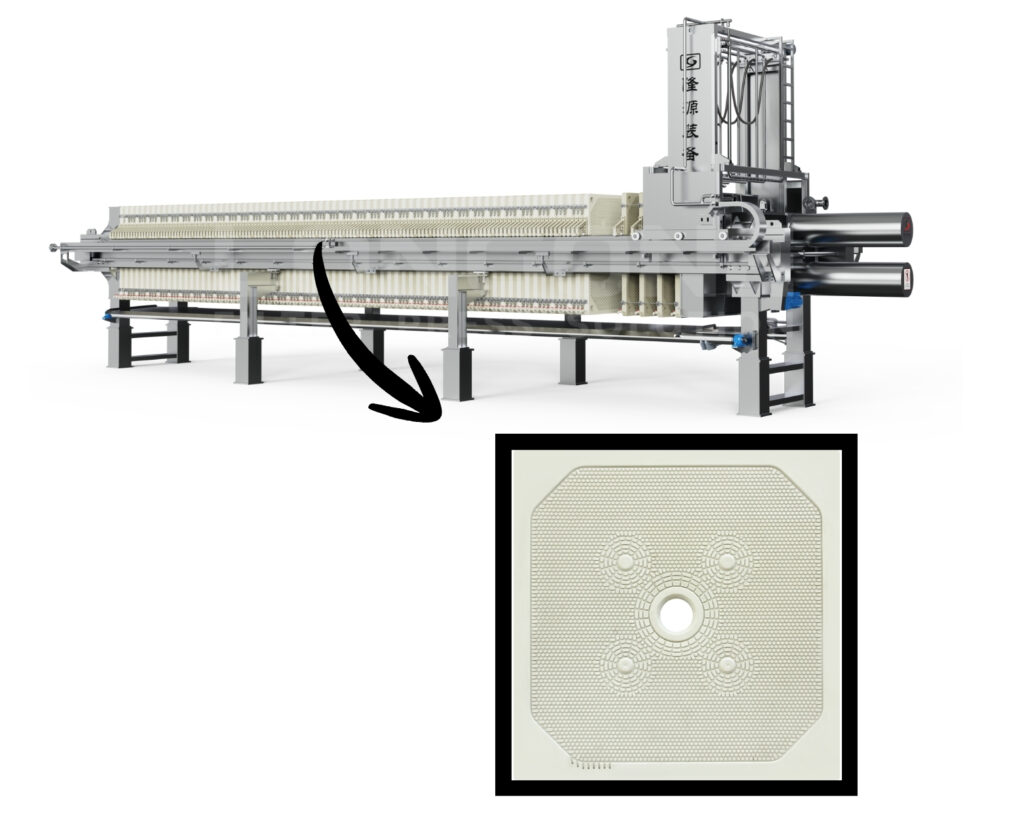
أ replaceable membrane plate uses a separate rubber membrane that clamps or bolts onto the plate face rather than being permanently bonded. If it fails, a maintenance crew can swap in a spare diaphragm in well under an hour, without waiting on a factory order. The plate body itself, which is the more expensive and durable component, stays in service. The tradeoff is a somewhat higher initial plate cost and the need to keep spare diaphragms in inventory.
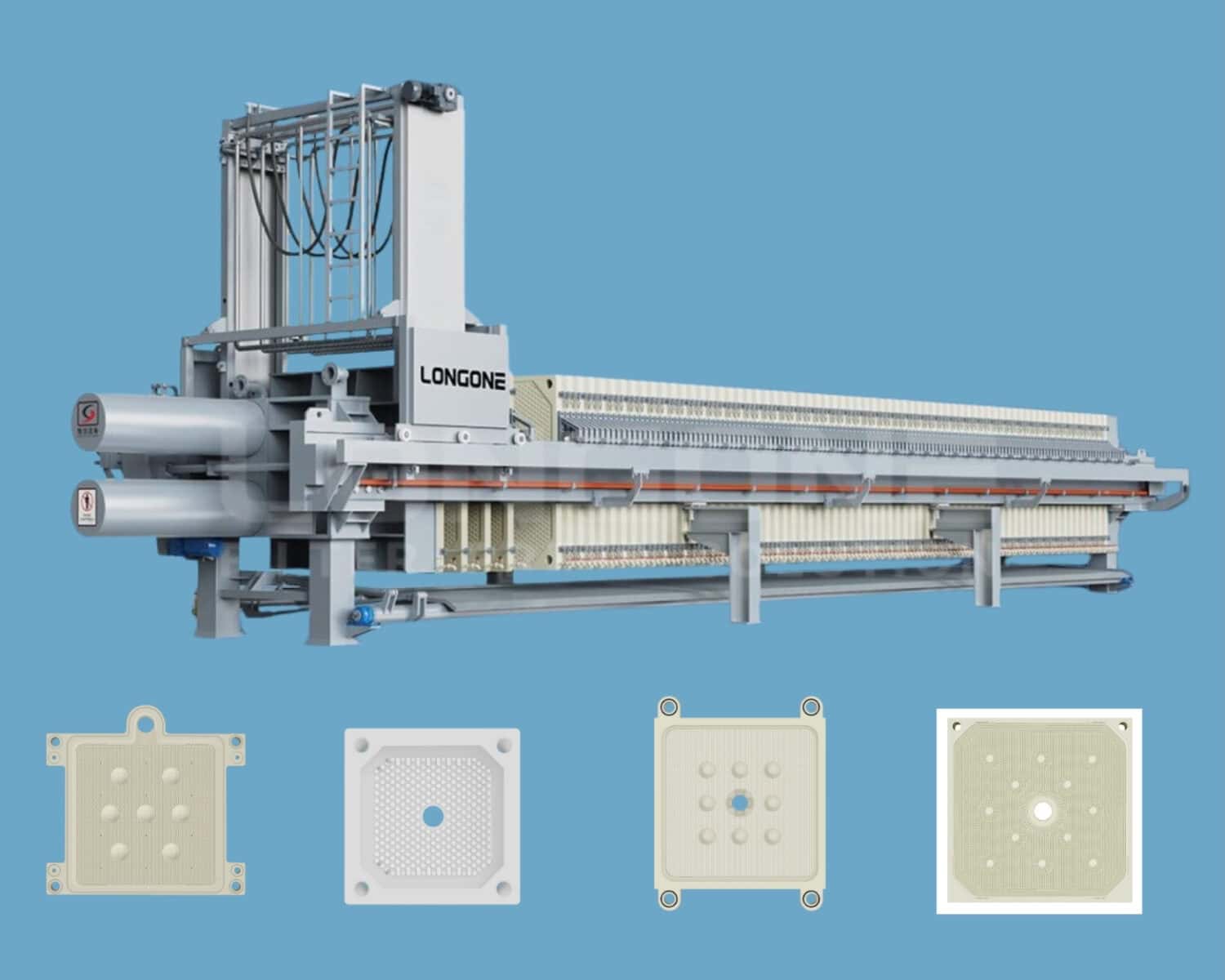
For continuous or multi-shift operations — chemical processing, mining, high-volume wastewater treatment — the replaceable design almost always wins on total cost of ownership, because avoided downtime outweighs the initial price difference within the first one or two membrane replacements. For lower-cycle, less demanding applications, welded plates can still be the more economical choice. The right answer depends on cycle frequency, slurry abrasiveness, and how costly downtime actually is at a given site — a calculation that’s easier to make with input from the plate manufacturer than from a spec sheet alone.
A related but often overlooked detail is feed port design. Corner-feed, non-gasketed membrane plates distribute feed pressure more evenly across the plate face, while center-feed designs concentrate stress around the central feed hole. In practice, that concentrated stress is one of the more common failure points for both filter cloth and membrane tearing, particularly on larger plates. It’s a small design choice, but it directly affects how often a plant deals with membrane or cloth replacement regardless of which diaphragm type it selects.
Why Membrane Squeeze Delivers Drier Cake and Shorter Cycles
The core benefit of membrane squeeze technology comes down to two connected outcomes: lower residual cake moisture and shorter total cycle time.
On moisture, conventional recessed chamber presses on general industrial or municipal sludge typically level off somewhere in the 30-40% moisture range once feed pressure can no longer force more liquid out. Adding a membrane squeeze stage commonly pushes final moisture down into the 18-25% range, and in favorable, highly compressible slurries, even lower. That 10-plus percentage point difference has real downstream value: drier cake weighs less to transport, may qualify for less expensive disposal routes, and in some regulated waste streams can be the difference between meeting a landfill acceptance limit or not.
On cycle time, the squeeze stage often shortens the overall cycle by roughly 20-50%, since mechanical compression removes liquid faster than continuing to wait on feed pump pressure alone once the cake has plateaued. Faster cycles translate directly into more batches per shift from the same equipment footprint — a meaningful throughput gain without adding filtration area.
These two benefits are related rather than independent: a drier cake is, by definition, a cake that has given up more of its liquid, and squeezing is simply a faster way to get there than waiting for the feed pump to do it alone.
Sizing the Mixed Pack: Matching Membrane Ratio to Your Slurry
Most membrane presses in practical use aren’t built entirely from membrane plates — a full membrane stack costs considerably more than the application usually requires. Instead, they run a “mixed pack,” alternating membrane plates with standard recessed plates through the stack.
The ratio between the two plate types is a sizing decision, and it should be driven primarily by cake compressibility rather than by squeeze pressure alone. Highly compressible cakes — biological sludge, many mineral tailings, and similar fine-particle slurries — respond strongly to mechanical squeezing, so a higher proportion of membrane plates delivers a proportionally larger dryness improvement. Less compressible materials, or slurries that are already fairly free-draining, see a smaller benefit from additional membrane plates, and the incremental cost of a heavier membrane ratio may not be justified by the moisture reduction achieved.
This is a detail that’s easy to get wrong when specifying equipment from a general catalog, because compressibility isn’t always obvious from a slurry’s solids percentage or particle size alone — it often needs to be confirmed through bench-scale or pilot testing before finalizing plate configuration. Getting the mixed-pack ratio right the first time avoids either overspending on membrane plates that add little dryness benefit, or underspending and falling short of the target moisture content once the press is running in production.

Industries and Applications Best Suited for Membrane Squeeze Filter Presses
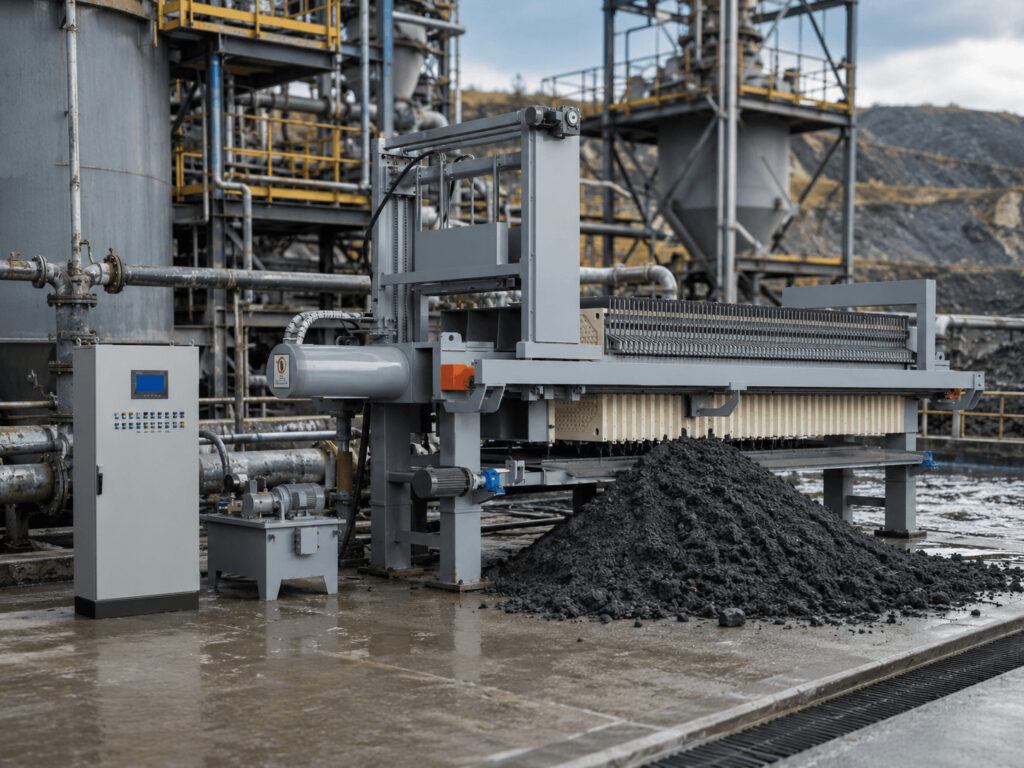
Membrane squeeze technology shows up across a wide range of solid-liquid separation applications, but it earns its higher upfront cost fastest in processes where moisture content or cycle time carries real financial weight:
- Chemical and fine chemical manufacturing, where drier cake reduces disposal cost and faster cycles support higher batch throughput
- Mining and mineral processing, particularly tailings dewatering where lower moisture supports dry-stacking and reduces water loss
- Municipal and industrial wastewater treatment, where meeting biosolids moisture limits avoids landfill tipping fee penalties
- Pharmaceuticals and fine chemicals, where more even cake compression improves wash efficiency and product purity
- Food and beverage processing, such as brewing, where faster liquid recovery supports higher production rates
Not every application needs a membrane press. When the waste stream is low value, disposal costs are minimal, and cycle time isn’t a bottleneck, a standard recessed chamber press is often the more economical choice — the added membrane hardware and maintenance simply won’t pay for itself. The decision comes down to weighing the higher initial equipment and membrane maintenance cost against the value of the moisture reduction and throughput gain for that specific process.
Choosing the Right Membrane Plates for Your Application
Selecting membrane squeeze technology is really two decisions layered together: the press frame and hydraulic system, and the plate and membrane specification that determines how well the press performs over its service life. The second decision — diaphragm material, replaceable versus welded construction, feed port design, and mixed-pack ratio — is where a filter plate manufacturer’s engineering input makes the most difference, since these are exactly the details that determine maintenance cost and cake quality long after installation.
If you’re evaluating a membrane squeeze filter press for your process, our team can help match plate configuration, diaphragm material, and mixed-pack ratio to your specific slurry characteristics and moisture targets — reach out to discuss your application in detail.