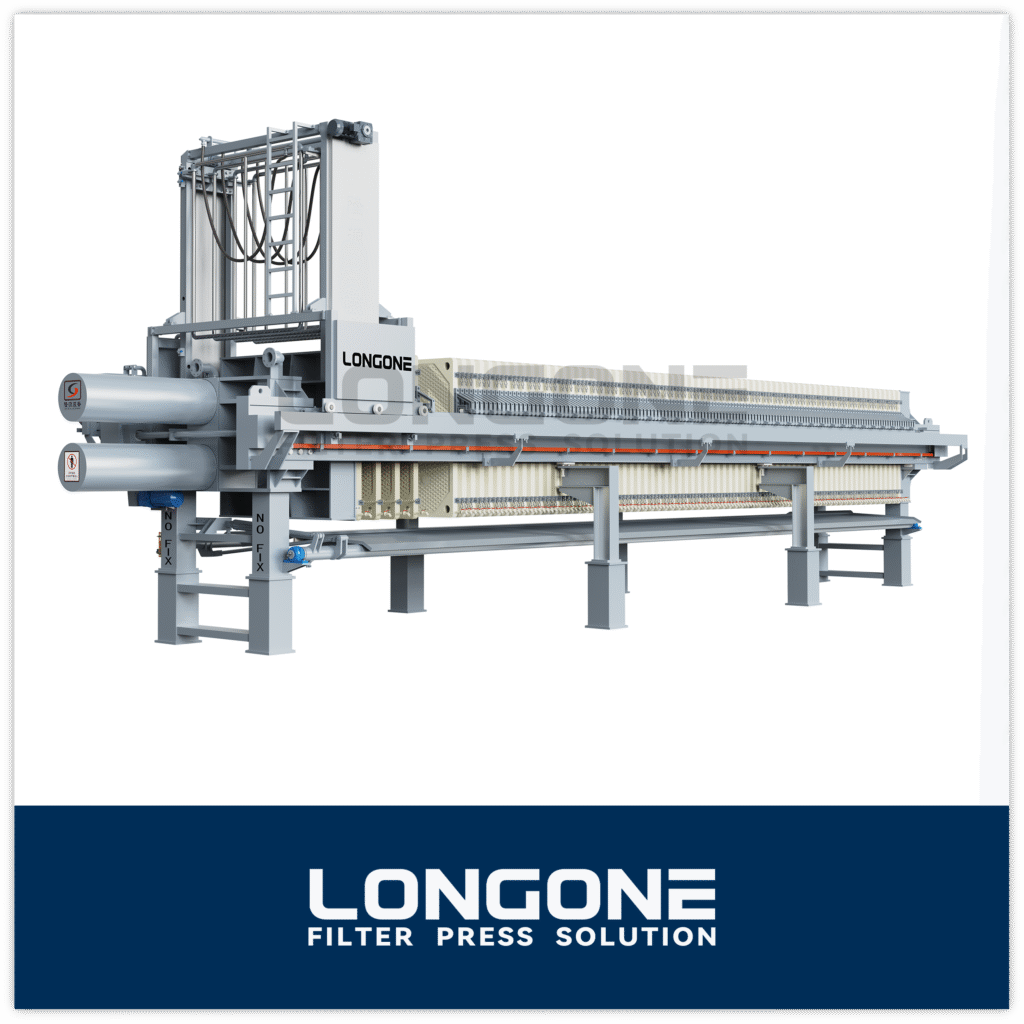
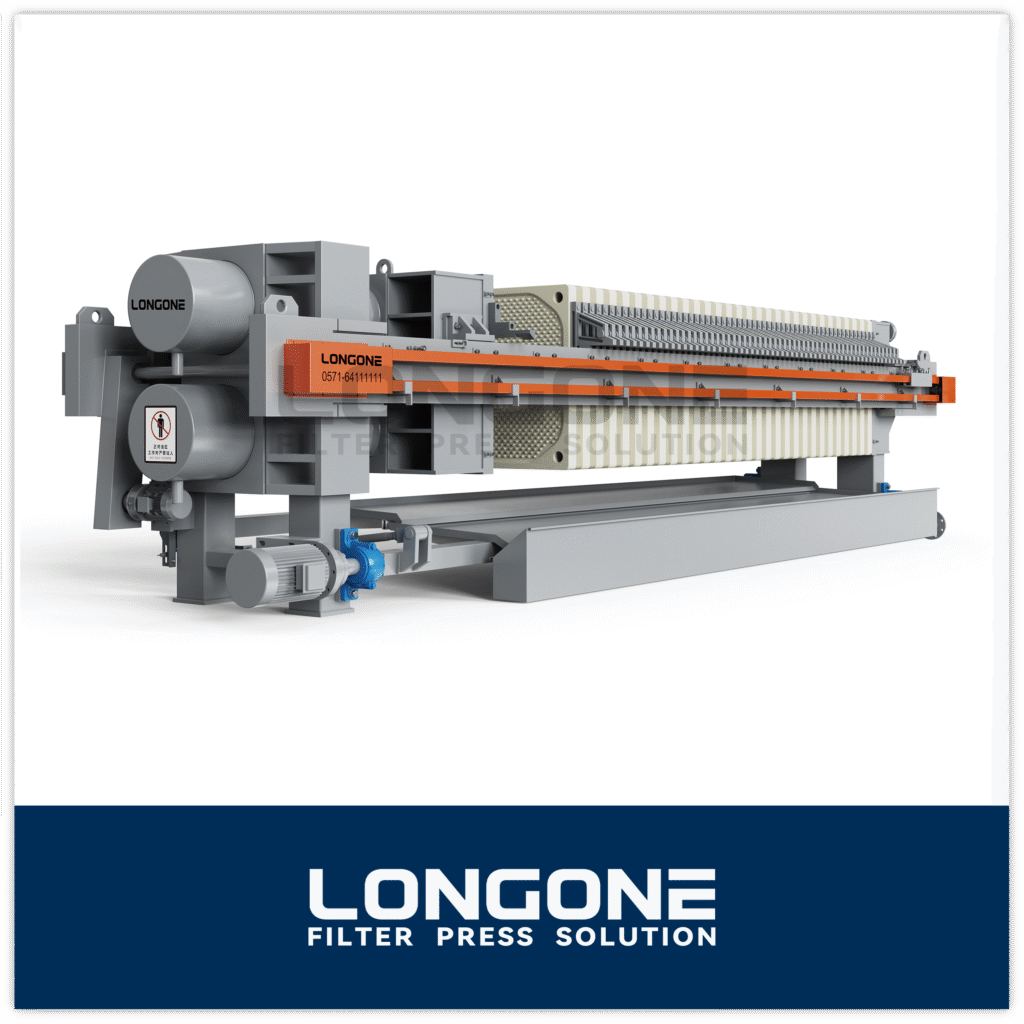
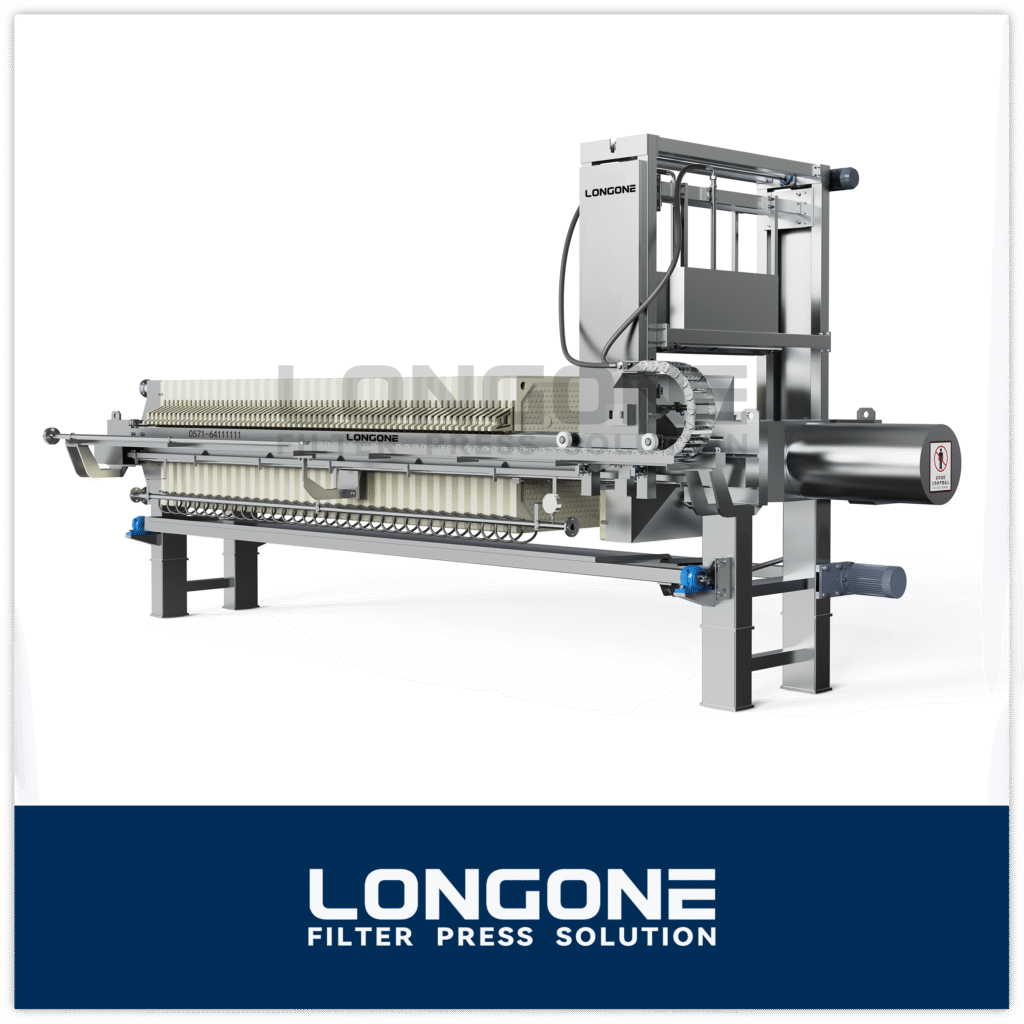
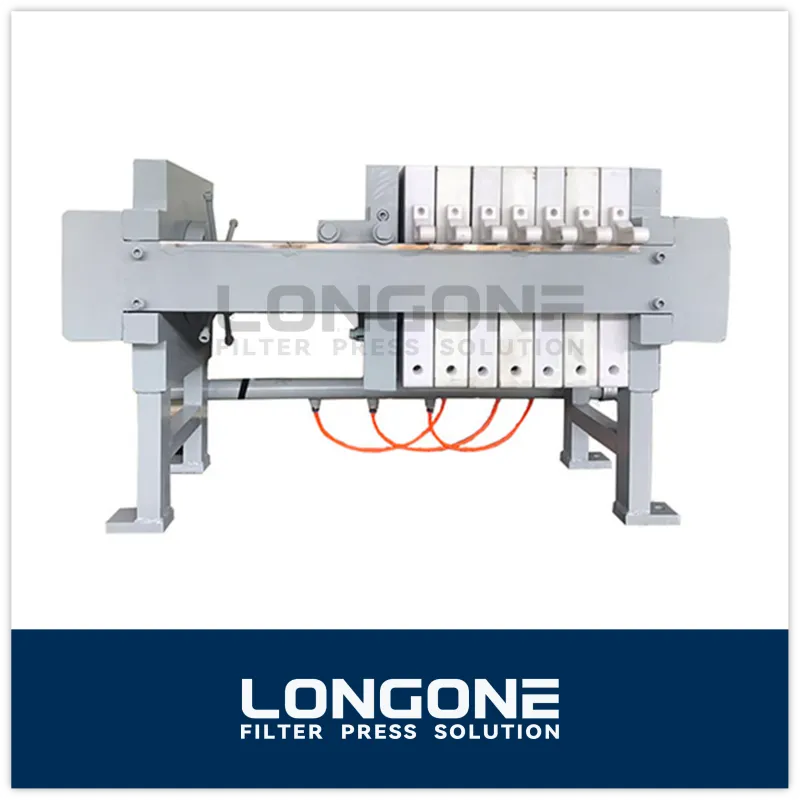
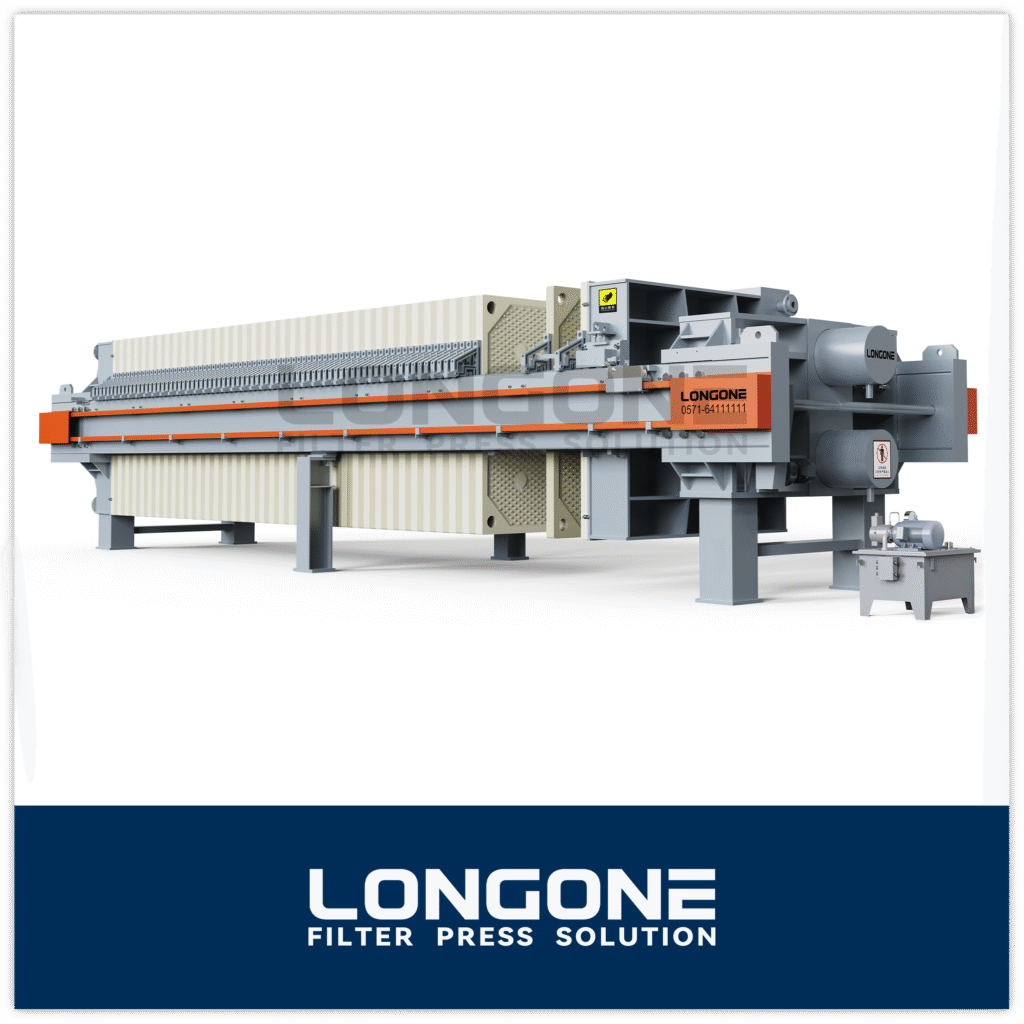
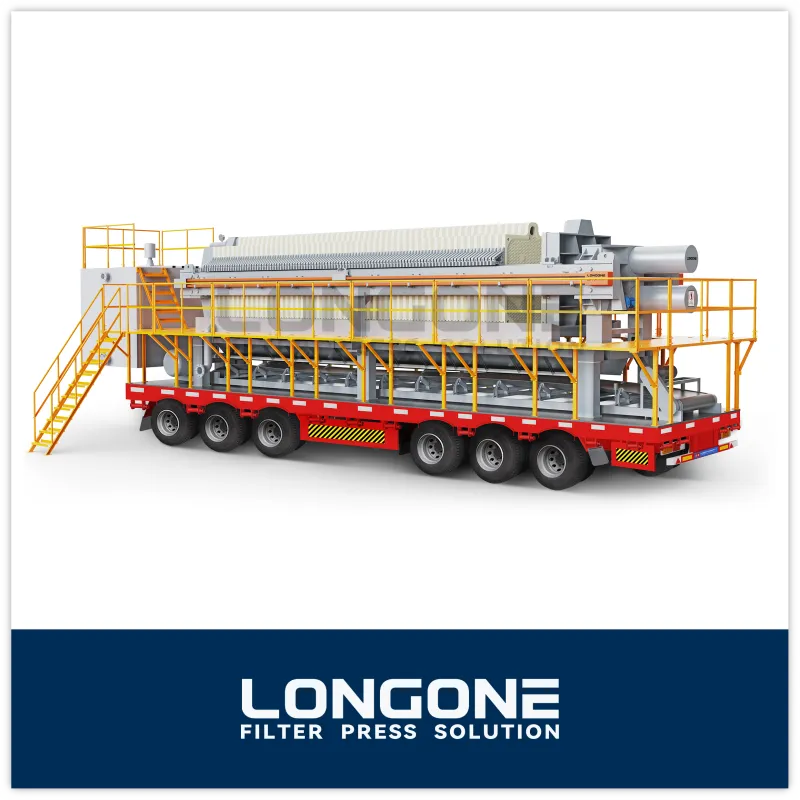
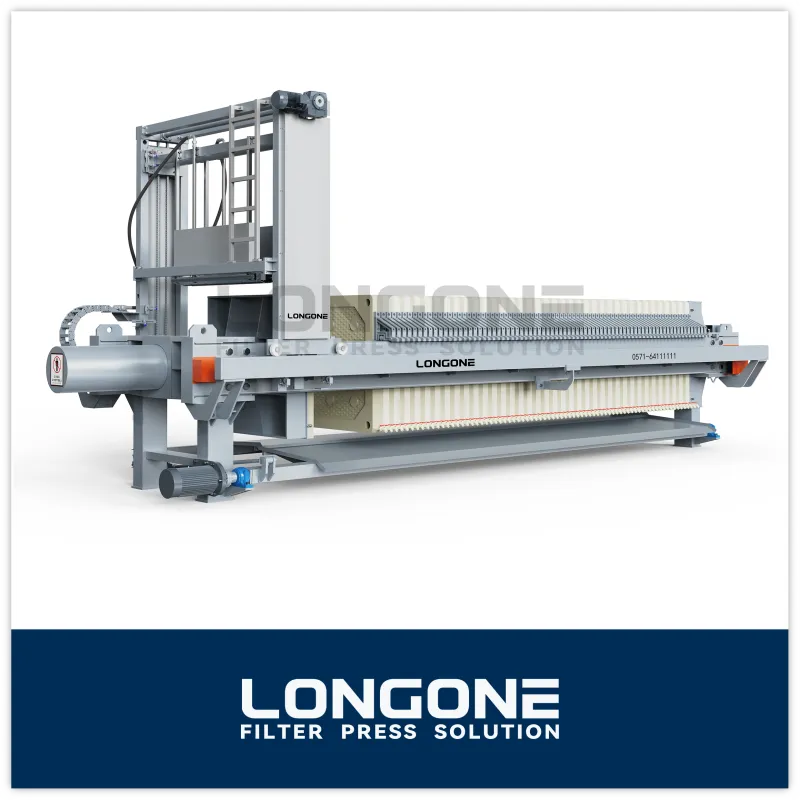
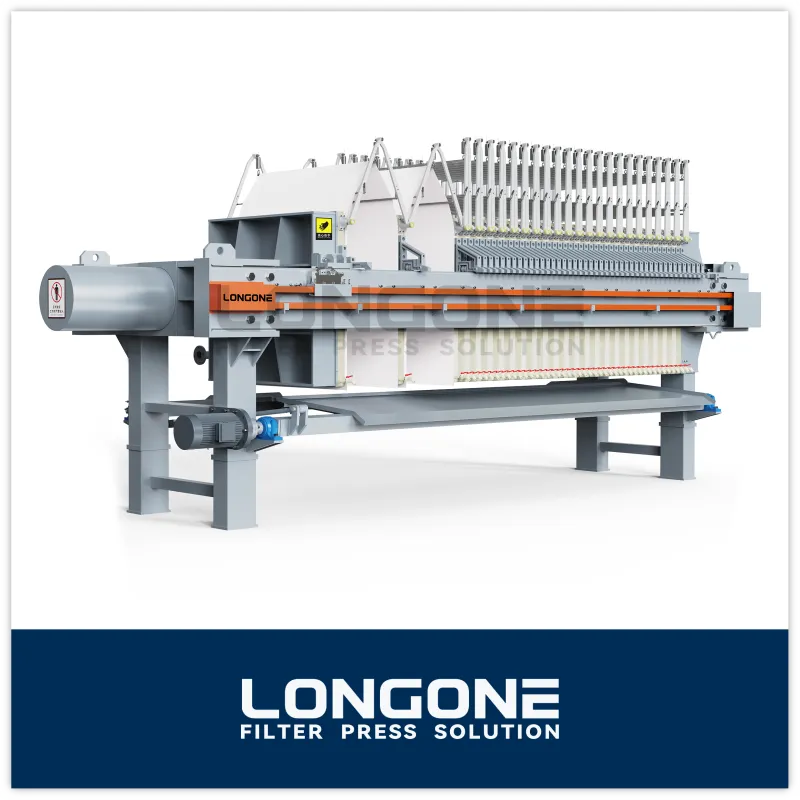
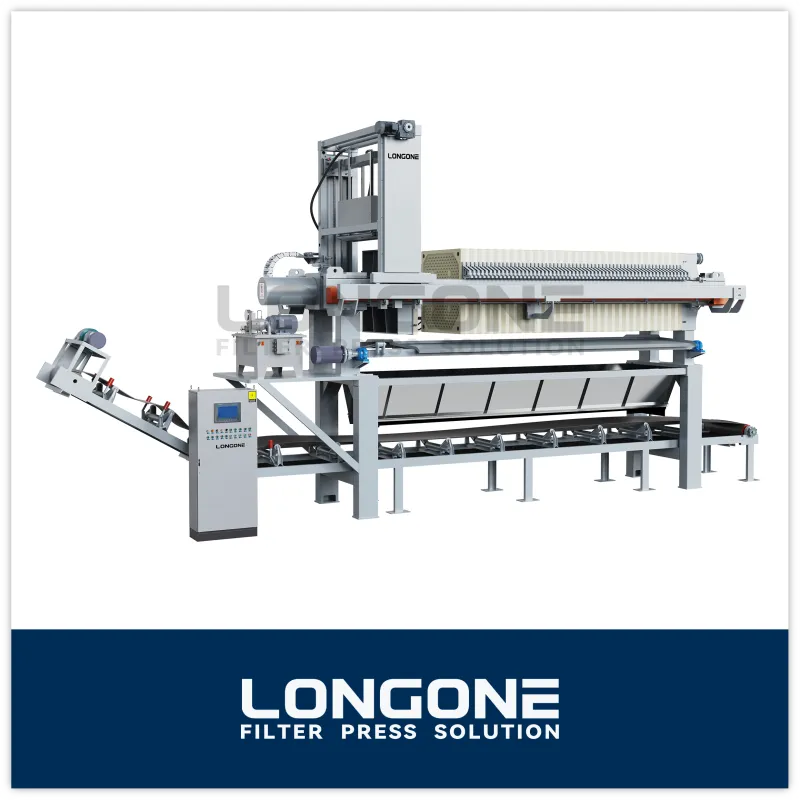
Choosing a ضغط التصفية for an industrial process is a major capital decision, but many buyers focus on a single metric like processing volume. This oversight often leads to an improperly sized machine—either an oversized unit that wastes capital and energy or an undersized one that creates production bottlenecks and maintenance headaches. Understanding the true factors that define filter press capacity is the first step to selecting a system that delivers reliable performance and a strong return on investment.
Filter press capacity is the total volume of solids a filter press can process in a specific timeframe, typically measured in dry kilograms or tons per hour. It is determined not by the machine’s overall size, but by a combination of the total filter area, the total chamber volume, the filtration cycle time, and the specific characteristics of the slurry being dewatered. A correct capacity calculation ensures the press meets production targets efficiently.
Let’s dive deeper into what capacity means in practice and the critical factors that influence it.
What Is Filter Press Capacity?
You hear the term “capacity” thrown around, but does it just refer to the physical size of the machine or the volume of its chambers? This common misunderstanding can lead to costly procurement mistakes when the chosen equipment fails to meet real-world production demands.
In industrial filtration, filter press capacity is a measure of performance: the mass of dry solids the press can capture and dewater per unit of time (e.g., kg/hour or tons/day). It is an output metric, not just a physical dimension.
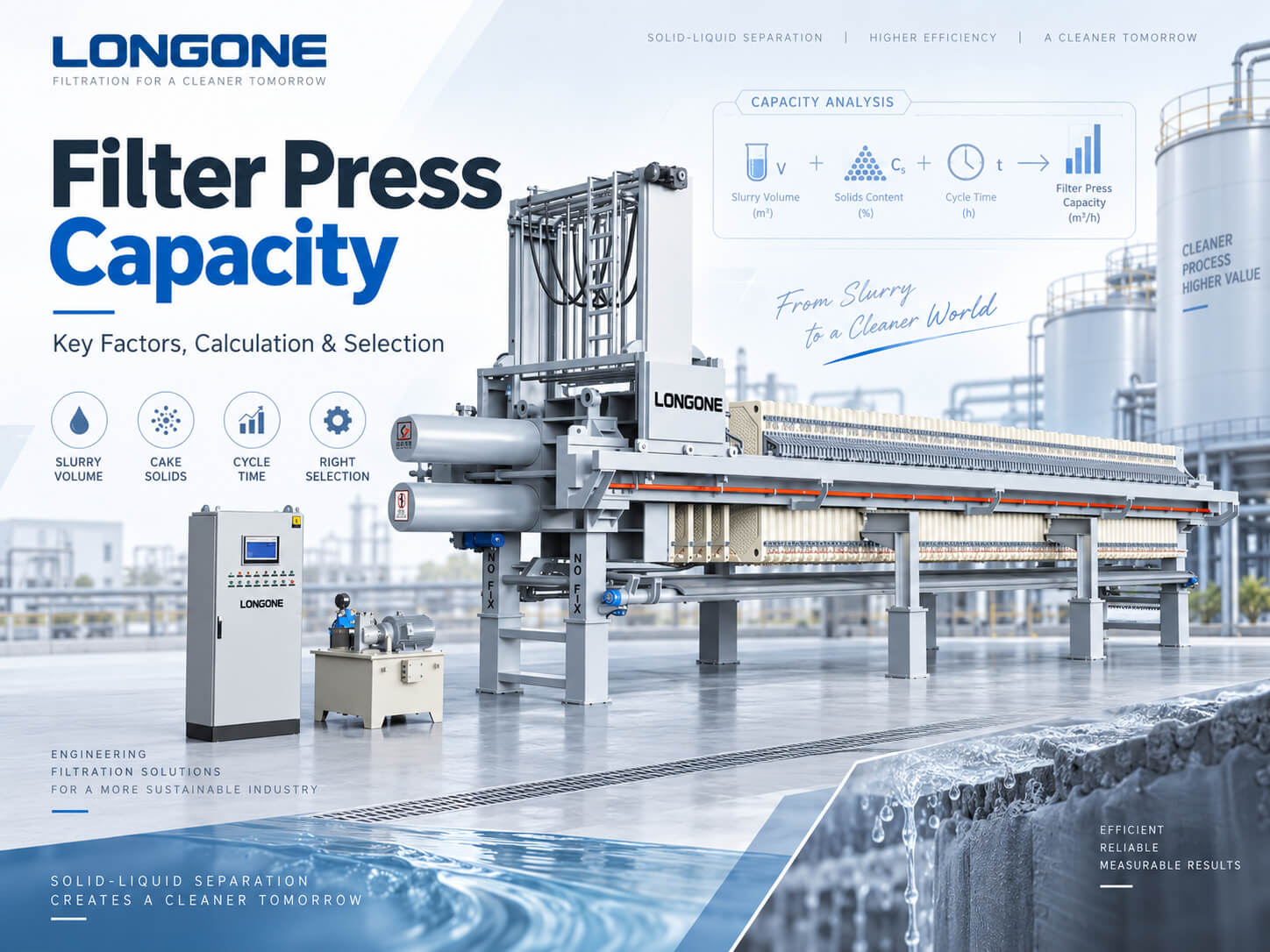
Beyond Simple Volume
When we discuss capacity at LONGONE, we are talking about the machine’s effective throughput under your specific operating conditions. It’s easy to think of capacity in terms of the slurry volume a press can hold, but this is misleading. A 10,000-liter press processing a 2% solids slurry will yield far fewer dry solids per cycle than the same press processing a 20% solids slurry.
Therefore, the conversation must be centered on the solids. I often use an analogy with clients: thinking about slurry volume is like measuring a bakery’s oven by how much air it holds. What really matters is how many loaves of bread (dry solids) it can bake (dewater) per day.
To properly quantify filter press capacity, we focus on a few key performance indicators (KPIs):
- Solids Throughput: This is the primary metric, measured in dry weight over time (e.g., 500 kg/hr). This KPI directly aligns with your production goals.
- Filtration Cycle Time: The total time required to complete one full batch, including filling the press, filtering the slurry, discharging the cake, and washing the cloths. A shorter cycle time for a given batch size means higher overall capacity.
- Cake Dryness: The percentage of solids in the final filter cake. Higher dryness can be a primary goal, which might require longer cycle times or higher pressures, thus influencing the capacity calculation. A press that produces a 50% dry cake has a higher effective capacity than one that only reaches 30% with the same input.
- Filtrate Clarity: The quality of the liquid removed from the slurry. If the filtrate must meet stringent environmental or process requirements, cycle times may need to be adjusted, which in turn affects hourly throughput.
Ultimately, capacity is the end result of a balanced system design, where the equipment’s specifications are perfectly matched to the process material and production targets.
What Factors Affect Filter Press Capacity?
You’ve calculated your required solids throughput, but your new filter press isn’t keeping up with the production line. What went wrong? The issue often lies in overlooked variables that significantly impact how efficiently a press can dewater your slurry, directly affecting its real-world capacity.
The most critical factors affecting filter press capacity are the slurry’s physical and chemical characteristics, the press’s operating parameters, and the design of the filtration components themselves, such as the filter plates and cloths.
A Balance of Slurry, Pressure, and Design
Achieving optimal filter press capacity requires a holistic understanding of how different variables interact. An otherwise perfect machine can underperform if it’s fed a difficult slurry or operated inefficiently.
Slurry Characteristics
The properties of the material you are filtering are the most dominant factor.
- Solids Concentration: A slurry with a higher percentage of solids will fill the press chambers faster, leading to shorter cycle times and higher hourly throughput. A dilute slurry requires pumping a large volume of liquid just to form the cake, extending the cycle.
- Particle Size, Shape, and Distribution: Slurries with large, hard, crystalline particles dewater very easily. In contrast, slurries with very fine, slimy, or amorphous particles (like in many biological wastewater sludges) are much more difficult. These fine particles can quickly blind the filter cloth, blocking the flow of filtrate and drastically reducing performance.
- Compressibility: This refers to how much the filter cake compacts under pressure. A highly compressible cake can become a dense, impermeable barrier that prevents further dewatering, forcing you to end the cycle early. This is a common issue we see in wastewater treatment applications.
Operating Parameters
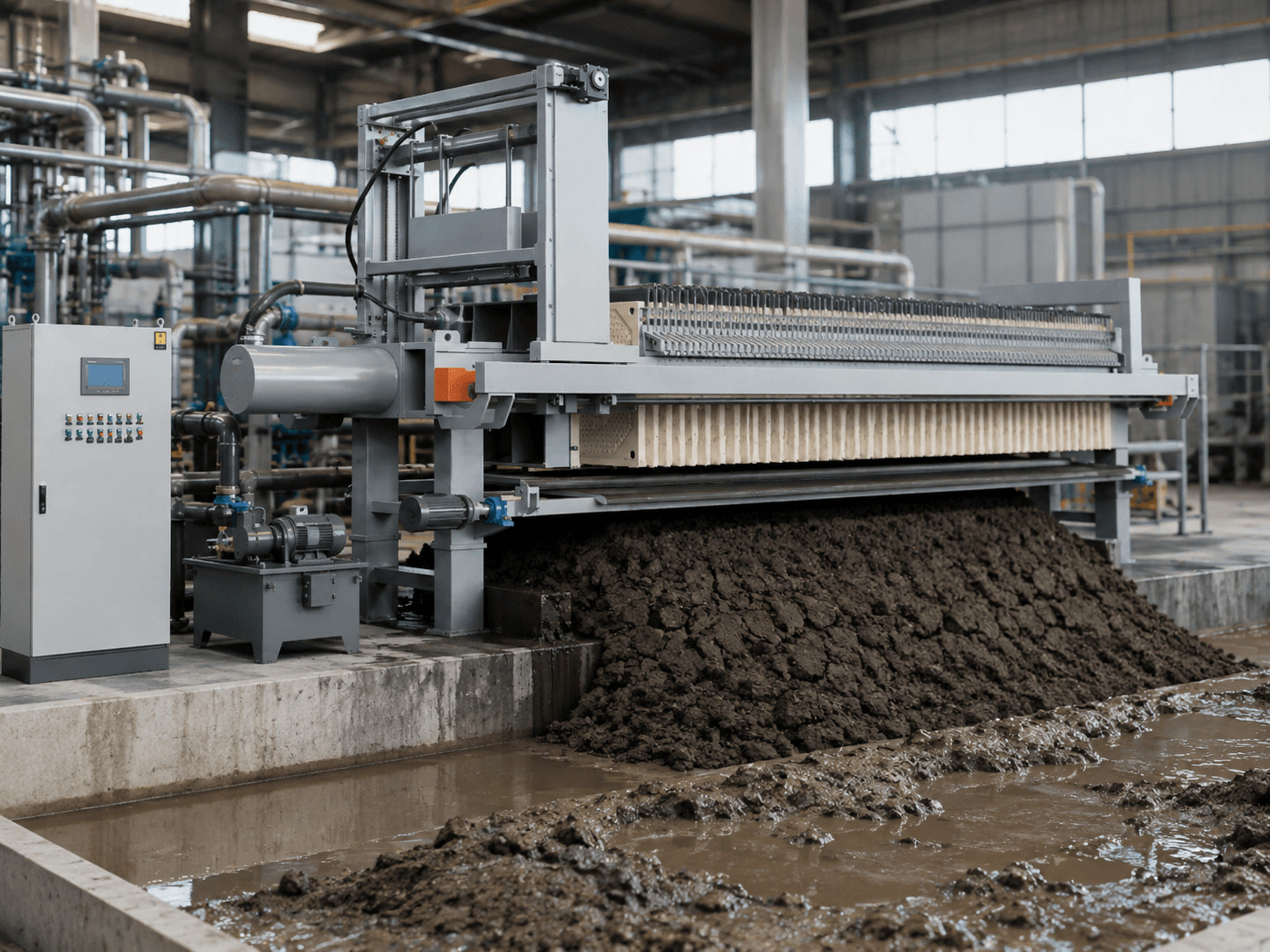
How you run the press is just as important as the press itself.
- Feed Pressure and Pumping Rate: Higher feed pressure generally speeds up filtration, but only to a point. For compressible solids, excessive pressure applied too quickly can compact the cake prematurely, choking off filtrate flow. A carefully controlled, ramping pressure profile is often more effective.
- Filtration Cycle Time: Each phase of the cycle—filling, pressing, cake discharge, and cloth washing—contributes to the total time. Shaving just a few minutes off each phase by optimizing automation or mechanics can lead to one or two extra cycles per shift, significantly boosting daily capacity.
- Target Cake Thickness: A thicker cake means more solids are captured per cycle, which reduces the number of cycles (and discharge/cleaning time) needed per day. However, a thicker cake also takes exponentially longer to dewater to its core. There is an optimal cake thickness for every application that balances batch size with filtration time to maximize overall throughput.
Equipment Design
Finally, the machine’s hardware plays a crucial role.
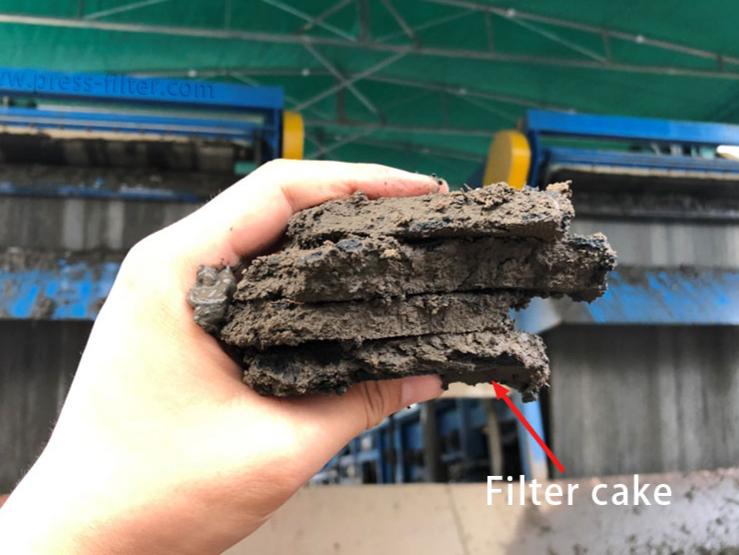
- Filter Plate and Chamber Design: The depth of the chamber in a recessed plate filter press determines the maximum cake thickness. Membrane filter plates, which can inflate to squeeze the cake, can achieve higher cake dryness in shorter times, effectively increasing capacity.
- Filter Cloth Selection: The weave, material, and permeability of the filter cloth are critical. A cloth with pores that are too large will allow solids to pass through, resulting in poor filtrate clarity. A cloth with pores that are too small will blind quickly. Selecting the right cloth is a science in itself and is a key part of the pilot testing we perform for our clients.
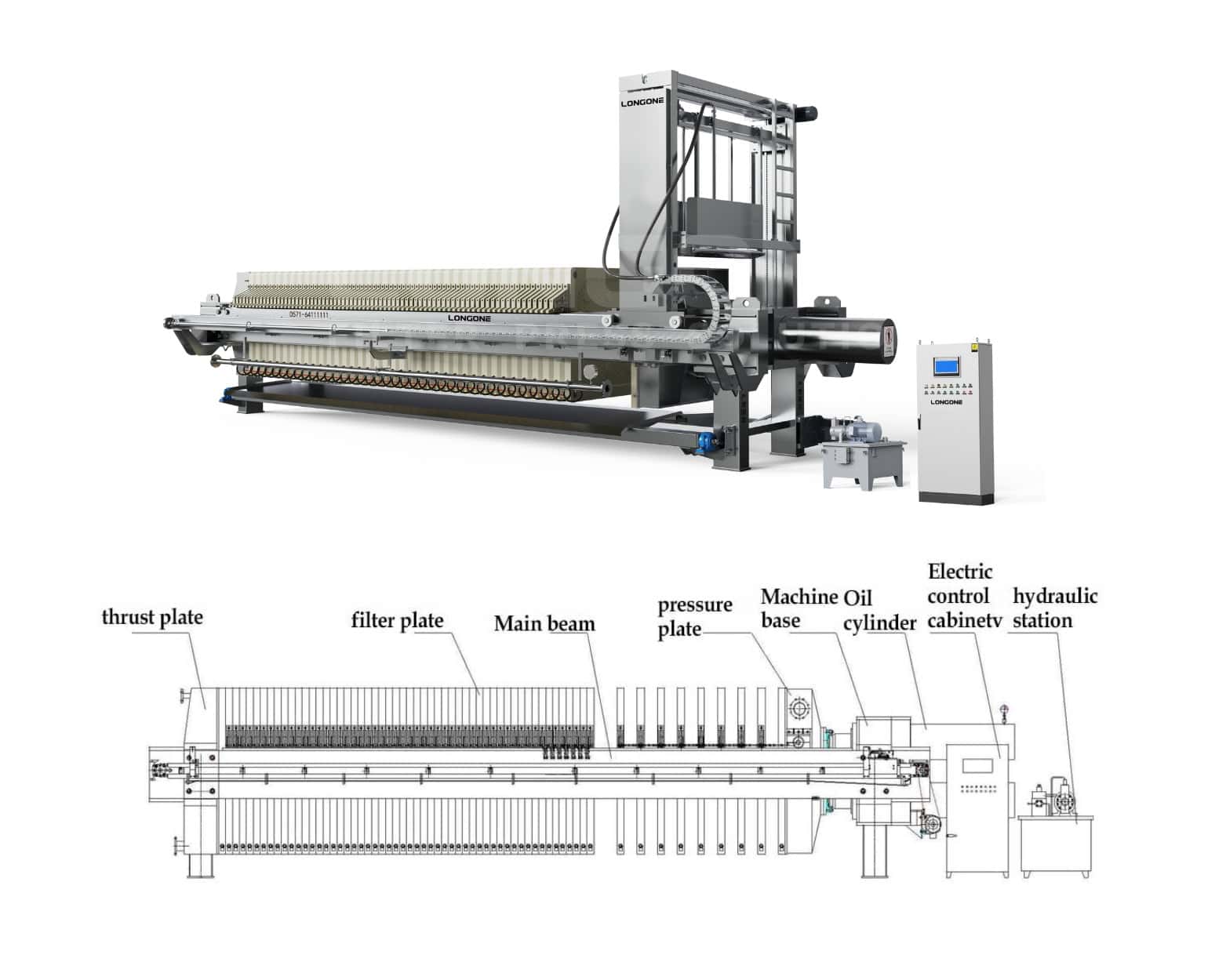
How Do You Calculate Filter Press Capacity?
Trying to size a filter press using a generic online calculator or a simple volume formula is a recipe for a major capital expenditure mistake. To avoid this, you need a reliable calculation method based on your specific production data and slurry properties.
The fundamental way to calculate filter press capacity is to first determine the mass of dry solids you need to process per cycle, then calculate the required chamber volume to hold those solids, and finally select a press with the filter area and plate configuration to provide that volume.
A Step-by-Step Calculation Guide
This calculation serves as a crucial starting point for any filter press project. However, remember that this theoretical model must be validated with practical testing.
Let’s walk through a simplified example.
Scenario: A chemical plant needs to dewater a slurry stream and recover 8,000 kg of dry solids over a 16-hour workday.
- Step 1: Determine Required Solids Processing Rate (S)
This is your primary production target.S = 8,000 kg dry solids / 16 hours = 500 kg/hr
- Step 2: Estimate the Filtration Cycle Time (T)
This is the most critical variable and should be determined from laboratory or pilot-scale tests on your actual slurry. For this example, let’s assume testing reveals an optimal cycle time of 90 minutes (1.5 hours).T = 1.5 hours
- Step 3: Calculate the Required Solids per Cycle (Sc)
This tells you how many kilograms of dry solids the press must hold in its chambers for each batch.Sc = S * T = 500 kg/hr * 1.5 hours = 750 kg per cycle
- Step 4: Determine the Filter Cake Properties
Again, this comes from testing. Let’s say the tests show you can achieve a filter cake with 40% dry solids content and a bulk density (ρ_cake) of 1,600 kg/m³.- Cake Dry Solids Content = 40%
- Bulk Cake Density (ρ_cake) = 1,600 kg/m³
- Step 5: Calculate the Required Chamber Volume (V)
This is the core specification for the filter press. First, find the volume of cake needed to hold 750 kg of dry solids.Total Cake Mass per Cycle = Dry Solids / % Solids = 750 kg / 0.40 = 1,875 kgRequired Chamber Volume (V) = Total Cake Mass / Cake Density = 1,875 kg / 1,600 kg/m³ = 1.17 m³
- Step 6: Select the Filter Press
With this information, you can now consult manufacturer specifications. You need to find a filter press model that provides a total chamber volume of at least 1.17 m³ (or 1,170 liters). This volume requirement, along with the desired cake thickness, will determine the necessary filter plate size (e.g., 1200mm x 1200mm) and the total number of plates.
Important Note: This calculation is a foundational estimate. At our facility in Zhejiang, we never finalize a design without performing filtration tests. Real-world slurry behavior, including compressibility and blinding potential, can significantly alter the required cycle time and achievable cake dryness. Trustworthy filter press capacity determination combines theoretical math with empirical data.
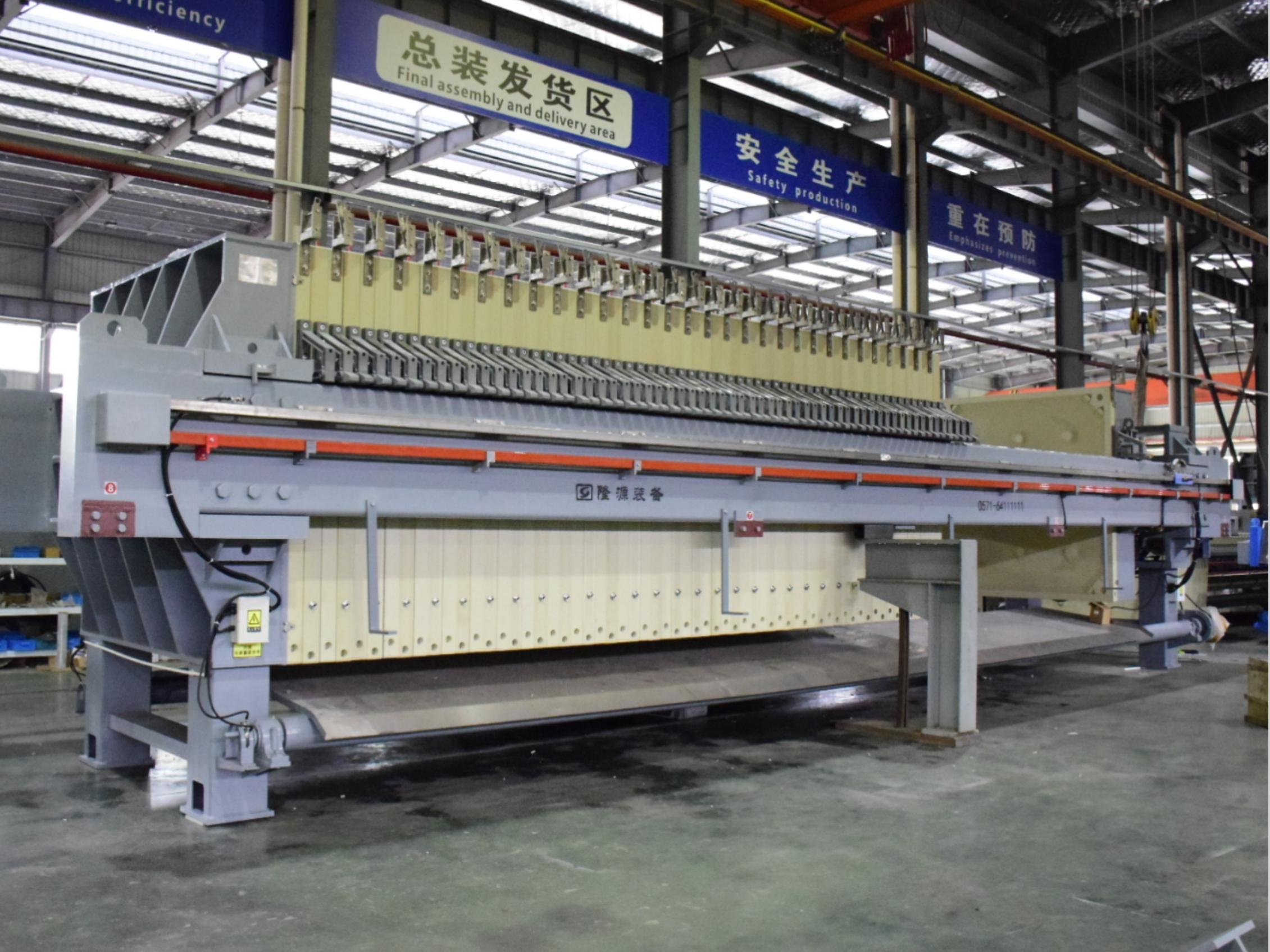
Filter Area and Chamber Volume: What’s the Core of Capacity Design?
When you review filter press specifications, you’ll see two key metrics: filter area (in m²) and chamber volume (in m³ or L). It’s easy to get lost in these numbers or even confuse them. Understanding the distinct role of each is essential for choosing a machine with the right design for your application.
Filter area determines the rate of dewatering (how fast liquid can pass through the cloths), while chamber volume determines the amount of solids that can be captured in a single batch. A properly designed filter press capacity hinges on the correct balance between these two parameters.
The Interplay of Speed and Size
Think of filter area and chamber volume as two different levers you can pull to optimize performance. The right combination depends entirely on your slurry and process goals.
Understanding Filter Area (m²)
The filter area is the total surface of the filter cloths that is available for liquid to pass through. It is calculated by multiplying the area of a single plate’s filtration surface by the total number of plates.
- Function: Governs the filtration speed. More area allows more water to be removed simultaneously at a given pressure.
- Impact: A press with a large filter area is well-suited for processing large volumes of dilute slurry, where the main challenge is removing a lot of water quickly. If the area is too small for the slurry volume, filtration times will be excessively long, bottlenecking your process.
Understanding Chamber Volume (m³)
The chamber volume is the total space created between the filter plates when the press is closed. This is the space where the solid particles accumulate to form the filter cake.
- Function: Governs the batch size or solids holding capacity per cycle.
- Impact: A press with a large chamber volume is ideal for slurries with a high solids concentration. It allows you to capture a large mass of solids in each cycle, reducing the frequency of non-productive phases like cake discharge and cloth washing. The volume is determined by the plate area, the number of chambers, and the depth of each chamber.
Finding the Right Ratio
The ideal ratio of filter area to chamber volume is application-specific. There is no single “best” design. Here’s how to think about it:
| Scenario | Filter Area | Chamber Volume | Best Suited For… | Example Application |
|---|---|---|---|---|
| High Area, Low Volume | Large | Small | Dilute, fast-filtering slurries. | Rinsing valuable product from a cake. |
| Low Area, High Volume | Small | Large | Concentrated, slow-filtering slurries. | Dewatering thick mineral tailings. |
| Balanced Design | Proportional | Proportional | General-purpose use with moderate solids. | Municipal sludge dewatering. |
For example, a client in the mining industry processing dense tailings might need a press with very deep chambers (e.g., 50 mm) to maximize solids capture per cycle. In contrast, a pharmaceutical company washing a valuable active ingredient might opt for a press with very shallow chambers (e.g., 20 mm) but a large total filter area to ensure efficient washing and fast filtration, even if the solids volume per batch is small. This is a core part of the custom engineering we provide, ensuring the filter press capacity is built around the process, not the other way around.
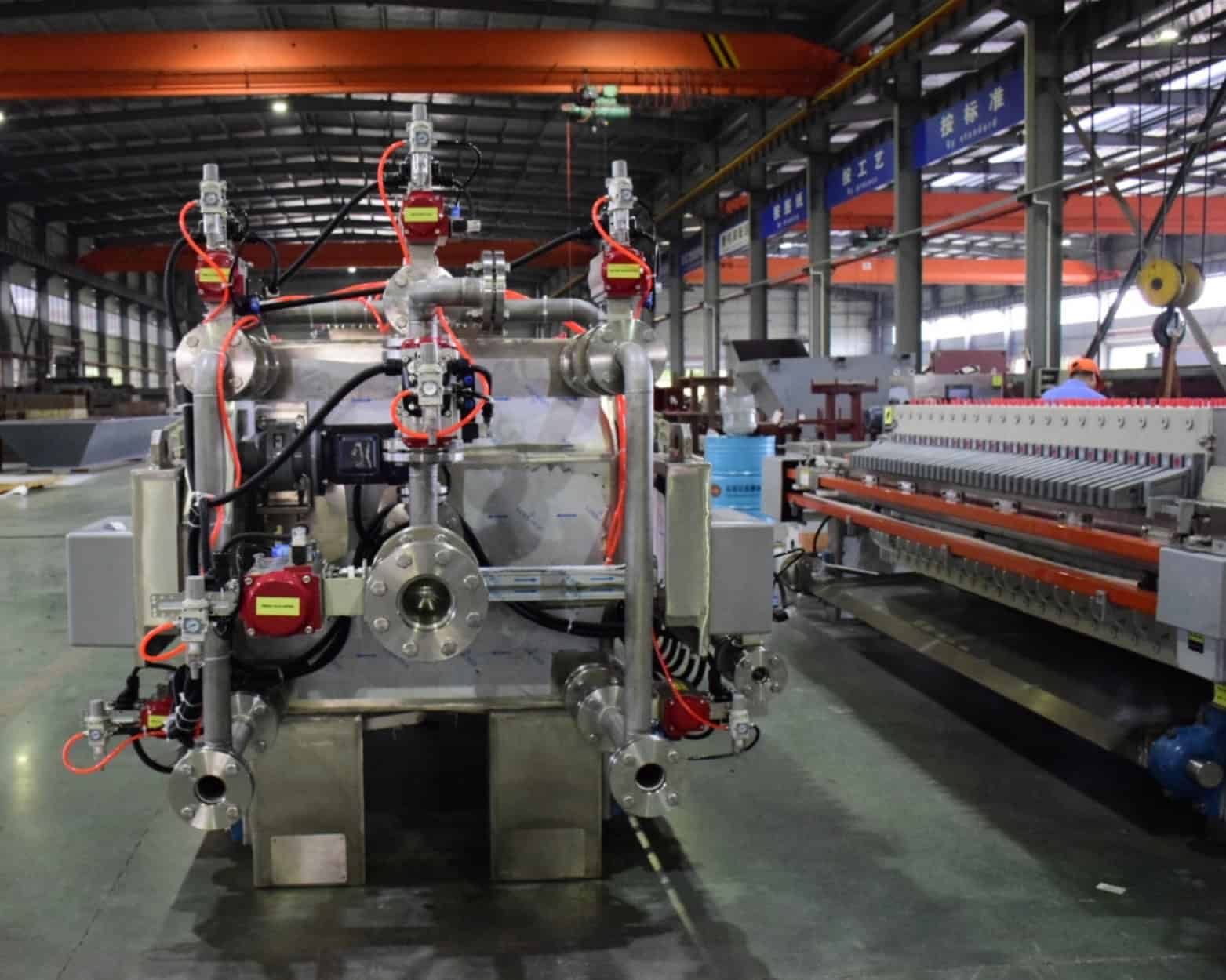
Choosing the Right Filter Press Capacity for Different Industries?
You know your industry inside and out, but do you know its specific filtration demands? Applying a generic solution from another sector is a recipe for inefficiency, high operating costs, and poor performance. Each industry presents a unique set of challenges that demand a tailored approach.
Selecting the right filter press capacity means designing a system around the unique slurry characteristics, production volumes, and final product requirements of your specific industry. A press for mining tailings will be vastly different from one used in food processing.
Custom Solutions for Diverse Needs
Over my 20+ years in this business, I’ve seen firsthand how diverse filtration needs can be. A successful installation always starts with a deep dive into the industry’s specific problems.
Mining and Mineral Processing
- Challenge: Processing enormous volumes of abrasive mineral tailings, often 24/7. The primary goals are maximizing water recovery for reuse and producing a stable, compact cake for safe disposal or backfill.
- Capacity Needs: This sector demands the largest and most robust filter presses. We often specify presses with filtration areas exceeding 1,000 m² and high operating pressures (e.g., 2.0-2.5 MPa) to achieve maximum cake dryness. Filter press capacity here is measured in tons per hour, and reliability is paramount. Automation for cake discharge and cloth washing is not a luxury; it’s a necessity.
Municipal and Industrial Wastewater Treatment
- Challenge: Dewatering biological or chemical sludge, which is typically slimy, highly compressible, and difficult to dewater. The goal is to reduce sludge volume to minimize disposal costs and produce filtrate clean enough for discharge.
- Capacity Needs: These applications require careful process design. Slurry pre-treatment with polymers (flocculants) is almost always required to agglomerate fine particles and make them filterable. The capacity is defined by the ability to consistently produce a cake meeting a specific dryness target (e.g., >25% solids for landfilling). Membrane filter presses are often favored here as the final squeeze can significantly increase cake dryness.
التصنيع الكيميائي
- Challenge: Extreme diversity. Slurries can be acidic, alkaline, solvent-based, or highly viscous. Processes might involve product recovery, catalyst separation, or waste neutralization. Purity and avoiding cross-contamination are often critical.
- Capacity Needs: The design must prioritize chemical compatibility. Plates and frames might be made from special grades of polypropylene or even stainless steel. Filter press capacity is balanced with the need for high-purity separation. For example, a fully enclosed (CGR) filter press might be required to contain hazardous fumes or prevent oxidation.
Food and Pharmaceutical Production
- Challenge: The strictest standards for sanitation and purity. All materials must be food-grade or FDA-compliant. The goal is often to gently recover a valuable liquid or solid product without degradation or contamination.
- Capacity Needs: Presses are typically smaller and built with materials like stainless steel and sanitary-grade polypropylene. The design emphasizes ease of cleaning and sterilization. Capacity might be lower in terms of tonnage, but the value of the recovered product is high. Cycle times are often optimized to preserve the quality of the product rather than for maximum throughput.
How to Maximize Filter Press Performance and Efficiency?
You’ve invested in a filter press with the right theoretical capacity, but over time, you notice cycle times are getting longer and throughput is dropping. How do you maintain peak performance for the long term and get the most out of your investment?
Maximizing your filter press capacity and efficiency involves a three-pronged strategy: optimizing the dewatering process itself, implementing a proactive maintenance schedule, and ensuring your filter media remains in top condition.
From Good to Great Performance
A filter press is not a “set it and forget it” machine. Continuous improvement and diligent maintenance are key to unlocking its full potential year after year.
Continuous Process Optimization
- Slurry Pre-treatment: This is the lowest-hanging fruit for performance improvement. The use of coagulants and flocculants can dramatically improve dewatering rates by grouping fine particles into larger, more filterable flocs. A small investment in a polymer dosing system can sometimes increase capacity by 20-50% or more. Experimenting with different polymers and dosages is crucial.
- Feed Pump Control: Instead of blasting the press with full pressure from the start, use a variable frequency drive (VFD) on your feed pump. A controlled, ramped-up feed pressure profile prevents the initial layer of cake from becoming too compacted, keeping filtration pathways open longer. This simple change can shorten cycle times and improve overall dewatering.
- Cycle Time Analysis: Don’t assume your initial cycle parameters are optimal forever. Regularly log the time taken for each phase: fill, filtration, final squeeze (if applicable), and discharge. If fill times are increasing, it could signal a pump issue or cloth blinding. If filtration slows down too early, your feed pressure might be too aggressive.
Proactive Maintenance Schedule
- Automated Filter Cloth Washing: A blinded (clogged) filter cloth is the number one enemy of efficiency. A high-pressure automatic cloth washing system is essential. It should be used as frequently as needed—for some sticky sludges, this might be after every single cycle. A clean cloth is a fast cloth.
- Plate and Gasket Inspection: A leaking press is an inefficient press. During cleaning, visually inspect the sealing surfaces of the filter plates and the gaskets. Any nicks or damage can cause leaks, preventing the system from reaching full operating pressure.
- Hydraulic System Health: The hydraulic ram provides the clamping force that holds the plate stack together against the immense feed pressure. Regularly check the hydraulic fluid level and pressure settings. A weak hydraulic system will lead to plate sealing issues and reduced performance.
I once visited a customer whose daily throughput had dropped by nearly 30%. They were convinced the press was undersized. After a quick inspection, we found the real culprits: partially blinded cloths and a feed pump VFD that was programmed incorrectly. After a thorough acid wash of the cloths and reprogramming the pump profile, their original filter press capacity was fully restored without any hardware changes.
خاتمة
Selecting the right filter press capacity is far more than choosing a machine size from a catalog; it is a critical engineering decision that directly impacts your operational efficiency, costs, and productivity. True capacity is not defined by volume alone, but by the proven, reliable throughput of dry solids your system can achieve. This requires a comprehensive evaluation of your slurry characteristics through testing, a precise calculation of your production needs, and a system design that balances filter area, chamber volume, and operating parameters. By moving beyond simple specifications and focusing on performance-based design, you can avoid the twin pitfalls of an oversized, wasteful system and an undersized, bottleneck-creating one.
If you need help moving from theoretical requirements to a proven, tested solution for your solid-liquid separation needs, contact our engineering team at LONGONE. We can help you evaluate your slurry and design a system with the right filter press capacity to ensure your long-term operational success.