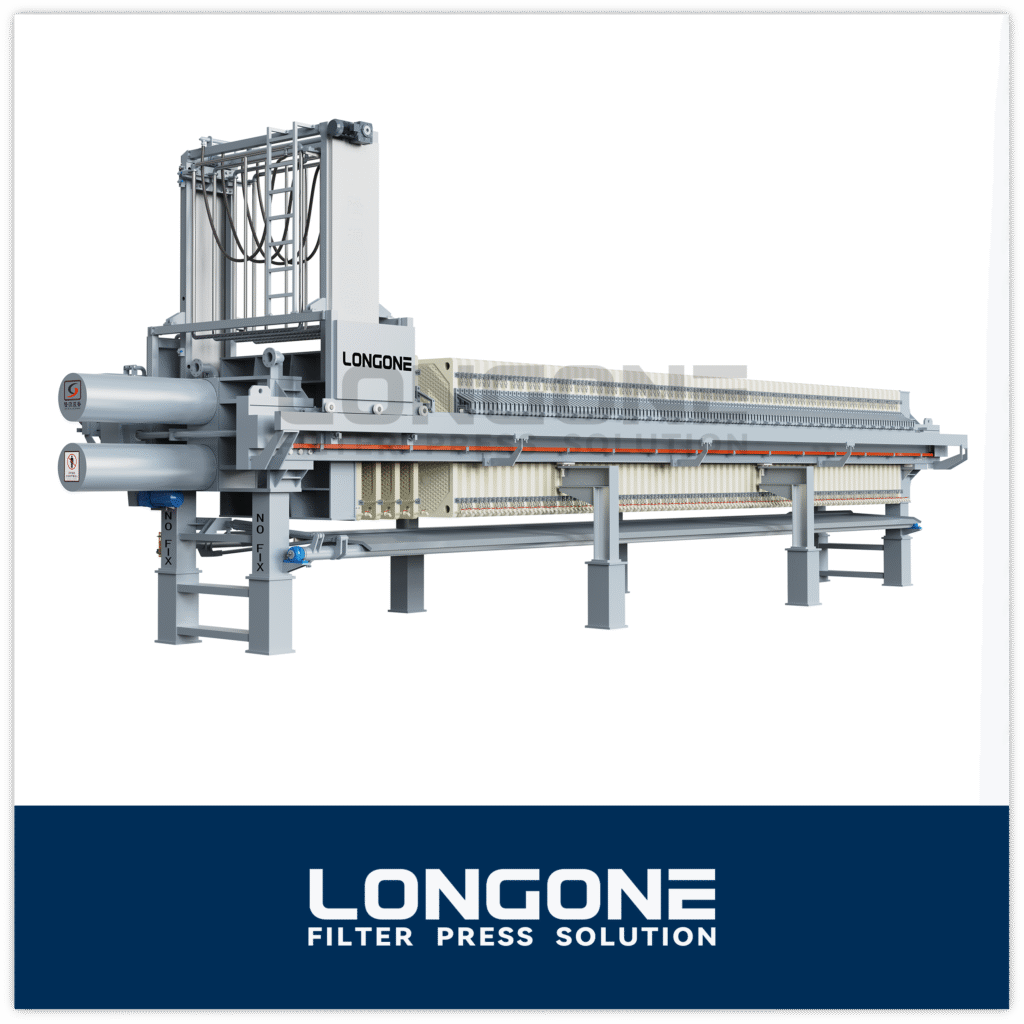
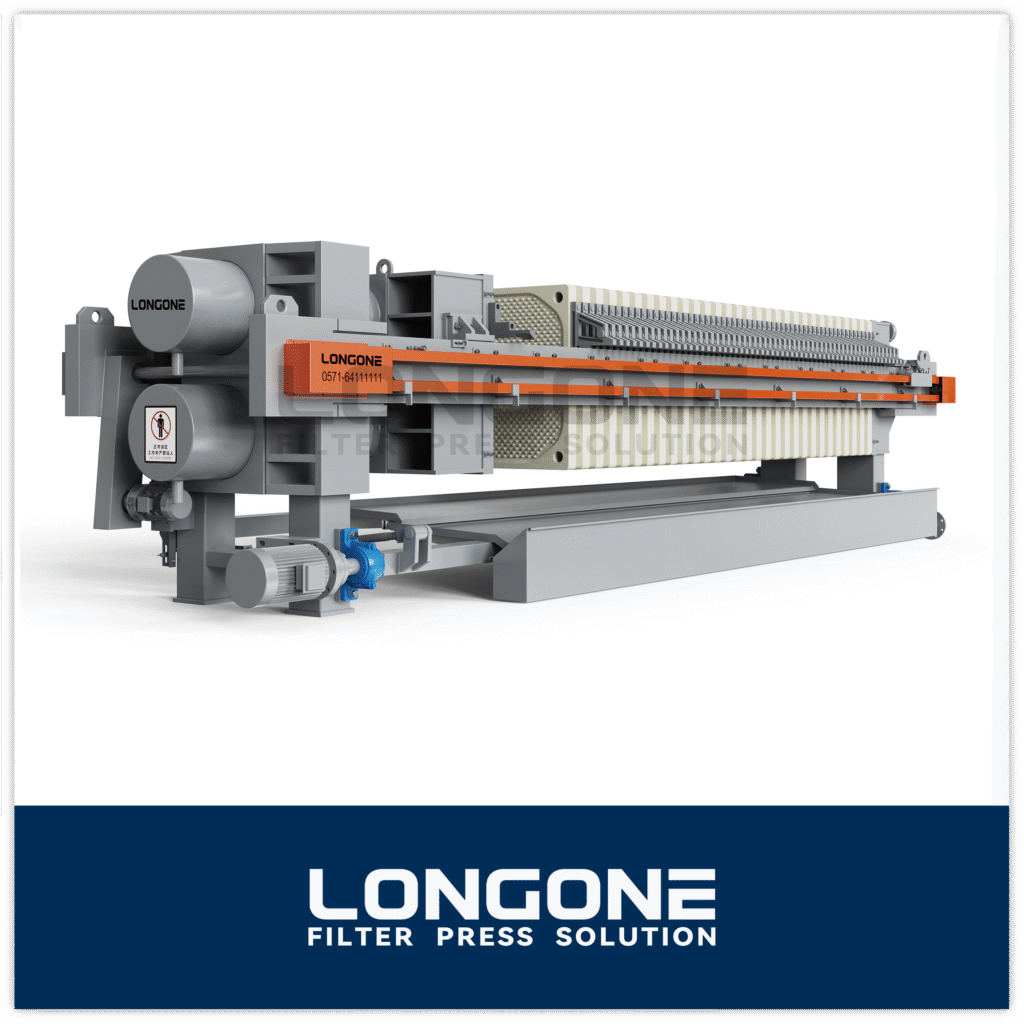
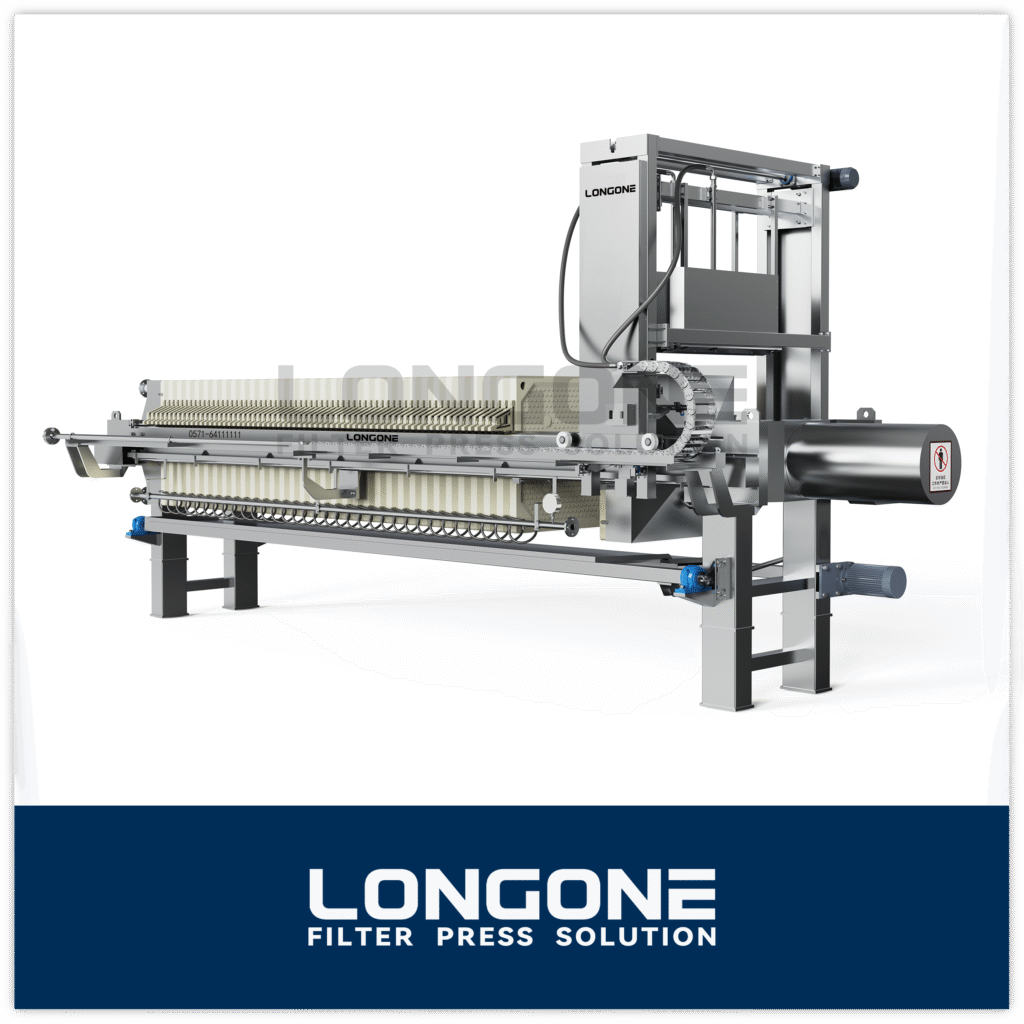
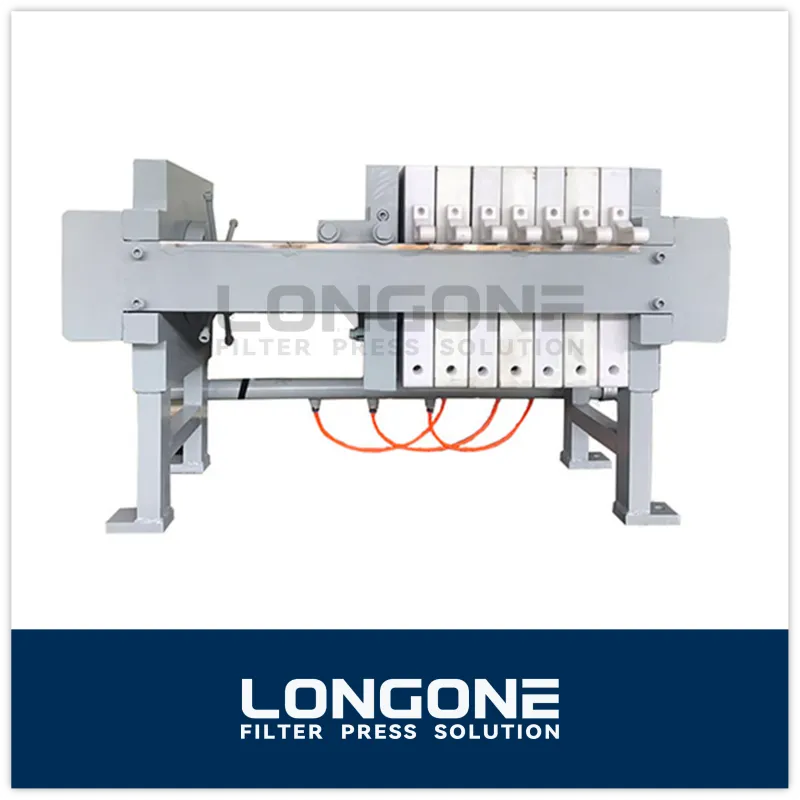
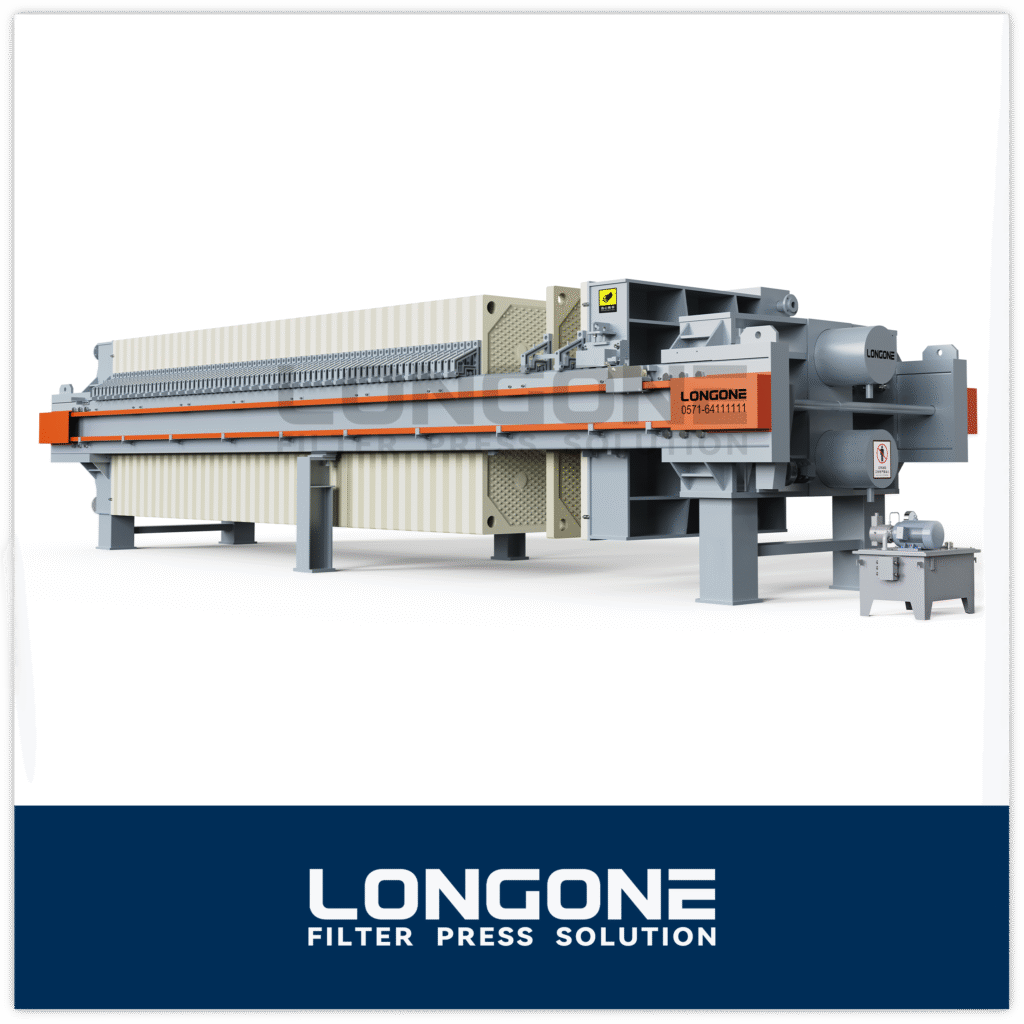
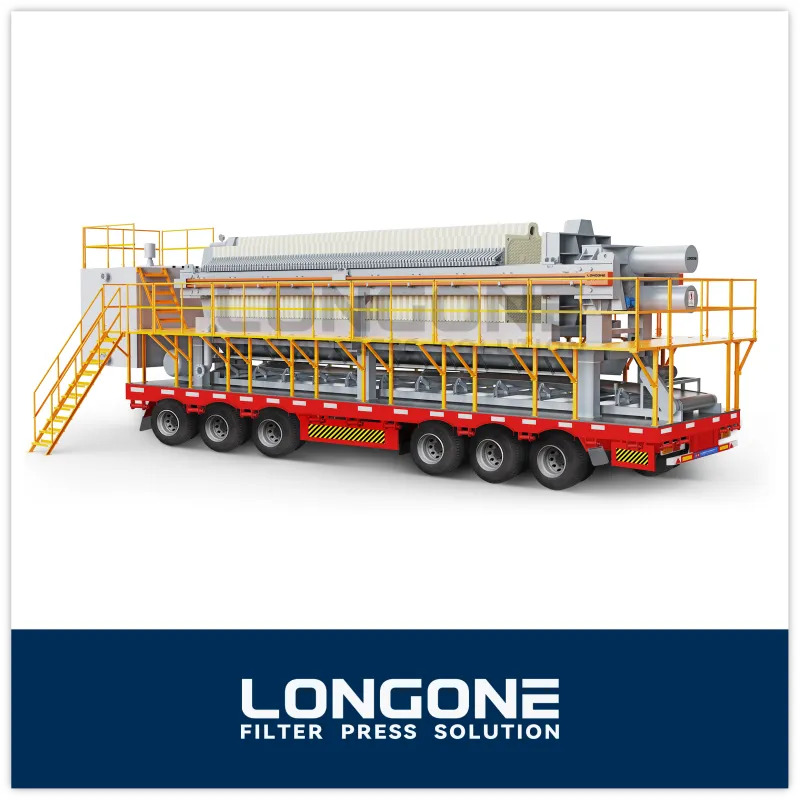
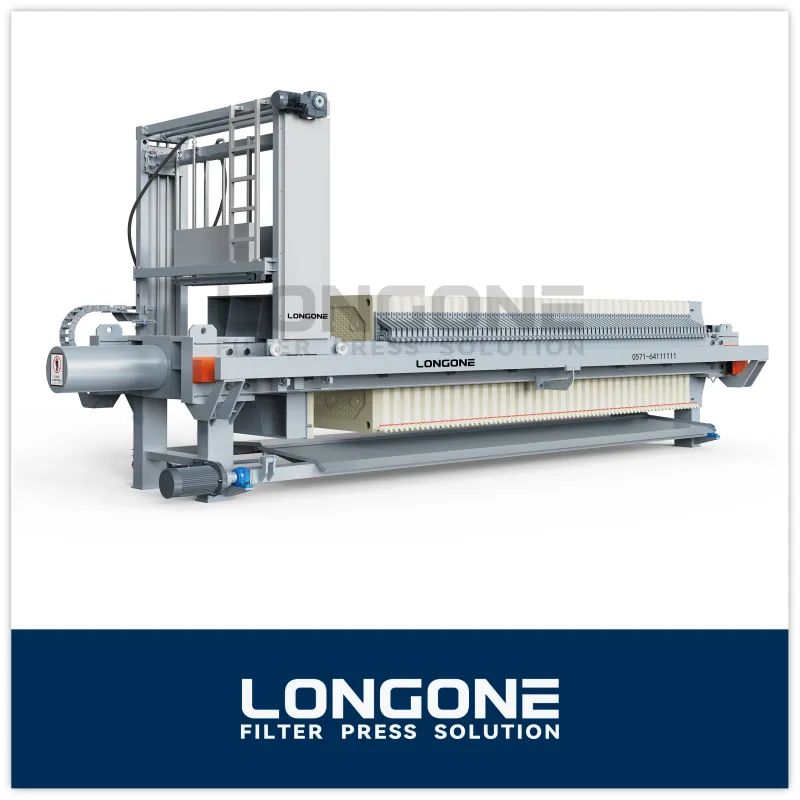
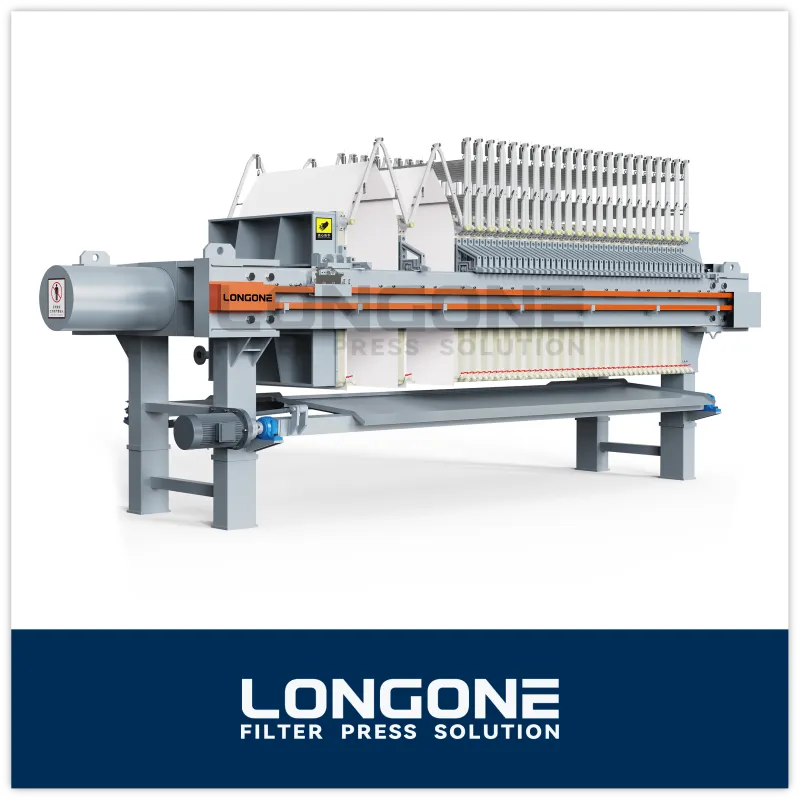
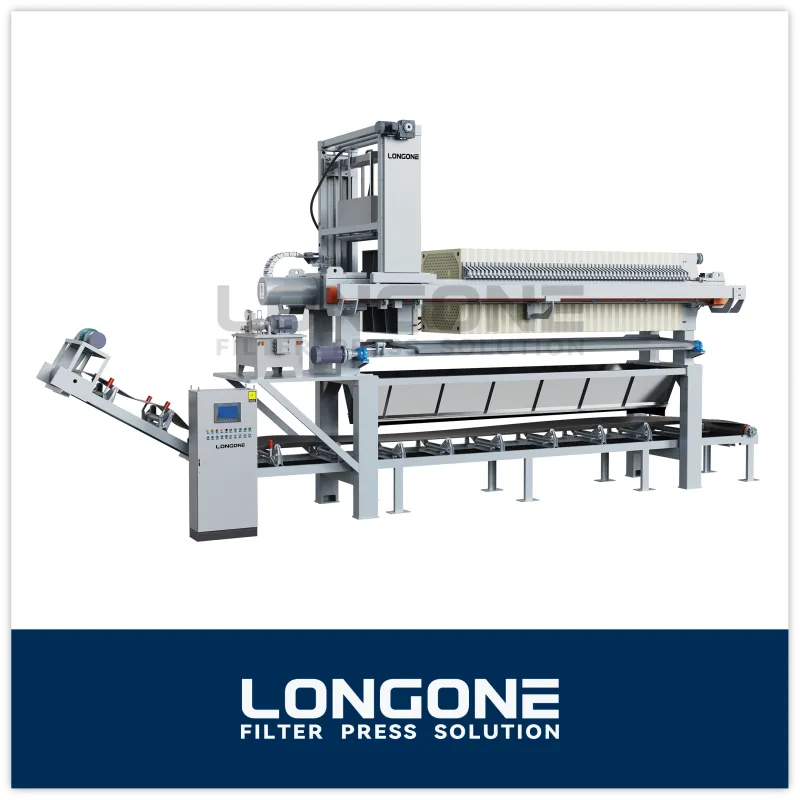
Your filter press may be sized correctly, but if cake discharge and cloth washing consume more than an hour of every cycle, you are losing filtration capacity before the next feed pump even starts. On a large conventional press, that lost time adds up to fewer cycles per day, higher labor cost, and slower project payback. A fully automatic rotary cloth filter press addresses exactly this problem.
A fully automatic rotary cloth filter press is a diaphragm (membrane) filter press in which all filter plates open at once and every filter cloth rotates in sync at the end of each cycle. This combined action peels the filter cake off all chambers together and washes every cloth in a single automatic sequence. Discharge takes under 5 minutes (including cylinder return), washing takes under 5 minutes, and no manual plate-by-plate work is required.
To see why this matters, we need to look at where conventional presses lose time, and what changes when the cloth moves instead of the operator.
How a Fully Automatic Rotary Cloth Filter Press Works
Conventional filter presses handle cake removal one plate at a time. Operators pull plates apart one by one, and a second person typically assists with cloth cleaning. On a long plate pack, this takes a long time before the machine is ready to filter again.
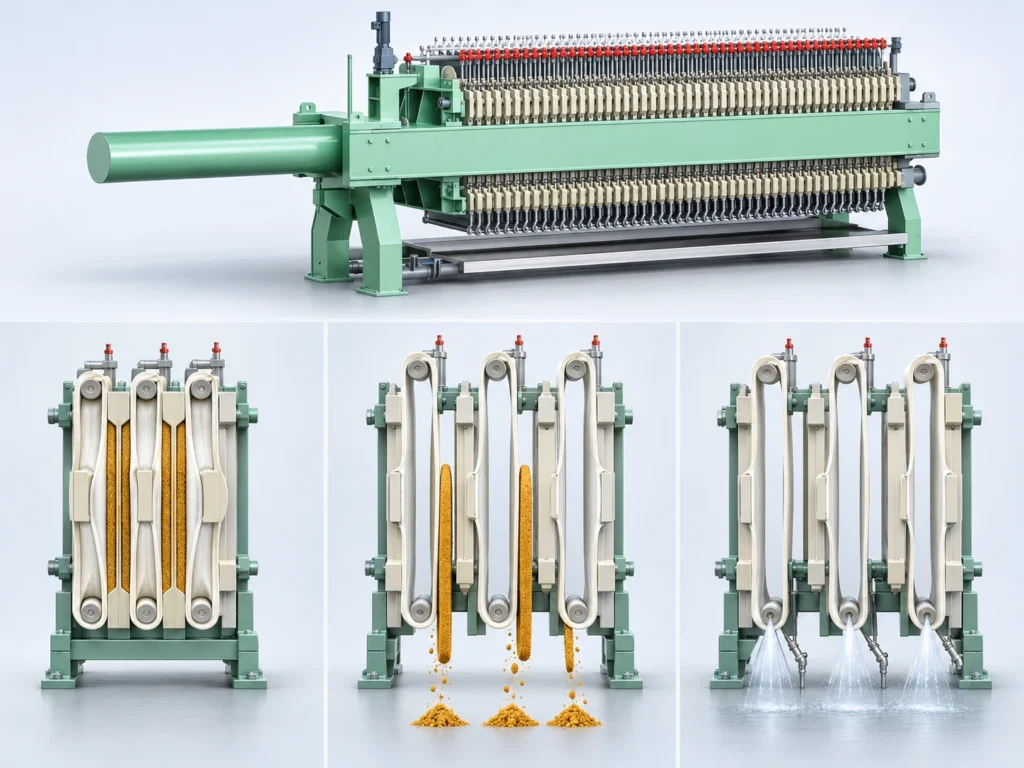
A rotary cloth filter press replaces this sequence with three automatic steps:
- Efficient dewatering: After filtration, water or air inflates the diaphragms on both sides of the plates. This squeezes the filter cake further and produces a drier cake.
- Rapid discharge: All plates are pulled open at once. A dedicated cloth travel system drives all filter cloths to rotate in sync, so the cake separates from the cloth in one action and drops out automatically.
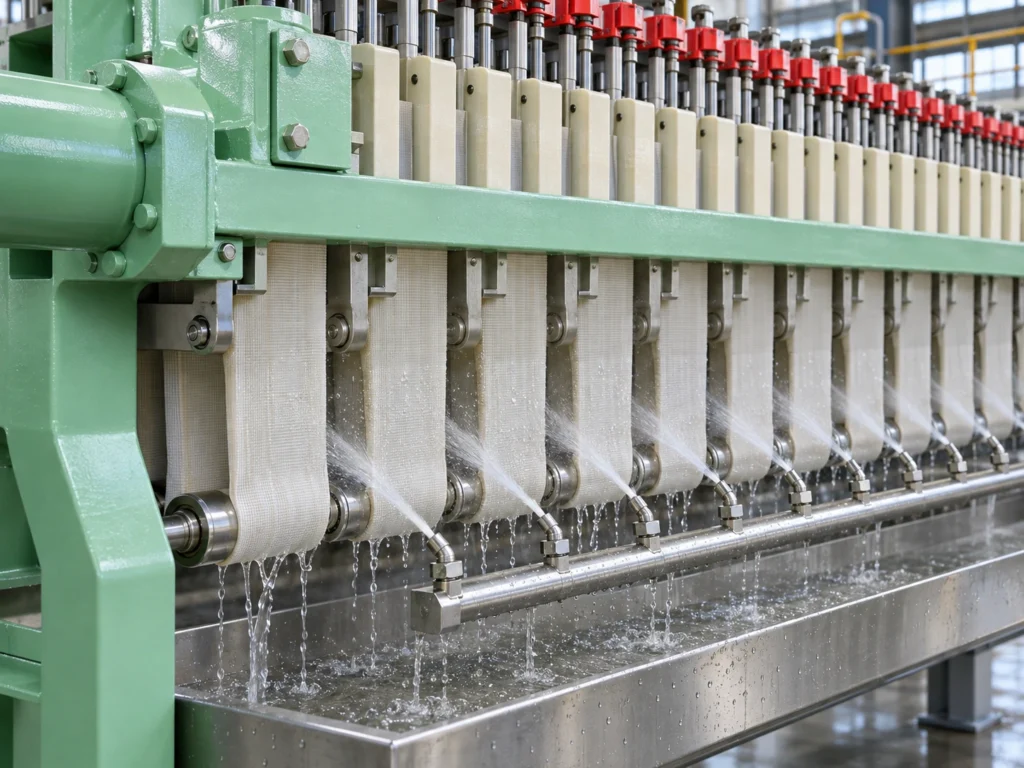
- Thorough cleaning: After discharge, the cloths keep rotating under the travel system while high-pressure clean water sprays onto them, cleaning the entire cloth surface automatically.
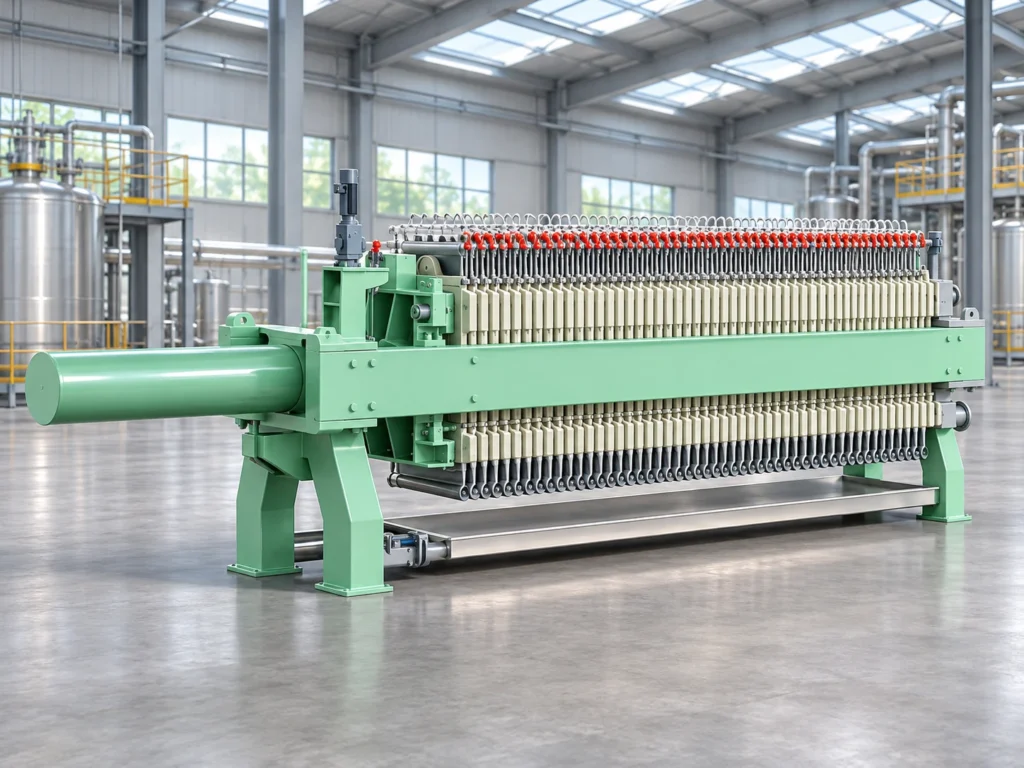
Key Components
- Filter plates with diaphragms: Squeeze the cake after filtration using water or air.
- Cloth travel system: Drives every filter cloth to rotate in sync, releasing the cake uniformly across all chambers.
- Hydraulic cylinder: Opens and closes the plate pack; its return stroke is included in the discharge time.
- High-pressure water spray: Cleans the cloths while they rotate.
- Automated control system: Manages the full cycle (filtration, squeezing, discharge, washing, closing) so the press can run unattended.
Once feed, pressure and timing parameters are set, the press runs as a closed-loop automatic cycle from start to finish.
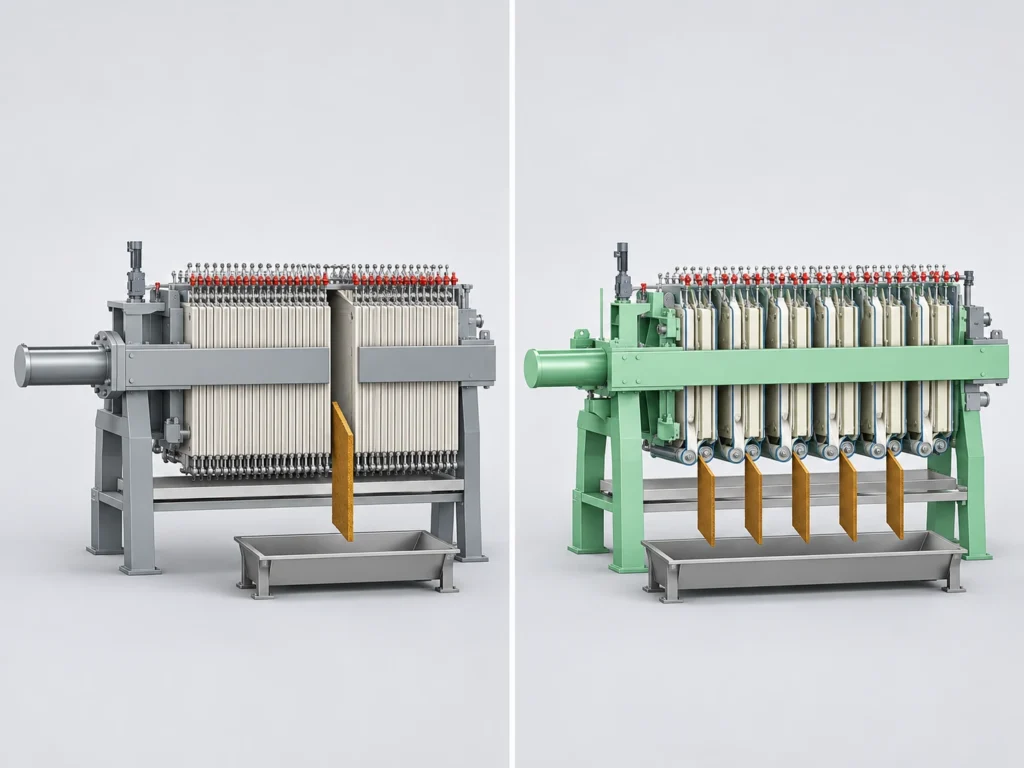
Cake Discharge in Under 5 Minutes: Rotary Cloth vs Traditional Plate-by-Plate Unloading
A question every plant manager faces is how to increase throughput without buying more equipment. The answer is often hidden in non-filtering time, specifically in how long discharge and washing take.
On a conventional filter press, discharge time is roughly 0.5 minutes per plate plus 3 minutes for cylinder return, and washing time is roughly 1 minute per plate plus 3 minutes for cylinder return. On a 50-chamber press, that means about 28 minutes for discharge and 53 minutes for washing per cycle, usually with two operators assisting. A rotary cloth filter press completes discharge in under 5 minutes (including cylinder return) and washing in under 5 minutes, with no manual assistance.
Side-by-Side Comparison (50-Chamber Example)
| Parameter | Traditional Filter Press | Rotary Cloth Filter Press |
|---|---|---|
| Cake discharge method | Plate by plate | All plates at once, cloths rotate |
| Discharge time | ~28 min (0.5 min × 50 plates + 3 min) | Under 5 min (including cylinder return) |
| Cloth washing time | ~53 min (1 min × 50 plates + 3 min) | Under 5 min |
| Manual assistance | 2 operators | None required |
| Total non-filtering time | ~81 min | Under 10 min |
Note: Traditional press times are calculated from the reference formulas above (0.5 min per plate for discharge, 1 min per plate for washing, plus 3 min cylinder return in each). Actual times vary with plate size, slurry properties and site practice.
Time Saved Across the LYROTA1500 Range
| Model | Chambers | Traditional discharge | Traditional washing | Traditional total | Rotary cloth total |
|---|---|---|---|---|---|
| LYROTA1500-20 | 20 | ~13 min | ~23 min | ~36 min | Under 10 min |
| LYROTA1500-30 | 30 | ~18 min | ~33 min | ~51 min | Under 10 min |
| LYROTA1500-40 | 40 | ~23 min | ~43 min | ~66 min | Under 10 min |
| LYROTA1500-50 | 50 | ~28 min | ~53 min | ~81 min | Under 10 min |
The more chambers the press has, the longer the conventional sequence takes, while the rotary cloth cycle stays under 5 minutes for each step. This is why the LYROTA1500 series, with 20 to 50 chambers, delivers its greatest commercial impact in high-throughput operations where every saved minute becomes extra filtration cycles per shift.
Automatic Cloth Washing and Unattended Operation
Cloth blinding is one of the most common causes of declining filtrate quality and longer cycle times on conventional presses. When washing is manual and slow, it tends to be shortened under production pressure, and that accelerates blinding over weeks of operation.
On the LYROTA1500 series, washing is built into every cycle. After discharge, the cloths keep rotating while high-pressure clean water cleans them, so cloth condition stays consistent from cycle to cycle. The cloths do not stick or accumulate material, which supports stable, continuous operation.
Why Consistent Washing Matters
Most buyers focus on the labor saving, since no operators are needed for discharge and washing. That benefit is real, but the operational consistency is just as valuable:
- Predictable cycle times let you schedule downstream equipment such as conveyors, dryers and packaging more accurately.
- Uniform cloth condition helps keep filtration performance from drifting across shifts and weeks.
- Less wash-water splashing: Because all cloths are washed while rotating after the plates are opened once, splashing is reduced compared with washing plate by plate, which improves the working environment.
- Unattended operation: Integrated automatic control allows the press to run during breaks, shift changes and nights without constant supervision.
From an EPC engineering perspective, an unattended press also simplifies the staffing model of the filtration section. Automating cloth washing at every cycle, rather than only when operators have time, is a practical way to protect cloth condition and control consumables cost.
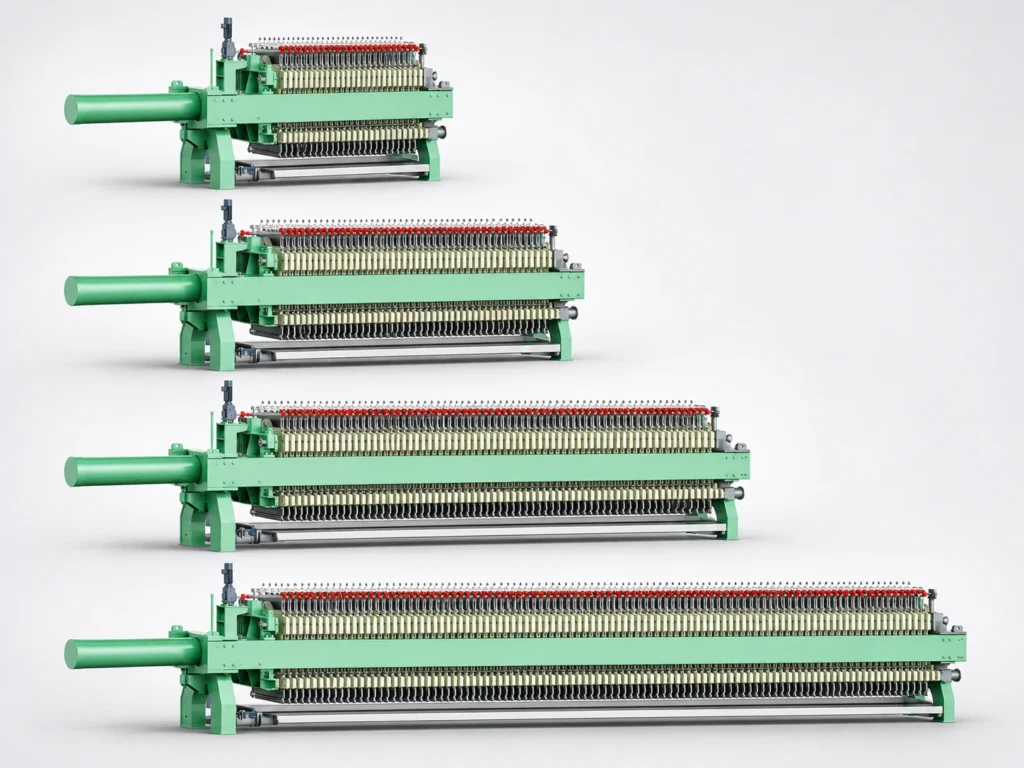
LYROTA1500 Series Specifications: 20 to 50 Chambers, 75 to 185 m²
The LYROTA1500 series covers four standard chamber configurations, ranging from 20 to 50 chambers and 75 to 185 m² of filtration area. All models support automatic discharge and automatic cloth washing.
LYROTA1500 Series Specification Table
| Model | Chambers | Filtration Area (m²) | Foot Center Distance L (mm) | Overall Length A (mm) | Weight (kg) |
|---|---|---|---|---|---|
| LYROTA1500-20 | 20 | 75 | 4,700 | 7,250 | 23,000 |
| LYROTA1500-30 | 30 | 110 | 6,100 | 9,350 | 24,800 |
| LYROTA1500-40 | 40 | 150 | 7,550 | 11,500 | 30,000 |
| LYROTA1500-50 | 50 | 185 | 8,900 | 13,620 | 36,000 |
All models share the same overall width (B) of 2,600 mm and overall height (H) of 3,280 mm.
The equipment is manufactured by Zhejiang Longyuan Equipment Technology Co., Ltd., a national high-tech enterprise established in 2007 in the Tonglu Economic Development Zone, Hangzhou. The company combines filtration process research, control system design, system integration and equipment commissioning, and holds ISO 9001, ISO 14001, ISO 45001 and CE certifications as well as “Zhejiang Manufacturing” certification. Filter plates are produced in the company’s own plate manufacturing area, which includes five-axis CNC machining and extrusion production.
For projects with specific flow rate, slurry or footprint requirements, customized filtration system solutions are available. We recommend involving our engineering team early in the project stage.
Best Applications: New Energy, Mineral Processing, Chemical and Environmental Projects
Not every application justifies a fully automatic rotary cloth press. It delivers the strongest return in processes with high cycle frequency, cakes that are slow to discharge, or tight labor-efficiency targets.
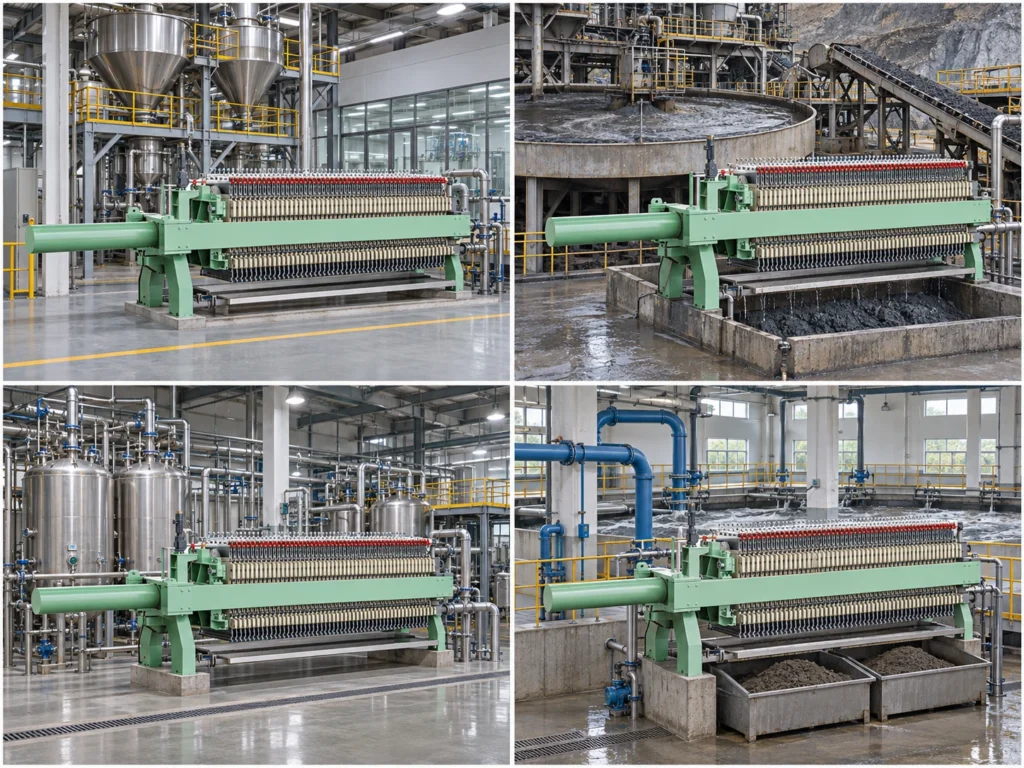
The LYROTA1500 series is best suited to new energy, mineral processing, chemical and environmental projects, wherever high throughput, low cake moisture and reduced manual intervention are process requirements.
Application Breakdown
New Energy Materials
Battery material production runs at high volumes, so the cycle time saved on each press translates directly into daily output. Automatic cloth washing at every cycle also helps keep cloth condition consistent between batches.
Mineral Processing
Concentrate dewatering and tailings management involve high tonnages. Mechanically driven cloth rotation releases the cake automatically without relying on manual work along the plate pack, which is also a practical benefit at remote sites.
Chemical Manufacturing
Chemical filter cakes can be hazardous or reactive. Unattended discharge and washing keep operators away from the press during these steps, which is a safety advantage in addition to the labor saving.
Environmental and Wastewater Treatment
Sludge dewatering plants often run continuously. Automatic operation helps maintain throughput during shift changes and reduced-staffing periods.
How to Choose a Rotary Cloth Filter Press for Your Plant
Buyers often start with filtration area and price. Both matter, but neither tells you whether the press will meet your cycle-time and output targets.
To choose the right rotary cloth filter press, evaluate your required filtration cycles per day, your cake release characteristics, your labor model, your available footprint and floor loading, and whether the supplier integrates the plates, cloths, hydraulics and controls into one engineered system.
Evaluation Checklist
- Cycle count target: Calculate the filtration cycles you need per 24 hours, then work out the maximum non-filtering time allowed per cycle. If a conventional press exceeds that budget, a rotary cloth press is worth evaluating.
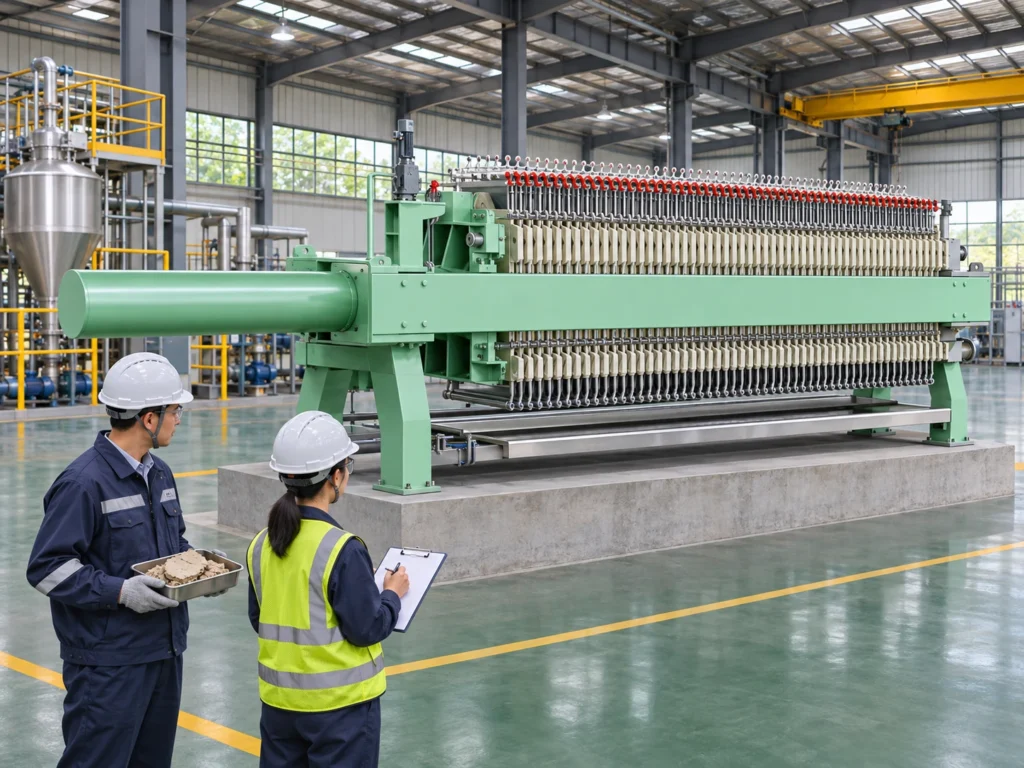
- Cake release: Request a filter trial on your slurry. Cakes that are slow to discharge by hand benefit most from simultaneous rotary discharge.
- Filtration area: Match your flow rate and target cake moisture to a chamber count in the LYROTA1500 range (75 to 185 m²), or discuss a custom configuration.
- Site constraints: Check overall length (7,250 to 13,620 mm), width (2,600 mm), height (3,280 mm) and weight (23 to 36 tonnes) against your installation space and foundation.
- Control integration: Confirm how the control system interfaces with your plant control system.
- Cloth and plate supply: Verify that replacement cloths and plates are available directly from the manufacturer to control long-term consumables cost.
- Certification and documentation: Review quality certificates (such as ISO and CE) and material documentation relevant to your local regulatory requirements.
- After-sales support: Confirm commissioning support, warranty terms and spare parts availability for your region.
Frequently Asked Questions
What is the difference between a rotary cloth filter press and a conventional filter press?
A conventional filter press discharges cake and washes cloth plate by plate, requiring manual assistance and significant downtime between cycles. A rotary cloth filter press opens all plates at once and rotates every cloth in sync, completing discharge and washing automatically in under 5 minutes each, with no manual assistance required.
How long does cake discharge take on a rotary cloth filter press?
Cake discharge, including cylinder return, takes under 5 minutes. Cloth washing also takes under 5 minutes, so total non-filtering time per cycle is under 10 minutes.
How much time does it save compared with a conventional press?
Using the reference formulas, a conventional 50-chamber press needs about 28 minutes for discharge and 53 minutes for washing (about 81 minutes in total), compared with under 10 minutes on a rotary cloth filter press. A 20-chamber press needs about 36 minutes in total on a conventional design.
Can a rotary cloth filter press run unattended?
Yes. Integrated automatic control manages the filtration cycle, and the cloths do not stick or accumulate material, which supports unattended operation during breaks, shift changes and nights.
What industries use rotary cloth filter presses?
Common applications include new energy, mineral processing, chemical manufacturing, and environmental or wastewater treatment projects, especially where high cycle frequency, low cake moisture and reduced labor are required.
How do I verify that a filter press supplier manufactures its own plates?
Request a facility audit or third-party inspection report, ask for material certificates for plates and cloths, and confirm which components are produced in-house and which are sourced from external vendors.
Conclusion
The fully automatic rotary cloth filter press solves a problem that filtration area ratings do not reveal: the time lost between filtration cycles. By opening all plates at once and rotating every cloth in sync, the LYROTA1500 series reduces discharge and washing time from about 81 minutes to under 10 minutes on a 50-chamber unit, without manual assistance. That means more filtration cycles per shift, lower labor cost, and safer, more consistent plant operation. For buyers in new energy, mineral processing, chemical and environmental sectors evaluating high-throughput solid-liquid separation equipment, it is a specification worth examining carefully.
If you are sizing a filtration system and want to know whether the LYROTA1500 series fits your flow rate, slurry and footprint, our engineering team can review your process data and recommend a configuration.