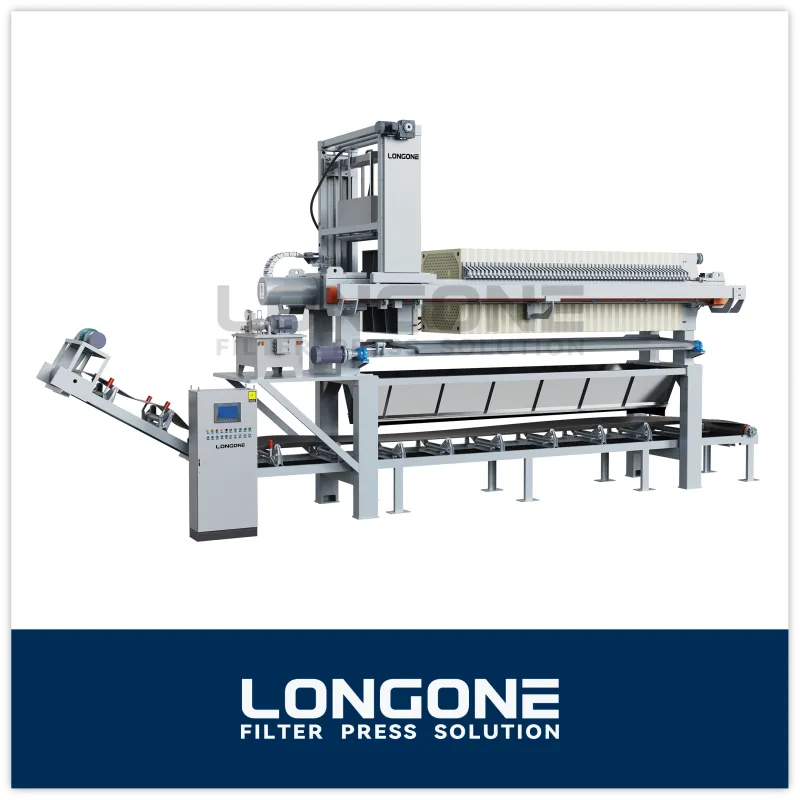
When plant managers compare solid-liquid separation equipment, the plate and frame filter press is often the machine that quietly wins. It is not the newest technology on the market, and it is not fully automatic out of the box. But after years of supplying filtration equipment to customers in wastewater treatment, mining, chemical processing and food production, we keep seeing the same pattern: buyers return to this design because it works, it lasts, and it is easy to live with.
In this guide, we explain the main plate and frame filter press advantages from a manufacturer’s point of view, including where the design fits best and where another type may be a better choice.
What Is a Plate and Frame Filter Press and How Does It Work
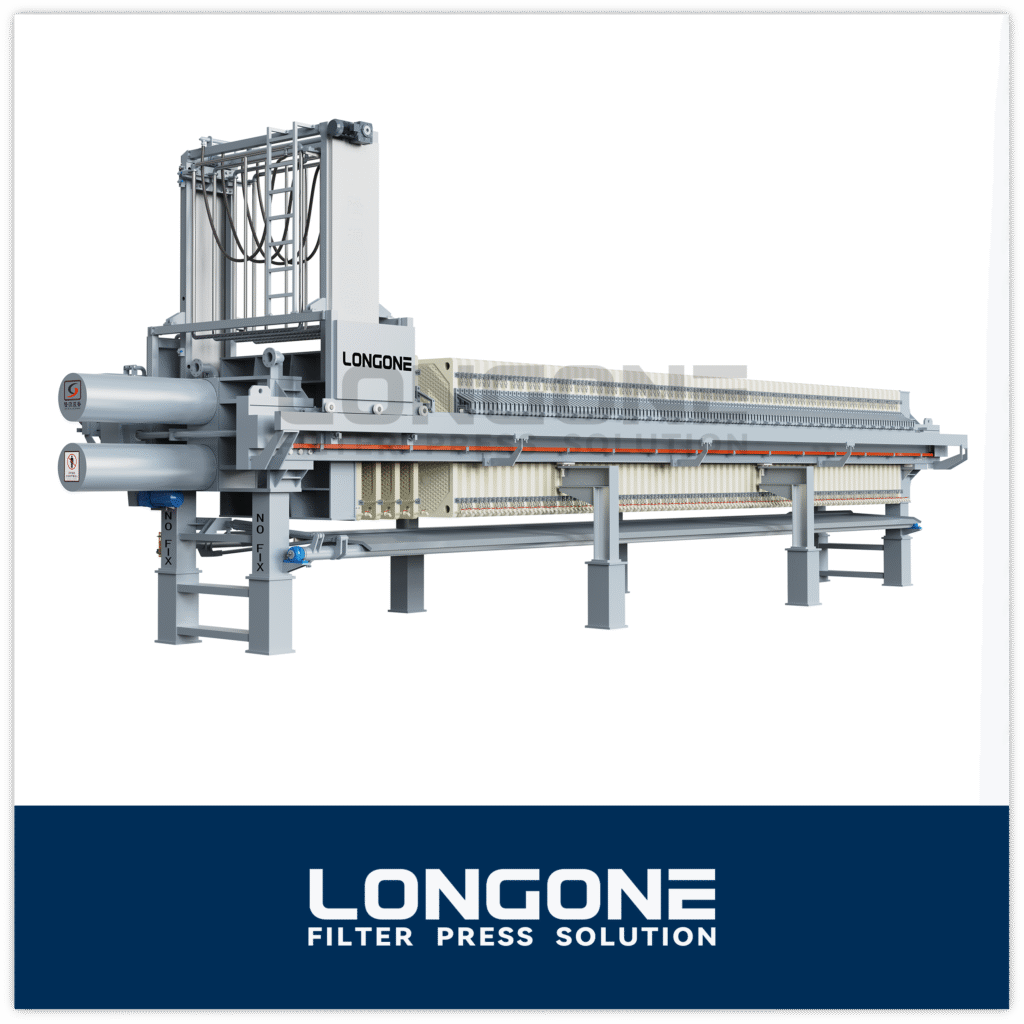
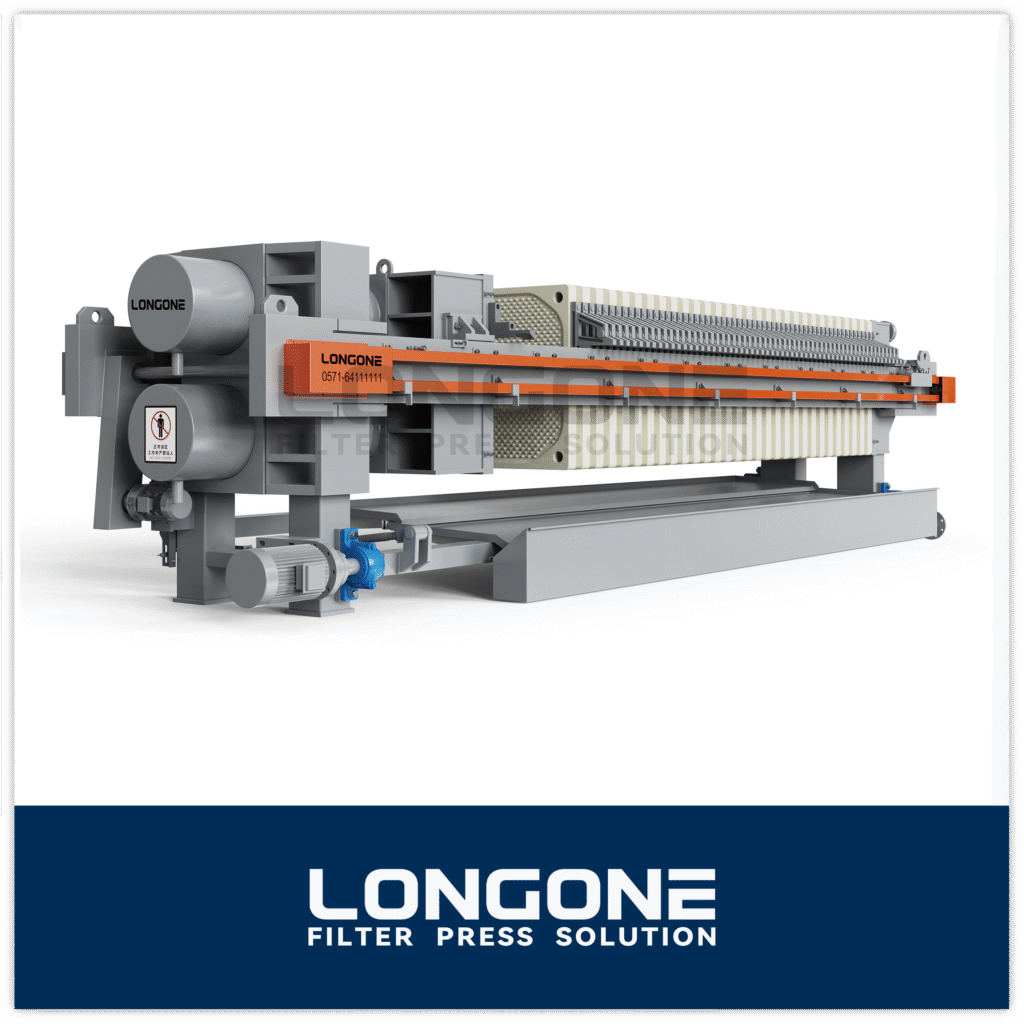
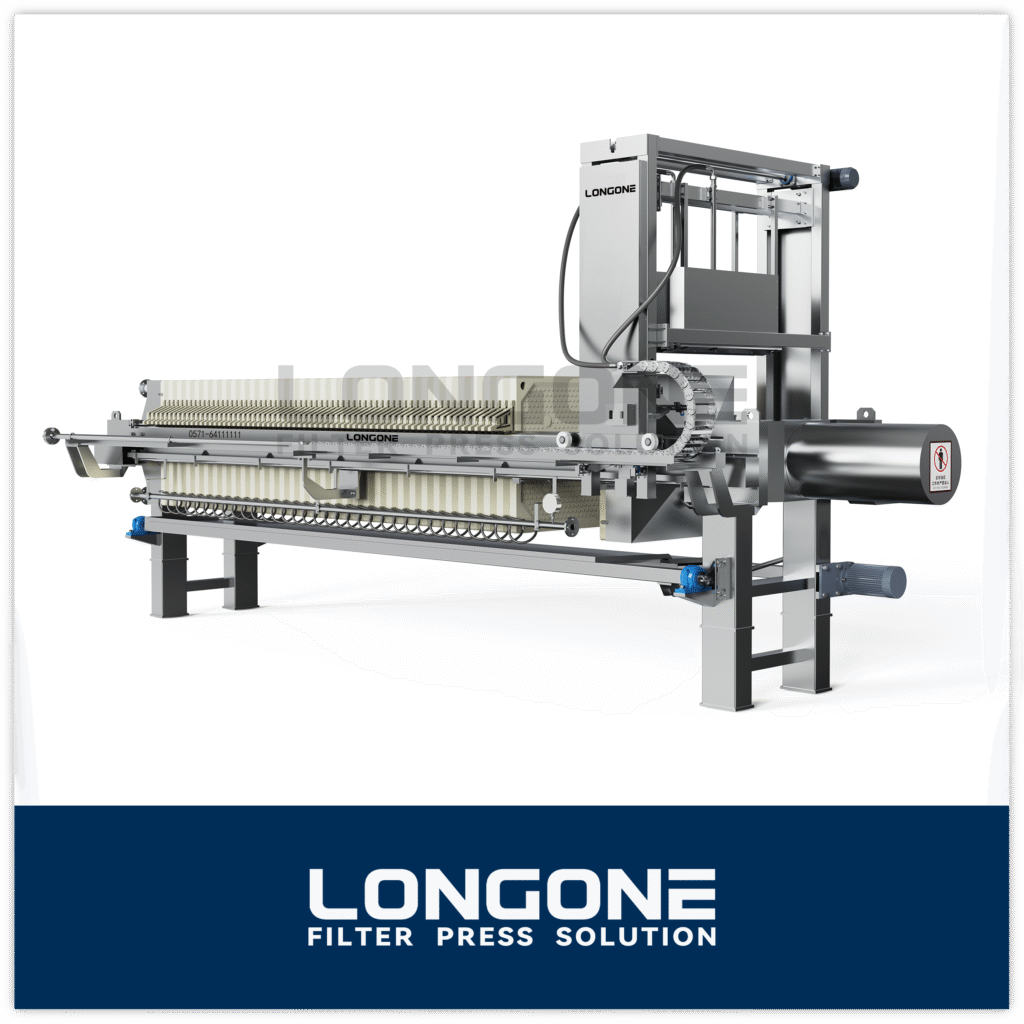
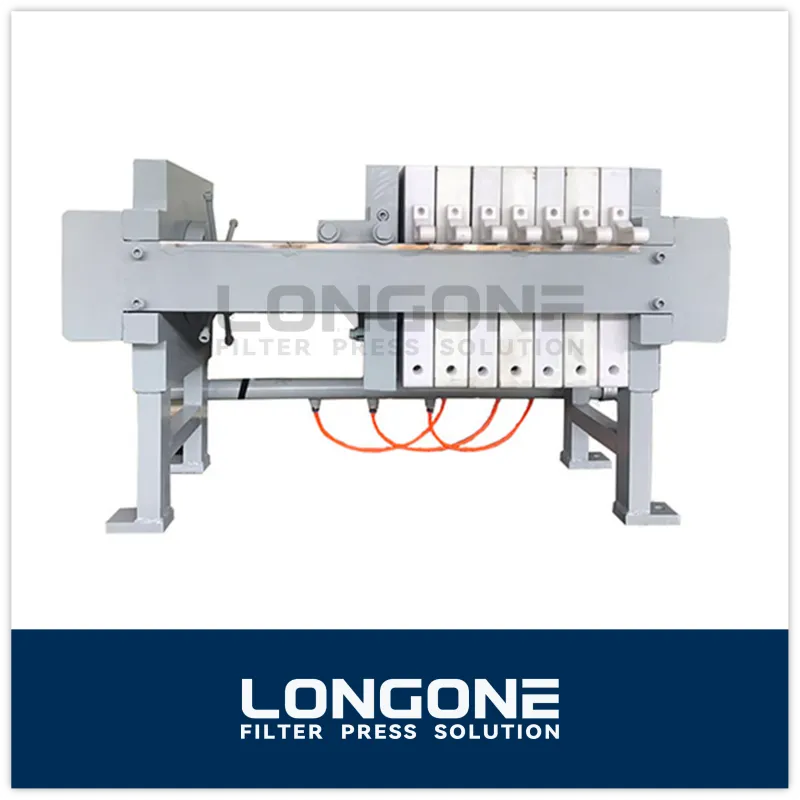
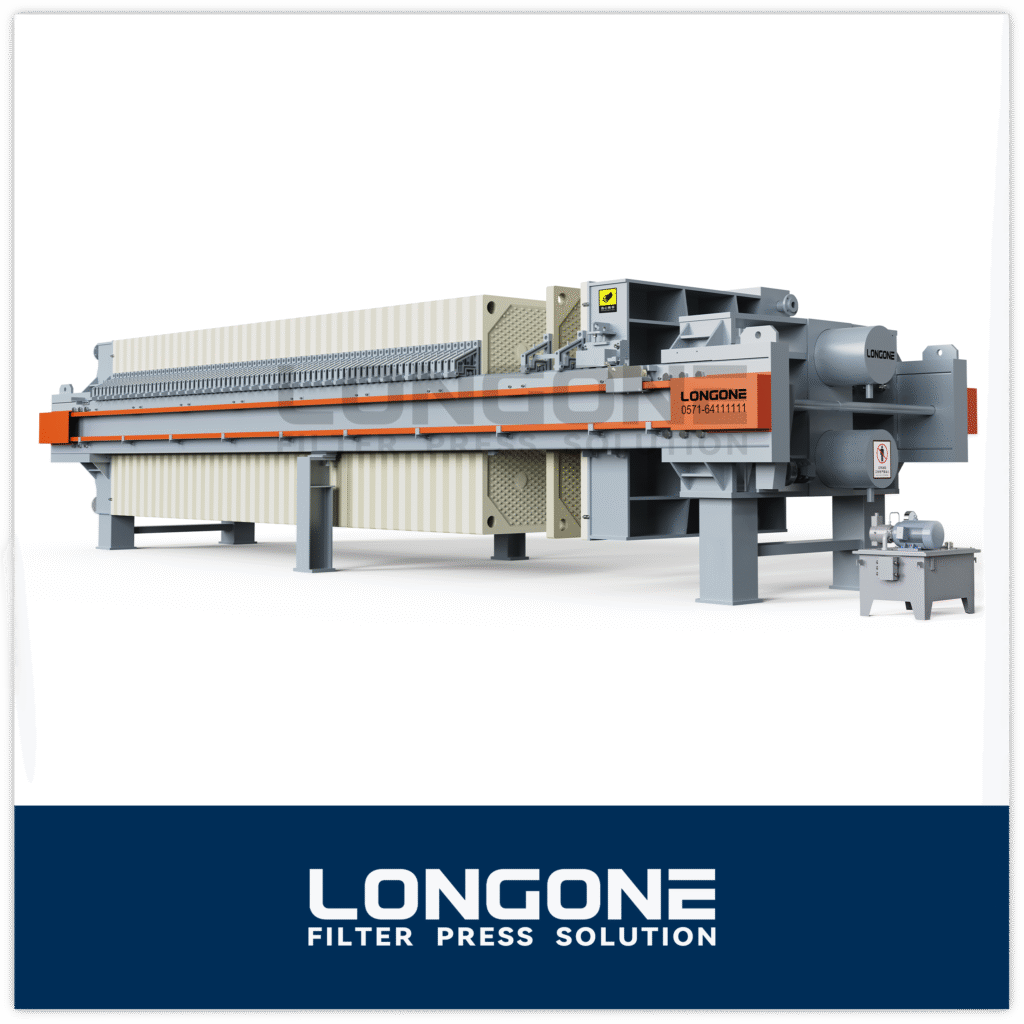
A plate and frame filter press is a batch filtration machine that separates solids from liquids under pressure. It is built from a few core parts:
- Frame: a steel structure with a fixed head and a movable end that holds the plate pack.
- Filter plates and frames: alternating plates and hollow frames that form the filtration chambers.
- Filter cloth: fitted over the plates to retain solids while the liquid passes through.
- Closing system: a manual screw, a hand pump or a hydraulic cylinder that clamps the pack tight.
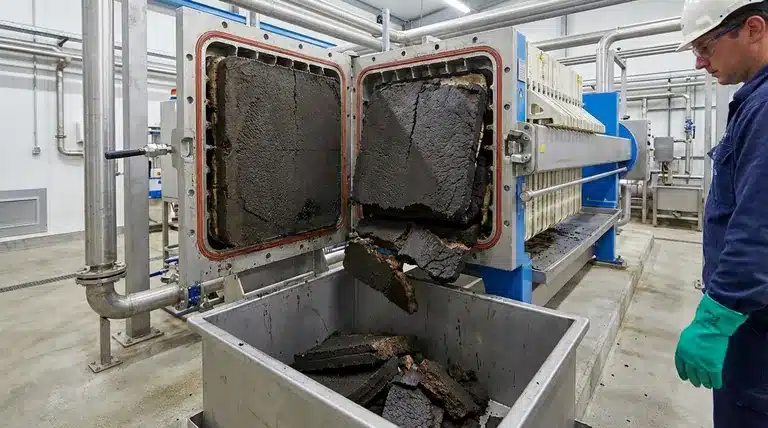
During a cycle, slurry is pumped into the chambers. The liquid (filtrate) passes through the cloth and leaves through the plate channels, while the solids build up inside the frames as filter cake. When the chambers are full, the pump stops, the pack is opened, and the cake is discharged. Then the cycle starts again.
If you want to see how this design relates to other models, our page on the frame and plate filter press explains the configurations we build.

High Filtration Pressure for Drier Filter Cake and Clearer Filtrate
The first and most important advantage is the driving force. A plate and frame filter press uses a feed pump to push slurry into the chambers under pressure. Depending on the plate material and design, working pressures commonly fall in the range of 0.6 to 1.6 MPa.
Compared with gravity settling or vacuum filtration, this pressure gives you:
- Lower cake moisture. Higher pressure forces more liquid out of the solids, so the cake is drier and easier to handle.
- Clearer filtrate. The cloth and the compacted cake work together as a fine filter, so the liquid leaving the press is cleaner and often suitable for reuse or further treatment.
- Lower disposal cost. A drier cake weighs less. If you pay for hauling, landfill or incineration by the ton, even a small drop in moisture adds up over a year.
The exact result depends on your material, particle size and filtration time, so we always recommend a small test or a sample review before sizing a machine. But as a general rule, pressure filtration is one of the most reliable ways to get a dry, stackable cake.

Simple Structure, Easy Operation and Low Maintenance Cost
Many buyers underestimate how much simplicity is worth. A plate and frame filter press has very few moving parts. There is no complex air system, no membrane squeezing circuit and no intricate sensor network that must be calibrated. The result is a machine that is easy to understand and easy to keep running.
In daily use, this means:
- Low failure rate. Fewer components mean fewer things that can go wrong.
- Easy operator training. A new operator can learn the cycle of closing, feeding, opening and discharging quickly.
- On-site repair. Worn cloths are replaced by hand. Plates are standard parts. You do not need a specialist engineer to be on site for routine work.
- Predictable spare parts. The wear items are mainly filter cloths, gaskets and seals, and they are easy to plan and stock.
Good maintenance habits still matter. Regular cloth washing, checking plate surfaces for cracks, and keeping the hydraulic system clean will extend service life. But compared with more automated designs, the maintenance burden is light, and so is the cost.
Strong Adaptability to Viscous Slurries and Fine Particles
Not every slurry behaves nicely. Some are thick and sticky. Some contain very fine particles that blind a cloth in minutes. Some are acidic, alkaline or hot. One of the plate and frame filter press advantages we value most is how well it adapts to these difficult materials.
Choose the right plate material. Filter press plates can be made from polypropylene for general chemical resistance, cast iron for high-strength applications, or stainless steel where hygiene or special corrosion resistance is required.
Choose the right filter cloth. Cloth material, weave and permeability can be matched to your particle size and chemistry. A good cloth selection often makes the difference between a stable process and constant blinding.
Use the right chamber thickness. The frame thickness sets the cake thickness. Thick cakes suit free-draining solids. Thinner cakes help when the material is hard to dewater.
This flexibility is why the same basic machine is used in sludge dewatering, ore concentrate, pigment and dye production, edible oil and juice clarification, and many other fields.

Flexible Filtration Area: Scalable and Customizable Configurations
Another practical advantage is how easily the machine can be sized to your process. The filtration area of a plate and frame filter press is determined by the number and size of the plates. That gives you a wide range of options:
- Small laboratory or pilot units for testing and low-volume production.
- Medium machines with a moderate number of plates for daily batch work.
- Large machines with many plates for higher throughput.
If your production grows, you can often add plates to the existing frame, provided the frame length and feed capacity allow it. This protects your investment because the machine does not become obsolete when your output increases.
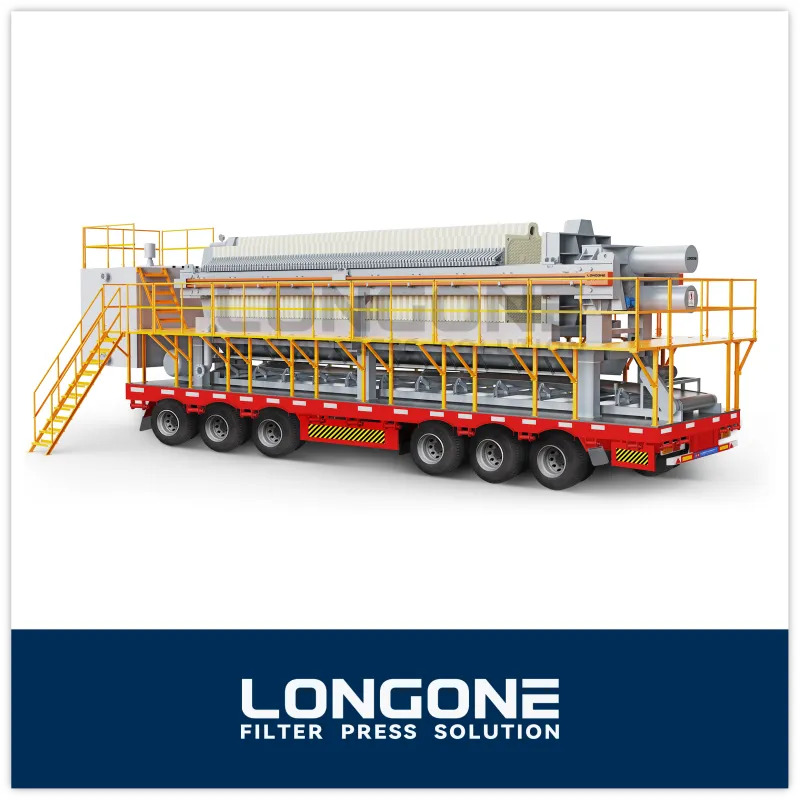
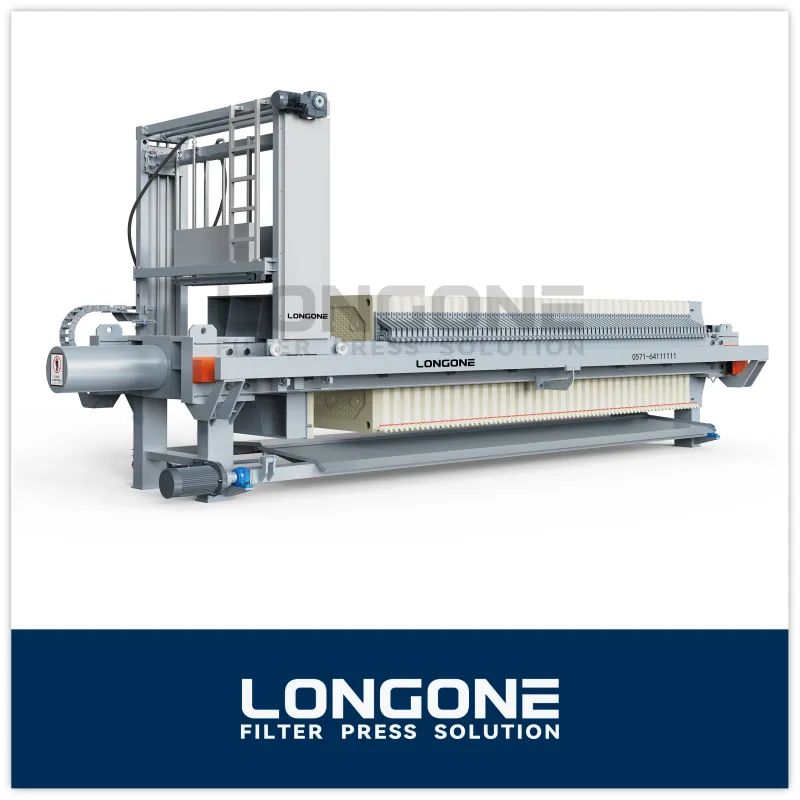
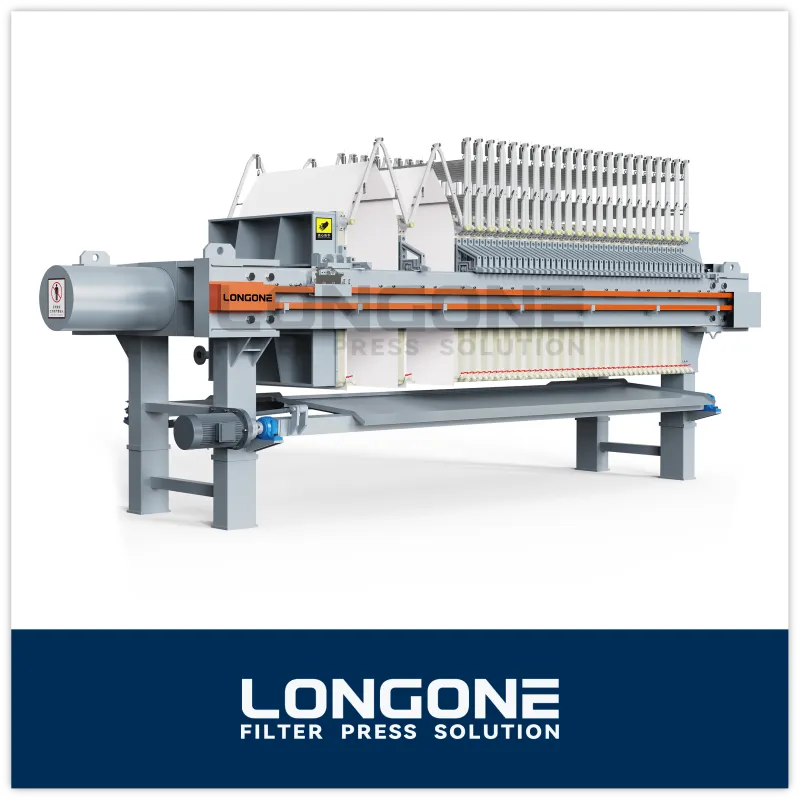
Customization goes further. At LONGONE, we can adjust plate size, plate material, number of chambers, closing method (manual, semi-automatic or hydraulic), structural material and control level to match your site. A customer with a small workshop and a customer with a large treatment plant can both get a machine that suits their real needs.

How to Decide If a Plate and Frame Filter Press Fits Your Application
No machine is perfect for every job, and we prefer to give honest advice. Here is how the plate and frame filter press compares with two other common designs.
| Feature | Plate and Frame | Chamber Filter Press | Membrane Filter Press |
|---|---|---|---|
| Filtration pressure | High (pump-driven) | High (pump-driven) | High, plus squeeze stage |
| Cake moisture | Low | Low | Lowest |
| Structure | Simplest | Simple | More complex |
| Automation level | Manual to semi-automatic | Semi to fully automatic | Usually automatic |
| Maintenance | Easy and low cost | Easy | Higher (membrane care) |
| Best for | Varied materials, small to medium batches | General sludge and slurry dewatering | High-volume, driest cake needed |

Limitations to Consider
To keep expectations realistic:
- It is a batch process. The machine must stop to discharge cake, so it is not continuous.
- Cake discharge can be labor-intensive. On manual models, operators open the pack and remove the cake by hand. Automatic plate shifting and cloth vibration systems can reduce this, but they add cost.
- Not ideal for very high volumes. For large continuous operations, an automatic chamber or membrane press may be more efficient.
When It Is the Right Choice
A plate and frame filter press is usually a strong fit when:
- Your volume is small to medium.
- Your slurry is difficult, variable or changes from batch to batch.
- You want a low-maintenance machine with simple spare parts.
- You need a clear filtrate or a very clean separation.
- You want room to expand later by adding plates.
If you are not sure, send us your material details, daily volume and target cake dryness. Our engineers will recommend a model and configuration, and we can arrange a filtration test when needed.
Frequently Asked Questions
What are the main advantages of a plate and frame filter press?
The main advantages are high filtration pressure, low cake moisture, a simple and reliable structure, easy maintenance, strong adaptability to different materials, and a filtration area that can be scaled to your needs.
Is a plate and frame filter press better than a chamber filter press?
Neither is better in every case. The plate and frame design is simpler and very adaptable, while a chamber filter press is often chosen for easier automation and higher throughput. The best choice depends on your material, volume and budget.
What materials can a plate and frame filter press handle?
It can handle many slurries, including sludge, mineral concentrates, chemical suspensions, viscous liquids and fine particles. Plate material and filter cloth should be selected to match the chemistry and particle size.
How dry will the filter cake be?
Cake dryness depends on the material, particle size, feed pressure and filtration time. A test with a sample of your slurry is the most reliable way to predict the result.
Can I increase capacity later?
In many cases, yes. If the frame and feed system allow it, you can add plates to increase filtration area. Tell us your future plans at the quotation stage so we can design the frame accordingly.
Get a Customized Plate and Frame Filter Press Solution
LONGONE designs and manufactures filter presses, filter plates, cloths, hydraulic systems and spare parts for customers around the world. Our team provides technical consultation, installation guidance, operator training and after-sales support. Tell us about your slurry and your goals, and we will help you choose the right configuration.
Send your inquiry today and get a recommendation from our engineers.